AI receptionist for landscaping: grow without missing calls
Your crew's out laying pavers in 95-degree heat. The phone rings. Nobody picks up.
That missed call? It was a homeowner ready to sign a $4,000 fall cleanup contract. They called the next company on Google instead.
If you run a landscaping business, you already know this pain. An AI receptionist for landscaping solves it by answering every call, qualifying leads, and booking estimates while your team is on the job site. And it costs a fraction of what you'd pay a full-time receptionist.
According to the National Association of Landscape Professionals (NALP), landscaping companies lose up to 30% of potential clients due to missed calls and slow responses. In an industry worth $188.8 billion and growing at 6.5% per year, that's serious money left on the table.
TL;DR:
- An AI receptionist for landscaping answers every call, qualifies leads, and books estimates 24/7 while your crew is out on the job site.
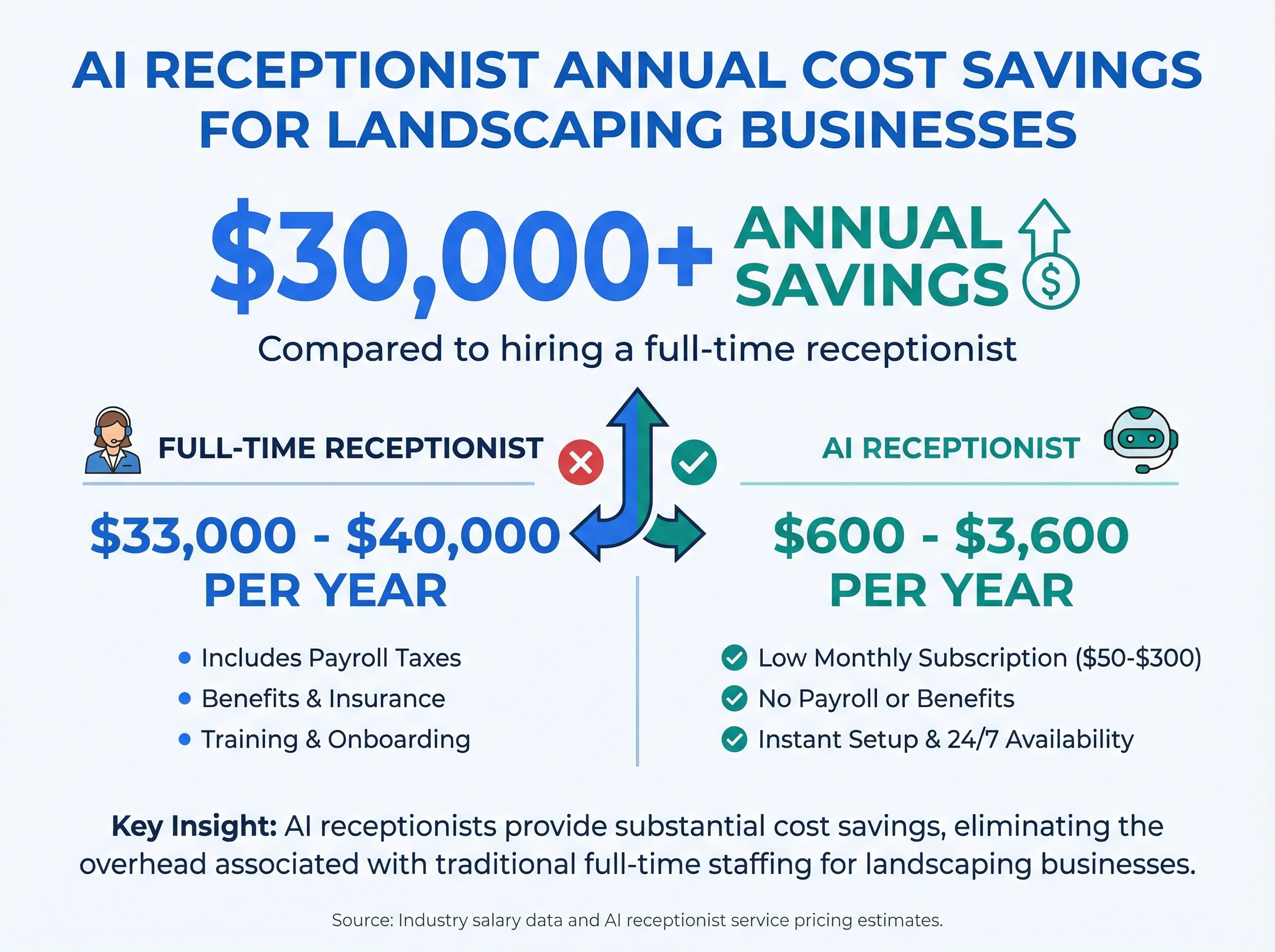
- It costs roughly $50-300 per month versus $33,000-$40,000 a year for a full-time receptionist, so you save 90%+ while still covering evenings and weekends.
- It handles landscaping-specific calls: routing emergency storm damage to your cell, answering pricing questions, and pushing new leads into tools like Jobber.
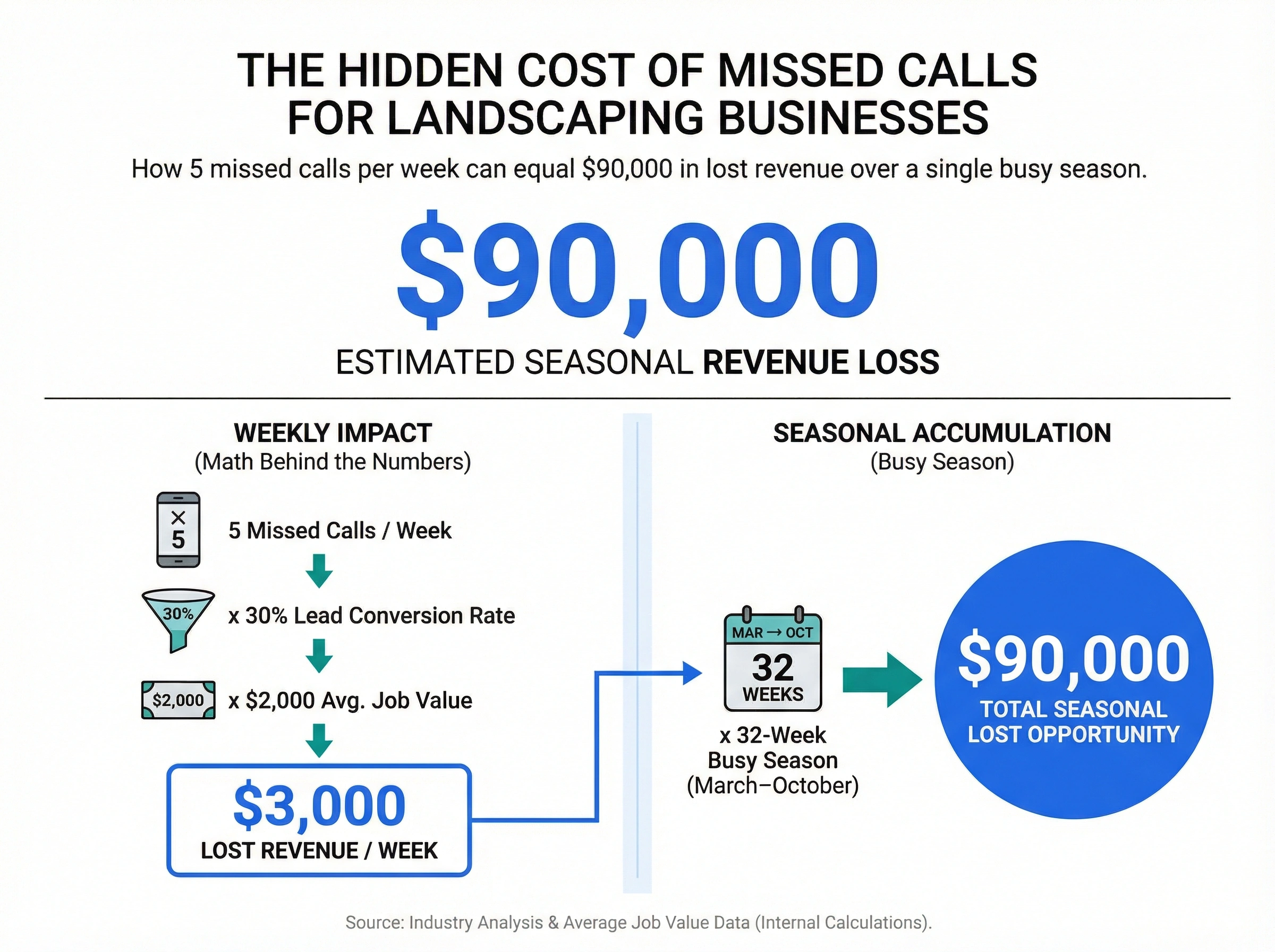
- Missing just 5 calls a week can cost around $90,000 in lost revenue over a busy season, which an always-on receptionist helps you recover.
- The AI receptionist is one piece of a full business phone system, so you can start with a business number and call routing, then add the AI later.
Why do landscaping companies miss so many calls?
Landscapers miss calls because they're doing the actual work. It's that simple.
Your team is operating mowers, trimming hedges, running irrigation lines, or pouring concrete for a patio. Nobody's sitting at a desk waiting for the phone to ring. Most landscaping businesses run with crews of 3-8 people, and hiring a dedicated office person just for phones doesn't make financial sense until you're well past the million-dollar mark.
Here's what happens instead. Calls go to voicemail. About 80% of callers won't leave a message. They call your competitor. You lose the job before you even knew it existed.
Sound familiar?
The busy season makes it even worse. Spring and summer bring a flood of calls for estimates, seasonal cleanups, and emergency tree work. Your existing customers need rescheduling because of rain delays. New leads want quotes for hardscaping projects. And your phone just keeps ringing while you're elbow-deep in mulch.
There's also a timing problem. Most homeowners search for landscaping services after work hours. They're browsing Google at 7 PM, checking your reviews at 8 PM, and ready to call at 9 PM. By then, you've been working outside for 10 hours and you're done for the day. Those evening leads slip through the cracks every single night.
The math gets ugly fast. If you miss just 5 calls per week, and each call has a 30% chance of becoming a $2,000 job, that's $3,000 in lost revenue every week. Over a busy season (March through October), that adds up to roughly $90,000 in missed opportunity. For a small landscaping company, that could be the difference between hiring another crew or staying stuck at the same size.
And it's not just new leads. Existing customers call to reschedule after rain, add services to their plan, or ask about fall aeration. When they can't reach you, they start wondering if you're reliable. One missed call won't lose a customer. But three or four? They'll start looking at other options. Retention is just as vulnerable as acquisition when your phone goes unanswered.
What does an AI receptionist actually do?
An AI receptionist answers your business phone using natural-sounding conversation, not a robotic menu tree. It picks up every call, asks the right questions, and takes action based on what the caller needs.
Think of it as a virtual front desk that never takes lunch, never calls in sick, and works weekends without overtime pay. When a homeowner calls asking about lawn maintenance pricing, the AI gathers their property details, answers common questions about your services, and books an estimate on your calendar. All without you lifting a finger.
It's not a voicemail system or one of those "press 1 for billing, press 2 for scheduling" menus that everybody hates. Modern AI receptionists use natural language processing to have real conversations. They can handle follow-up questions, understand context, and even recognize returning customers by their phone number.
For landscaping businesses specifically, this means the AI can ask about property size, the type of service needed (weekly mowing, one-time cleanup, hardscaping project), timeline, and budget range. It captures all of this in a clean summary and sends it to you via text or email. When you check your phone during a water break, you've got a qualified lead ready to follow up on, not a cryptic voicemail you can barely hear over wind noise.
The technology has gotten good enough that most callers don't realize they're talking to an AI. The conversations feel natural because the system understands intent, not just keywords. If someone says "my backyard looks like a jungle," the AI knows they need a cleanup, not a jungle-themed garden installation.
If you're curious about how AI voice assistants work for small businesses, we've covered the basics in a separate guide.
How does it handle landscaping-specific calls?
An AI receptionist trained for landscaping knows the difference between a routine mowing inquiry and an emergency storm damage call. It routes urgent situations straight to your cell and handles everyday questions on its own.
Here's what a typical interaction looks like:
Caller: "Hi, I need someone to clean up my yard after the storm last night. A big branch fell on my fence and there's debris everywhere."
AI receptionist: "I'm sorry to hear that. I can help get that taken care of. Can I get your address and a quick description of the damage? I'll schedule a crew to come assess it as soon as possible."
The AI captures the caller's name, address, phone number, type of service, and urgency level. Then it routes the information based on rules you set up. Emergency storm damage? It rings your cell immediately. Routine estimate request for spring planting? It books an appointment slot and sends you a summary.
Here are the landscaping-specific tasks a good AI receptionist handles:
- Estimate scheduling. Books appointments directly into your calendar or job management system. No double-booking, no manual entry.
- Pricing questions. Answers based on your rate sheet. "Weekly mowing for a quarter-acre lot typically starts at $45 per visit."
- Seasonal service inquiries. "Yes, we offer fall leaf cleanup. Would you like to schedule an estimate?"
- Emergency routing. Storm damage, broken irrigation, flooding? The AI identifies urgency and calls you directly.
- Returning customer recognition. Pulls up the caller's history by phone number. "Welcome back, Mrs. Johnson. Are you calling about your regular Tuesday mowing service?"
- Text summaries after every call. You get the caller's info, what they need, and any appointment booked, all in one text message.
But can an AI really handle the weird calls? The ones where somebody wants to know if you'll also pressure-wash their driveway, or asks whether you can trim a tree that's technically on the neighbor's property?
Honestly, it handles about 85% of calls with zero issues. For the tricky 15%, it takes a detailed message and flags it for your personal follow-up. That's still way better than a missed call. The lead is captured, the caller feels heard, and you can call back with a thoughtful answer instead of scrambling.
5 ways an AI receptionist helps you scale
Growing a landscaping business is hard when you're the bottleneck for every phone call. You can't add crews, take on commercial contracts, or expand your service area when every new customer has to reach you personally. Here's how an AI receptionist removes that bottleneck.
1. Capture every lead, even at 9 PM
Most homeowners search for landscaping services after their workday ends. They're Googling "landscaper near me" at 7 PM, browsing your website at 8 PM, and ready to call at 9 PM. If nobody answers, they move on.
An AI receptionist picks up 24/7. It doesn't matter if it's a Saturday morning or a Tuesday at midnight. Every caller gets a professional response and a path to booking an estimate. That means leads that used to vanish are now showing up as appointments on your calendar the next morning.
2. Free up 2-3 hours per day
When we talk to landscaping business owners, the number one complaint is time. They started the business because they love the outdoor work. Instead, they spend hours each day returning calls, scheduling estimates, and answering the same questions about pricing and service areas.
An AI receptionist handles all of that. You get those hours back to focus on the work that actually generates revenue, whether that's running a crew, meeting with a commercial client, or planning next season's operations.
3. Save $33,000+ per year versus a full-time hire
According to industry salary data, a full-time receptionist costs $33,000 to $40,000 per year once you factor in payroll taxes, benefits, and training. An AI receptionist typically runs $50-300 per month, depending on call volume.
That's a savings of $30,000+ annually. For a small landscaping company doing $500K in revenue, that's massive. You could hire another crew member instead, buy that skid steer you've been eyeing, or invest in marketing to fill your schedule even faster.
We've broken down the full cost comparison of AI answering services if you want the detailed math.
4. Look bigger and more professional
A polished AI receptionist makes a 5-person landscaping crew sound like a well-organized operation. And that matters when you're bidding on commercial contracts or HOA maintenance agreements.
Property managers, construction firms, and commercial clients expect professional communication. When they call and get an immediate, knowledgeable response (not voicemail from a truck cab), they're more likely to take you seriously and include you in the bid process. It's a credibility boost that costs almost nothing compared to the contracts it helps you win.
Honestly? A generic answering service won't cut it for landscaping. Those services use human operators reading from a script who don't know a Japanese maple from a crepe myrtle. An AI trained on your specific services, pricing, and service area gives much better answers.
5. Handle seasonal call spikes without scrambling
Spring is controlled chaos for landscapers. Call volume can spike 3-4x between March and May. Without extra help, you're drowning in missed calls right when you need them most.
An AI receptionist scales instantly. Whether you get 10 calls a day or 100, every one gets answered. No hiring temps, no overtime, no stress about who's covering the phones while everyone's out on jobs. The AI handles the surge, and you just show up to a full calendar.
What should you look for in an AI receptionist?
The right AI receptionist for your landscaping business needs to do more than answer phones. It should fit into how you actually run your operation day to day.
Here are the features that matter most:
Calendar and scheduling integration. Your AI should book appointments directly into whatever tool you use, whether that's Google Calendar, Jobber, ServiceTitan, or something else. If it just takes a message and expects you to manually schedule later, it's basically a fancy voicemail. The whole point is removing busywork.
Job management sync. If you use Jobber, Aspire, or another field service platform, your AI receptionist should push new leads directly into your system. We're not 100% sure why some providers skip this feature, but manual data entry defeats the entire purpose of automation.
Customizable knowledge base. Your AI should know your service area, your pricing ranges, your seasonal offerings, and what you don't do. A good provider lets you update this information easily as your business changes. When you add snow removal in November, you should be able to update the AI in minutes.
Smart call routing. Not every call is equal. Storm damage and broken irrigation can't wait until Monday. Your AI should identify urgent situations and ring your cell directly, while booking routine estimate requests for your next available slot.
Text and email summaries. After every call, you should get a text with the caller's name, what they need, and any appointment booked. Quick follow-up is what separates landscapers who close 60% of leads from those who close 20%. The faster you respond, the more jobs you win.
Bilingual support. Depending on your market, a significant portion of your calls may come in Spanish. An AI receptionist that handles both English and Spanish widens your customer base without hiring bilingual staff.
Easy setup and onboarding. You shouldn't need a tech degree to get started. The best AI receptionist providers let you set up your account, upload your service info, and go live in under 30 minutes. If the onboarding process takes weeks of back-and-forth configuration calls, that's a red flag.
Analytics and call reporting. You should be able to see how many calls come in, how many become appointments, and what times are busiest. This data helps you plan your crew schedules, adjust your marketing spend, and spot patterns you'd never notice just from checking voicemail.
If you're comparing options across industries, the same buying criteria apply whether you're in landscaping, retail, automotive, accounting, or ecommerce. The key difference is industry-specific training, making sure the AI understands landscaping terminology, seasonal patterns, and your particular service menu.
Beyond the AI receptionist: a full phone system for landscaping
Even if you're not ready for an AI receptionist, a modern business phone system can change how your landscaping company runs day to day. The phone is still the primary way customers reach you. Getting it right matters.
Here's what a platform like dialnote gives landscaping businesses out of the box:
A real business number on your personal phone. You don't need a second device or a landline at an office you're never in. dialnote's mobile app puts your business number on the phone you already carry. Customers see your business caller ID, not your personal cell.
And when the workday ends, turn on Do Not Disturb and calls go straight to voicemail without ringing your phone.
Shared numbers for your whole crew. Got a main office line? With shared numbers, any team member can pick up incoming calls from that number. If your office manager is busy, the call rolls to your crew lead. No more single points of failure where one person being unavailable means a missed lead.
Call routing that fits your schedule. Set up simple rules: during business hours, ring the office first, then your cell. After hours, send calls to voicemail or (if you add the AI receptionist later) let the AI handle it. You can even route calls by type, sending emergency tree removal requests straight to your foreman's phone.
Call analytics you'll actually use. See exactly how many calls you get each day, what times are busiest, and how many you're missing. This data helps you figure out if you need to adjust your marketing, hire help, or just change your crew's break schedule so someone's always near a phone. The analytics dashboard makes it all visible at a glance.
CRM and Jobber integration. When a call comes in, dialnote can log it directly in your CRM or field service tool. No more scribbling notes on your hand and trying to remember to enter them at 8 PM. Every call, every lead, every follow-up is tracked automatically.
Call recording and transcription. Missed what a customer said about their property? Go back and listen. Need to settle a dispute about what was agreed on? You've got the recording. AI-powered call summaries give you the key points without listening to the whole thing.
The point is this: an AI receptionist is powerful, but it's just one piece of a system that can make your entire landscaping business phone operation sharper. You can start with just a business number and call routing, then add the AI receptionist when you're ready to take the next step.
AI receptionist for landscaping: your next growth move
The landscaping industry isn't slowing down. According to NALP research, there are now over 692,000 landscaping businesses in the US, up 4.8% from last year. Competition is growing right alongside the market.
The companies that pull ahead aren't always the ones with the biggest crews or the fanciest equipment. They're the ones that capture every lead and respond fast. An AI receptionist gives you that edge without adding headcount or office overhead.
If you're tired of checking voicemail at 6 PM and finding three missed estimate requests, it's time to fix the phone problem. dialnote offers an AI receptionist built for service businesses like yours. It answers calls, books jobs, and sends you summaries, so you can stay focused on the work that actually grows your landscaping business.
Try it for yourself and see what happens when you stop missing calls.
Frequently asked questions
Most AI receptionist services run $50-300 per month, compared to $33,000-$40,000 per year for a full-time receptionist. You save 90%+ while getting 24/7 coverage.
Yes. A good AI receptionist integrates with your calendar or job management tool (like Jobber) and books estimates directly. No manual scheduling needed.
Modern AI receptionists sound natural and conversational. Most callers don't notice the difference, especially for routine questions about pricing and scheduling.
It takes a detailed message with the caller's info and flags it for your attention. You get a text summary so you can follow up quickly.
No. AI receptionists work with your existing business phone number. Setup typically takes 15-30 minutes and doesn't require any new hardware.

Written by
Lancelot Dsouza
Chief Marketing Officer, SmartReach.io
Lancelot Dsouza is the Chief Marketing Officer at SmartReach.io, where he built the Marketing, Sales, and Customer Success verticals from the ground up. With over 25 years of experience spanning digital marketing, business development, and strategic...
Lancelot Dsouza is the Chief Marketing Officer at SmartReach.io, where he built the Marketing, Sales, and Customer Success verticals from the ground up. With over 25 years of experience spanning digital marketing, business development, and strategic...
Related Articles
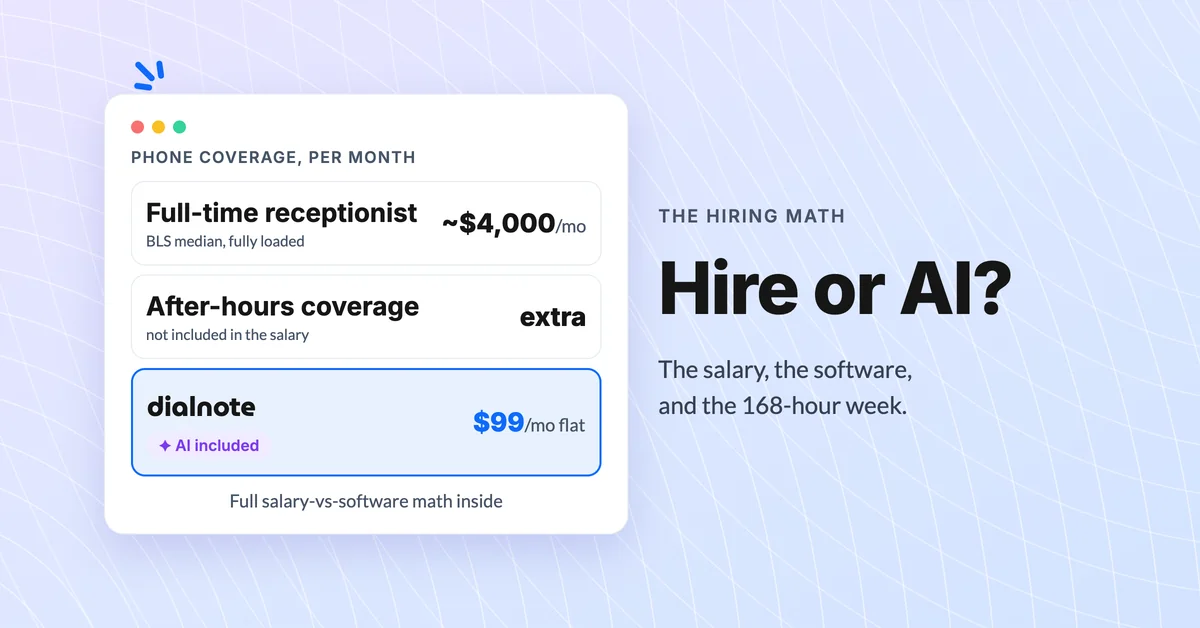
AI Receptionist vs Hiring: What Each Really Costs
Compare an AI receptionist vs hiring a receptionist: salary and benefits math, coverage hours, and what each option really costs over a year.
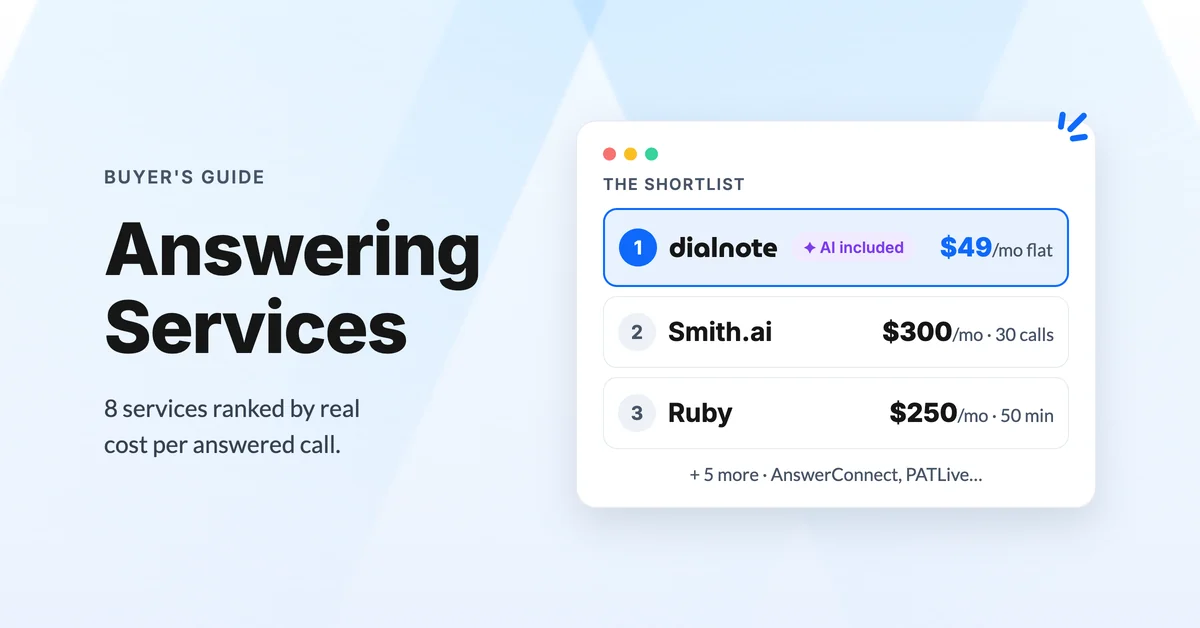
Best Answering Service for Small Business [2026]
Compare the best answering services for small business in 2026: live, AI, and hybrid options ranked by real cost per call and coverage.
Best Virtual Receptionist Services Ranked [2026]
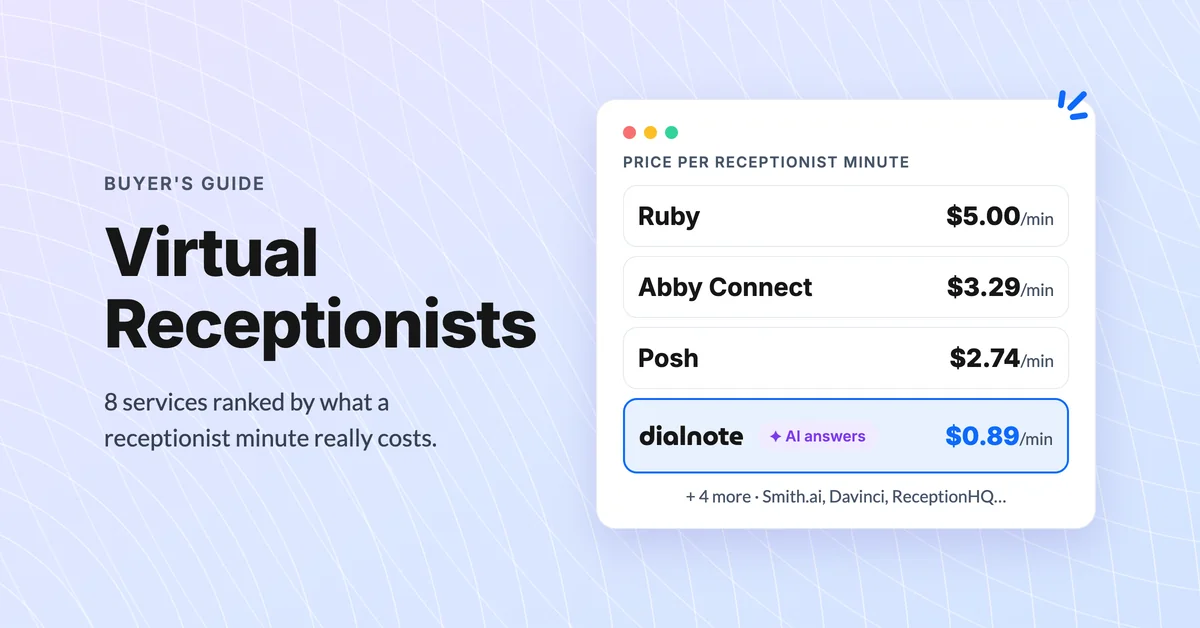
Compare the best virtual receptionist services of 2026 by price per receptionist minute, booking depth, and coverage, including the AI option.