How Can AI Receptionist Help Grow Your Insurance Agency?
Insurance agencies miss 39% of inbound calls, according to Invoca research. And 85% of those callers won't try again. An AI receptionist for insurance makes sure you don't lose that chance.
Picture this. You run an independent P&C insurance agency with three agents. It's 2 PM on a Tuesday, and you're sitting across the table from a couple reviewing their homeowner's policy. Your phone buzzes twice. Then a third time.
When the meeting wraps, you check your missed calls. One was a driver who just bought a new car and needs a quote today. Another was a small business owner asking about commercial liability. The third didn't leave a voicemail. Gone.
Sound familiar?
Insurance is a relationship business, but those relationships start with a phone call. If nobody picks up, the prospect moves on to the next agency on Google. They usually find one within seconds.
This pattern is picking up steam as AI tools move deeper into the insurance industry. According to McKinsey, a third of insurers already have AI use cases in production, and that number is climbing fast.
TL;DR:
- Insurance agencies miss about 39% of inbound calls, and 85% of those callers never call back, so every unanswered ring is lost revenue.
- An AI receptionist for insurance agencies answers calls 24/7, qualifies prospects, books consultations, and sends you a written summary of every call.
- It qualifies leads before you call back, so you spend your time on serious buyers instead of price shoppers or existing-client billing questions.
- AI receptionist tools typically cost $50 to $300 per month, versus $35,000 to $45,000 a year for a full-time receptionist.
- Look for natural conversation, insurance-specific training, calendar and AMS sync, instant lead alerts, and flat monthly pricing.
Why do insurance agencies miss so many calls?
Insurance agents aren't sitting at their desks waiting for the phone to ring. They're meeting clients at kitchen tables, reviewing claims paperwork, handling renewals, and chasing underwriters for quotes. The phone rings at the worst moments.
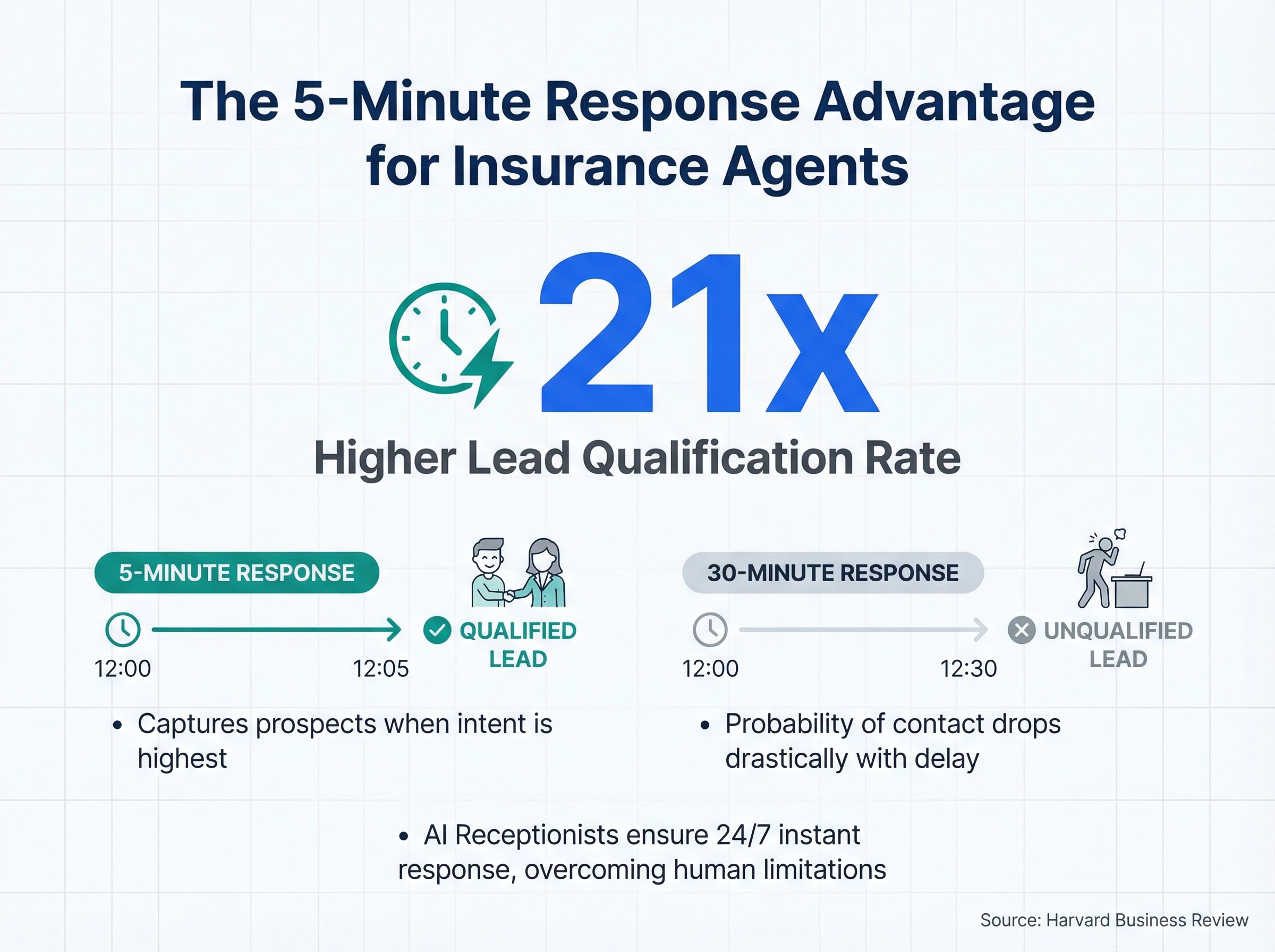
And the timing of those calls matters a lot. According to research cited in the Harvard Business Review, responding to a lead within 5 minutes makes you 21 times more likely to qualify them compared to waiting just 30 minutes. Most insurance agents can't hit that window when they're deep in a policy review with an existing client.
Voicemail doesn't solve the problem either. Most callers hang up when they hear a recording. They need a quote before their new car registration expires tomorrow, or they're comparing three agencies during their lunch break. If you don't answer, they move on.
The financial damage adds up quickly. If your agency misses just five new business calls per week, and each represents an average annual premium of $2,000, that's $520,000 in potential revenue lost over a year. According to Invoca, about 22% of insurance call leads convert. Even at that rate, you're still looking at over $114,000 walking out the door.
It's not just new business either. Existing policyholders call about claims, billing questions, and policy changes. When those calls go unanswered, you chip away at trust that took years to build. Renewals and referrals depend on being reachable, and both dry up when clients feel ignored.
Small agencies feel this pressure the most. Hiring a full-time receptionist costs $35,000-$45,000 a year plus benefits. A two-person agency can't justify that expense when margins are already tight. But leaving the phone unanswered isn't an option either.
So what do you do when you're in a client meeting, but every missed call could be your next $5,000 annual policy?
What does an AI receptionist do for insurance agencies?
An AI receptionist answers your agency's calls in real time, 24 hours a day, 7 days a week. It's not a basic voicemail or a clunky phone tree. Modern AI receptionists carry on natural conversations, ask qualifying questions, and take action based on what callers need.
For insurance specifically, here's what a well-trained AI receptionist handles:
- Answer coverage questions about policy types, deductibles, and what your agency offers
- Qualify prospects by asking about the type of insurance they need, timeline, current coverage, and budget range
- Schedule consultations directly on your calendar without any back-and-forth
- Route urgent calls to your cell based on rules you set (like transferring active claims immediately)
- Capture lead details including contact info, insurance type needed, and current carrier
- Send instant summaries via text or email so you know exactly what happened on every call
But can AI really handle something as personal as an insurance policy? Actually, yes. Today's voice AI is surprisingly good at natural conversations. Callers often don't realize they're talking to an AI, especially when the system is trained on your agency's specific products and common client questions.
Insurance clients care about getting quick, accurate answers. They don't care whether those answers come from a person or an AI, as long as they get what they need without sitting on hold or leaving voicemail.
If you're curious about how AI phone systems work more broadly, we've covered the fundamentals in our guide to AI voice assistants for small business.
How does an AI receptionist qualify insurance leads?
Not every call is a hot prospect. Some are price shoppers, some are existing clients with billing questions, and some are ready to bind a policy today. A good AI receptionist sorts through these automatically so you can focus your limited time on the callers who matter most.
Here's a step-by-step approach that works well for most insurance agencies:
Step 1: Greet and identify the caller's intent. The AI picks up and asks what they're looking for. Auto insurance? A homeowner's policy? Commercial coverage? Help with a claim?
Each path triggers different qualifying questions. Here's what a typical new business call sounds like:
Caller: "Hi, I need a quote for auto insurance. I just bought a new car."
AI receptionist: "I'd be happy to help get you started with a quote. Can I ask a few quick questions so we can match you with the right agent?"
Caller: "Sure."
AI receptionist: "Great. What type of vehicle did you purchase? And do you currently have auto insurance with another carrier?"
The conversation flows naturally. The AI gathers the info you need without sounding like a survey. Callers stay engaged because they're getting real answers about coverage they care about, not being sent through a phone tree.
Step 2: Ask qualifying questions. For auto prospects, the AI asks about vehicle type, driving history, current coverage, and when they need the policy to start. For homeowners, it asks about property value, location, and bundling interest. For commercial clients, it asks about business type, number of employees, and coverage needs. These aren't generic questions. They're the same ones a sharp CSR at a top agency would ask.
Step 3: Score and route. Hot leads (needs coverage this week, specific vehicle or property details in hand) get flagged right away. You get a text with their details and can call back within minutes. Price shoppers comparing five agencies get logged for your follow-up queue. Existing clients with billing questions get routed to your service team.
Step 4: Send a summary. After every call, you get a written summary with the caller's name, number, intent, and qualifying details. No more cryptic voicemails or trying to remember what that person from Tuesday wanted.
The data isn't entirely clear on how much AI phone systems affect close rates for insurance agencies specifically, but the early signs look promising. Agents who respond faster to leads consistently outperform those who don't. An AI receptionist makes fast response the default, not the exception.
Your AI receptionist also works hand-in-hand with call routing. You set the rules. Someone calling about an active claim? Transfer to the claims team right away. New quote request for commercial insurance? Route to your commercial lines specialist. This kind of smart routing means you only get interrupted for calls that truly need your attention.
How different insurance agencies use AI receptionists
AI phone answering works for insurance agencies of all sizes. The way you use it just depends on the structure of your operation.
Independent agents get the most dramatic benefit. You're the entire agency. When you're at a client's home walking through their coverage, in a continuing education class, or driving between appointments, your AI receptionist becomes your front desk. It catches every lead, qualifies them, and sends you a text summary. You call back the hot ones during your next break. No more choosing between being present with a client and answering the phone.
This also means you can take on more clients without burning out. One of the biggest limits for solo agents is the number of calls they can handle in a day. When the AI takes the first pass on every inbound call, you multiply your capacity without hiring anyone.
Small agencies (2-5 agents) use AI receptionists to split incoming leads fairly and route them to the right person. A caller asking about personal auto goes to your personal lines agent. A business owner asking about worker's comp goes to your commercial specialist. The AI handles the initial screening and sends each agent only the leads that match their focus.
It also takes pressure off your CSRs. Instead of spending half their day answering routine calls about office hours, payment methods, or policy status, your service team can focus on claims processing and renewals that actually need a human touch.
Multi-line agencies handle a wide variety of call types. Life insurance questions, property claims, commercial renewals, new auto quotes. An AI receptionist triages these automatically, routing each call to the right department or agent. This saves hours of phone time every week and means callers get to the right person faster.
Agencies in disaster-prone areas face massive call surges after storms, floods, or fires. When 200 policyholders call in two days to report claims, your four-person team can't keep up. An AI receptionist handles the overflow, collects initial claim details, and prioritizes calls by severity. That means the family whose house flooded gets through before someone calling about a cracked windshield.
Agencies expanding to new markets also benefit. When you appoint with a new carrier or start marketing in a new zip code, call volume spikes before you're staffed for it. An AI receptionist handles the surge and gives you time to hire at the right pace.
No matter the agency size, the core value is the same: you stop missing calls, and you stop wasting time on calls that don't move the needle.
5 ways an AI receptionist grows your insurance business
An AI answering service for insurance agents does more than just pick up the phone. Here are five specific ways it puts money back in your agency.
1. You stop losing after-hours prospects
Insurance doesn't follow a 9-to-5 schedule. People think about their coverage when something happens. A fender bender at 7 PM. A pipe bursting in the basement on a Saturday. A new business owner researching liability insurance at midnight.
If nobody answers, they'll call another agency that picks up. An AI receptionist catches every call, day or night. You wake up Monday morning to a list of qualified leads and confirmed consultations instead of missed-call notifications.
This matters for claims too. When a policyholder calls at 11 PM because a tree fell on their roof, getting a professional response that collects the details and sets expectations builds enormous trust. Getting voicemail? That's how you lose a client at renewal time.
And it's not just emergencies. People shopping for insurance often do their research at night. A young couple buying their first home might be comparing agencies at 9 PM after putting the kids to bed. If your AI picks up and walks them through a few questions about their property, you've got a warm lead waiting in your inbox by morning. That couple isn't calling back the agency that sent them to voicemail.
2. You qualify leads before you call back
Without an AI receptionist, you call back every missed number blindly. Some are worth your time. Plenty aren't. You spend 20 minutes on the phone with someone who just wants the cheapest possible minimum coverage, while a small business owner ready to bundle three policies sits in your voicemail.
With AI handling the initial conversation, you already know who's serious before you pick up the phone. Business owner looking for commercial, auto, and worker's comp? Call them first. Someone comparing five agencies on price alone? Follow up by email with a quote.
This completely changes how you spend your day. Instead of playing phone tag with everyone, you focus your energy on the prospects most likely to become long-term clients with multiple policies.
3. You never double-book or forget a consultation
AI systems that connect to your calendar schedule consultations directly. No more texting back and forth to find a time. The prospect gets a confirmed slot, and you get a calendar notification with all their details attached.
Double-booking a consultation wastes the prospect's time and makes your agency look disorganized. It's the kind of mistake that kills a sale before it starts. Some AI receptionists also send automated confirmation texts, which cuts no-show rates and lets you plan your day more effectively. You can even set buffer time between appointments so you're never rushing from one meeting to the next.
4. You look bigger and more professional
Honestly? Most insurance agencies don't need a full-time receptionist anymore. But they absolutely need someone answering their phone professionally at all times.
An AI receptionist gives a two-person agency the same polished phone presence as a large brokerage with a front desk team. When a business owner calls to discuss a $50,000 commercial policy, getting a professional greeting and thoughtful questions builds confidence. Getting voicemail three times doesn't.
This also helps with referrals. When a policyholder sends their neighbor your way, they're putting their own reputation on the line. If that neighbor gets a professional, knowledgeable response, it reflects well on everyone. If they get voicemail, your referral pipeline dries up fast.
5. You save serious money compared to hiring
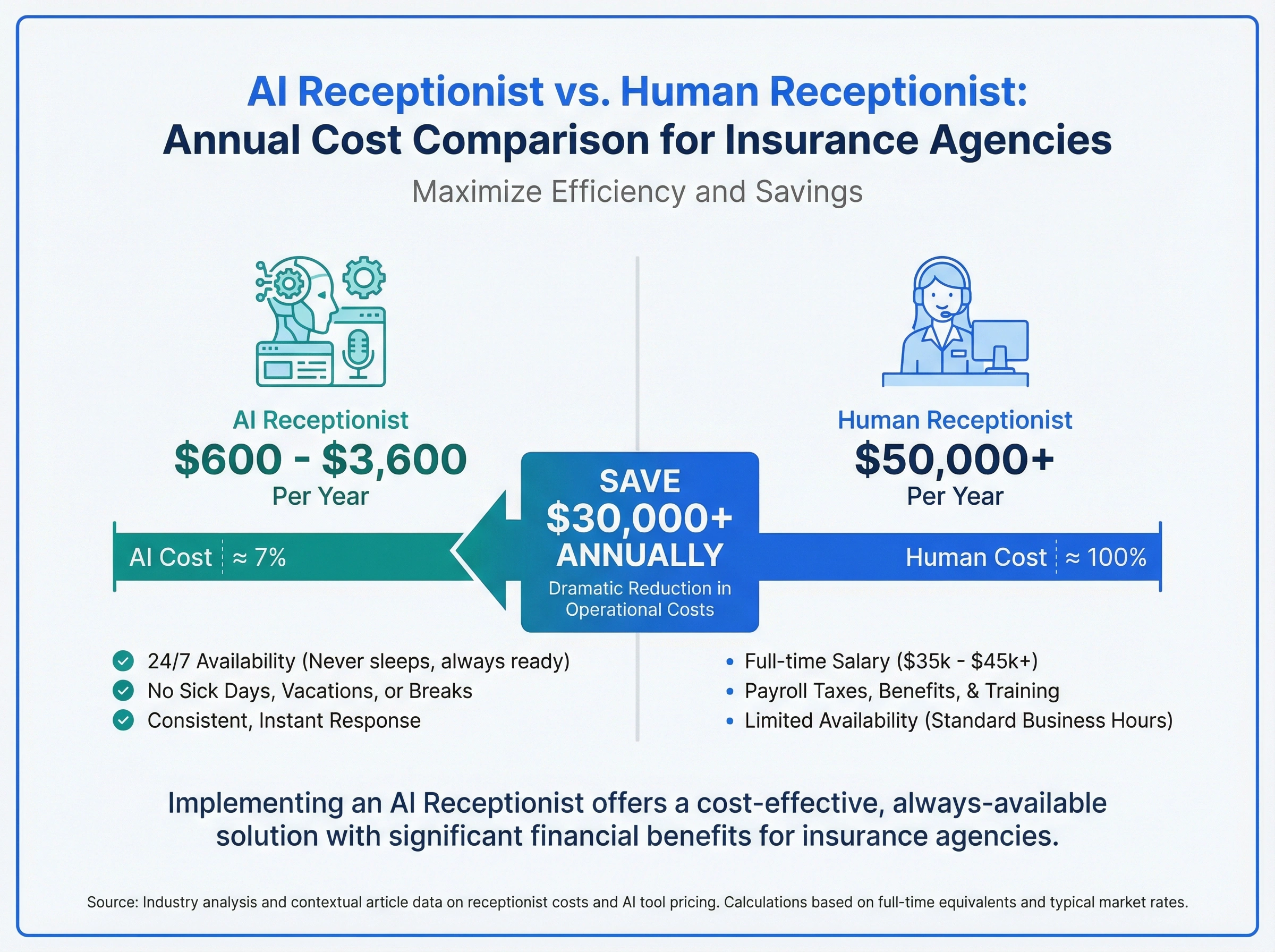
A full-time receptionist costs $35,000-$45,000 per year. Add payroll taxes, benefits, and training, and you're easily past $50,000. AI receptionist tools typically run $50-$300 per month. That's a savings of at least $30,000 per year, and the AI never takes sick days, vacations, or lunch breaks.
We've done a full cost breakdown of AI answering services if you want the detailed numbers. The same math works for other appointment-heavy businesses too, from salons to clinics.
What to look for in an AI receptionist for insurance
Not all AI phone tools are built for insurance. Here's what actually matters when you're choosing one.
Natural conversation ability. The AI should sound human, not robotic. Test it by calling and asking about a specific policy type. If it stumbles or gives a generic answer, keep looking.
Insurance-specific training. Generic AI that can't explain the difference between comprehensive and collision coverage isn't useful. The best tools let you upload your product details, common client questions, and agency-specific information so the AI gives accurate answers.
Calendar integration. Your AI receptionist should plug directly into Google Calendar, Outlook, or whatever scheduling tool you use. If it just takes a message and expects you to manually schedule later, it's barely better than voicemail.
CRM and AMS sync. Leads should flow automatically into your agency management system. Whether you use EZLynx, Applied Epic, HawkSoft, or something else, manual data entry wastes time and leads fall through the cracks. The AI should log every interaction without you touching anything.
Instant notifications. You need to know about hot leads right away. Look for tools that send text or email alerts within seconds of a call ending. A daily summary email at 5 PM doesn't help when a business owner called at 10 AM.
Call transfer options. Sometimes a caller needs to talk to you now. The AI should transfer calls to your cell based on rules you define. Active claim emergency? Transfer immediately. General quote request? Let the AI handle it.
Compliance awareness. Insurance agencies handle sensitive personal and financial information. Make sure any AI tool you use takes data privacy seriously and follows industry standards for protecting client data. Ask about data encryption, storage policies, and whether the provider has experience working with financial services companies. This isn't something you want to learn the hard way.
Pricing transparency. Watch out for per-minute billing that spikes during busy months. The best providers charge a flat monthly rate, so your costs stay predictable even when call volume jumps after a local storm or during open enrollment season.
If you're in the process of choosing a business phone system, look for one that includes AI receptionist features built in rather than adding a separate tool. An integrated system means fewer things that can break.
A complete phone system for your insurance agency
Even if you're not ready for an AI receptionist today, a modern business phone system can change how your insurance agency runs day to day. The phone is still the primary way clients reach you. Getting it right matters.
Here's what a platform like dialnote gives insurance agents and agencies out of the box:
A real business number on your personal phone. You don't need a second device or a landline at an office you rarely use. dialnote's mobile app puts your business number on the phone you already carry. Clients see your professional caller ID, not your personal cell. And when the day is done, turn on Do Not Disturb and calls go straight to voicemail without ringing your phone.
Shared numbers for your team. Got a main office line? With shared numbers, any team member can pick up incoming calls from that number. If your office manager is out, the call rolls to another agent. No more single points of failure where one person being unavailable means a lost lead.
Smart call routing that fits your schedule. Set up simple rules: during client meetings, send calls to voicemail or your assistant. After hours, let the AI receptionist handle it. Route personal lines calls to one agent and commercial inquiries to another. You control who gets what and when. Call routing is what turns a basic phone line into a real business tool.

Call analytics you'll actually use. See exactly how many calls you get each day, what times are busiest, and how many you're missing. This data helps you figure out if your marketing is generating calls, whether you need more staff during certain hours, or if most new business leads come in after 5 PM. The analytics dashboard makes patterns visible at a glance.
CRM integration. When a call comes in, dialnote can log it directly in your agency management system. No more scribbling names on sticky notes and forgetting to enter them later. Every call, every lead, every follow-up gets tracked automatically. This also means your marketing data stays clean. You can actually track which campaigns drive phone calls and which calls convert to policies.
Check out our full guide to dialnote's CRM integration for details on how it works with popular platforms.
Call recording and transcription. Can't remember what a prospect said about their coverage needs? Go back and listen. Need to recall the details of a pricing discussion with a commercial client? You've got the call recording. AI-powered call summaries give you the key points without replaying the whole conversation.
IVR and voicemail transcription. Even when calls go to voicemail (it happens), dialnote transcribes them into text automatically. You can scan 10 voicemails in 30 seconds instead of listening to each one. The transcription includes caller intent, so you know which messages need an immediate callback and which can wait.
The AI receptionist is powerful on its own, but it's just one piece of a system that makes your entire insurance agency phone operation sharper. Start with a business number and call routing, then add the AI receptionist when you're ready.
Start catching every insurance lead with AI
Missing calls isn't just an annoyance for insurance agencies. It's lost revenue. Every unanswered ring could be a prospect ready to bind a policy, and once they call another agency, you rarely get a second chance.
An AI receptionist fixes this without blowing up your budget. It answers every call, qualifies every lead, and makes sure you spend your time with the people most likely to become long-term policyholders.
The agencies that pull ahead aren't always the ones with the biggest marketing budgets or the most carriers. They're the ones who answer every call and follow up fast. An AI receptionist gives you that edge without adding headcount.
If you're an independent agent or small agency looking to stop leaving money on the table, dialnote offers an AI-powered phone system built for exactly this, with flat monthly pricing that stays predictable as your call volume grows. It picks up calls 24/7, qualifies prospects with smart questions, sends you detailed summaries, and connects to your calendar so consultations get booked automatically.
Your next $10,000 policy could be one missed call away. Don't let it ring out.
Frequently asked questions
Most AI receptionist tools run $50-$300 per month, compared to $35,000-$45,000 per year for a full-time receptionist. You'll save $30,000+ annually while getting 24/7 coverage.
Yes. A good AI receptionist collects claim details, prioritizes by severity, and routes urgent calls to your team right away. You get a full summary for follow-up.
Modern AI receptionists sound natural and conversational. Most callers don't notice, especially when the system is trained on your agency's products and common questions.
Most AI receptionist tools connect with popular AMS platforms like EZLynx, Applied Epic, and HawkSoft. Calls get logged automatically without manual data entry.
You can typically go live in under a day. Upload your agency info, set routing rules, connect your calendar, and you're running. No developers needed.

Written by
Upasana Sahu
Senior Digital Marketing Specialist, SmartReach.io
Upasana Sahu is a Senior Digital Marketing Specialist at SmartReach.io with over 10 years of experience in content marketing, SEO, and digital strategy. She manages end-to-end blog operations, from content creation and on-page/off-page SEO to traffic...
Upasana Sahu is a Senior Digital Marketing Specialist at SmartReach.io with over 10 years of experience in content marketing, SEO, and digital strategy. She manages end-to-end blog operations, from content creation and on-page/off-page SEO to traffic...
Related Articles
Why do real estate agents need an AI receptionist?
Find out how an AI receptionist helps real estate agents catch every call, qualify buyers, and book more showings around the clock.
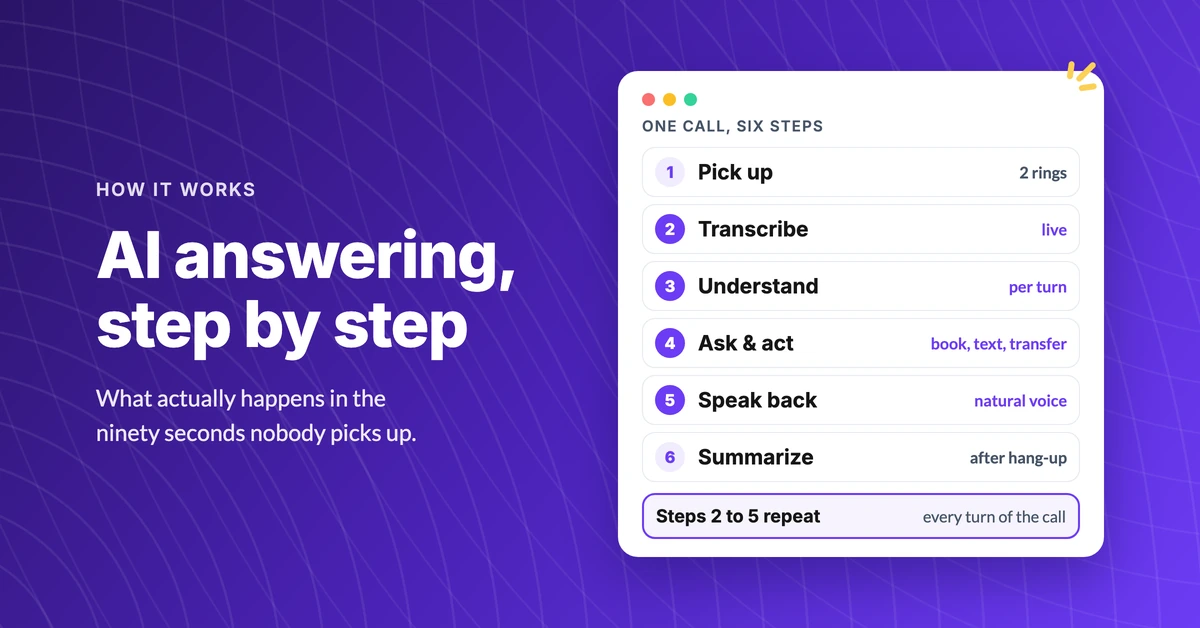
How Does an AI Answering Service Actually Work?
See how an AI answering service works, step by step: what happens in the first four seconds, what it can do on the call, and where it hands off to a human.
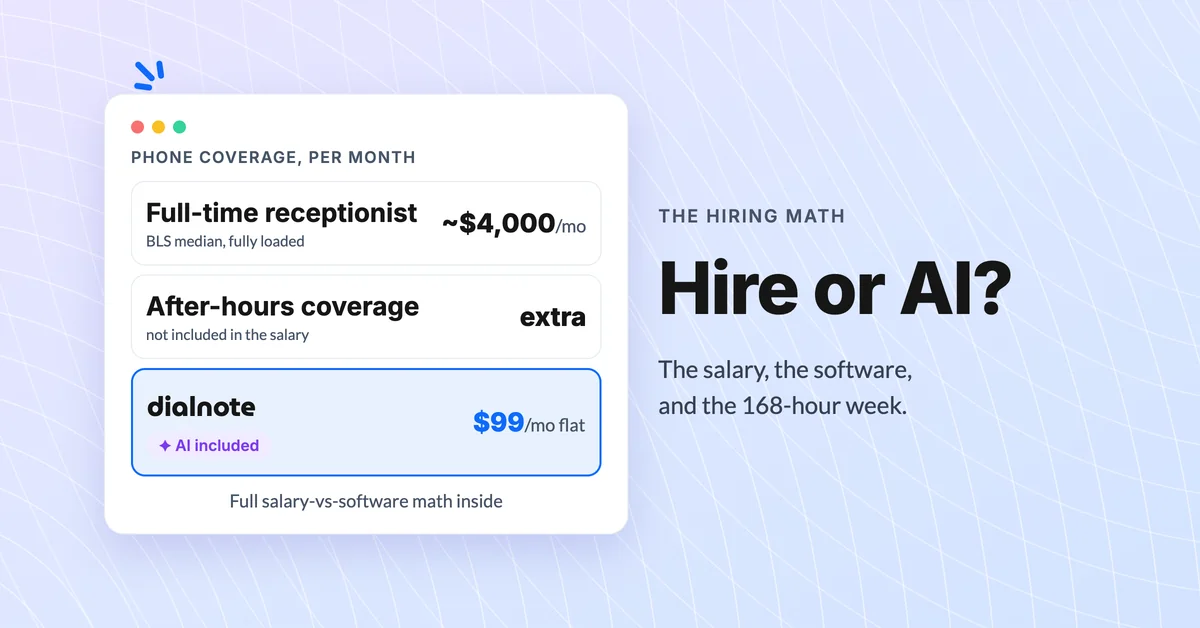
AI Receptionist vs Hiring: What Each Really Costs
Compare an AI receptionist vs hiring a receptionist: salary and benefits math, coverage hours, and what each option really costs over a year.