Why do real estate agents need an AI receptionist?
85% of callers won't try again if you don't pick up. In real estate, that missed call could be a buyer ready to put in an offer. An AI receptionist for real estate makes sure you don't lose that chance.
You're a solo agent showing a three-bedroom colonial across town. Your phone buzzes four times in two hours, but you can't step away mid-tour.
When you finally check, two of those calls were buyers who found your listing on Zillow. One already called a competing agent and scheduled a showing. The other didn't leave a voicemail.
Real estate runs on relationships, but those relationships start with a phone call. If nobody picks up, the relationship never begins.
That's why AI phone systems are becoming a real difference-maker for agents and brokerages of all sizes. The trend is picking up speed. According to NAR's latest technology survey, one in five agents already uses AI tools daily, and that number keeps climbing.
TL;DR:
- An AI receptionist for real estate agents answers every call 24/7, qualifies buyers, and books showings, so leads stop slipping to voicemail while you're at a showing.
- Speed wins deals: responding to a lead within 5 minutes makes you 21 times more likely to qualify them (Harvard Business Review), and an AI receptionist makes that fast response automatic.
- AI receptionist tools run about $50-$300 per month versus $35,000-$45,000 a year for a full-time human receptionist, a savings of at least $30,000 annually.
- A good AI receptionist connects to your calendar and CRM, routes pre-approved buyers straight to your cell, and sends a text summary after every call.
Why do real estate agents miss so many calls?
Real estate agents aren't sitting behind desks. They're driving between showings, walking open houses, meeting clients at the title office, and negotiating deals over coffee. The phone rings at the worst possible moments.
According to research cited in the Harvard Business Review, responding to a lead within 5 minutes makes you 21 times more likely to qualify them compared to waiting just 30 minutes. That's a massive gap. And most agents can't hit that 5-minute window because they're physically busy with another client.
Traditional voicemail doesn't solve the problem either. Most callers hang up when they hear a recording. They're browsing listings on their lunch break or during their commute.
If you don't pick up, they tap the next agent on the list. By the time you listen to your voicemails at 7 PM, the opportunity is long gone.
The financial impact adds up fast. NAR data shows the median home sale price sits around $400,000. At a 2.5-3% commission, one lost deal costs you $10,000 or more. If you're missing even two or three qualified calls per week, that's potentially $50,000-$100,000 in annual commissions walking out the door.
And it's not just new business you're losing. Existing clients call too. A past buyer wants to refer their coworker. A seller needs an update on their listing. When those calls go unanswered, it chips away at the trust you've built. Repeat business and referrals are the backbone of a sustainable real estate practice, and both depend on being reachable.
Small teams feel this even more. You can't hire a full-time receptionist if you're a solo agent or a two-person team. A human receptionist costs $35,000-$45,000 a year plus benefits. The economics just don't work until your brokerage is large enough to split that cost across many agents.

So what do you do when you physically can't answer the phone, but every missed call might be your next deal?
What does an AI receptionist do for real estate?
An AI receptionist answers your business calls in real time, 24 hours a day, 7 days a week. It's not a basic voicemail or a "press 1 for sales" phone tree. Modern AI receptionists carry on natural conversations, ask qualifying questions, and take action based on what callers say.
For real estate specifically, here's what a well-trained AI receptionist handles:
- Answer property questions about your listings, pricing, square footage, and availability
- Qualify buyers by asking about budget range, timeline, pre-approval status, and neighborhood preferences
- Schedule showings directly on your calendar without any back-and-forth
- Route urgent calls to your cell based on rules you set (like transferring pre-approved buyers immediately)
- Capture seller leads by asking about property type, condition, and motivation to sell
- Send instant summaries via text or email so you know exactly what happened on every call
But can AI really handle something as personal as a home search? Actually, yes. Today's voice AI is surprisingly good at natural conversations. Callers often don't realize they're talking to an AI, especially when the system is trained on your specific listings and the questions buyers commonly ask.
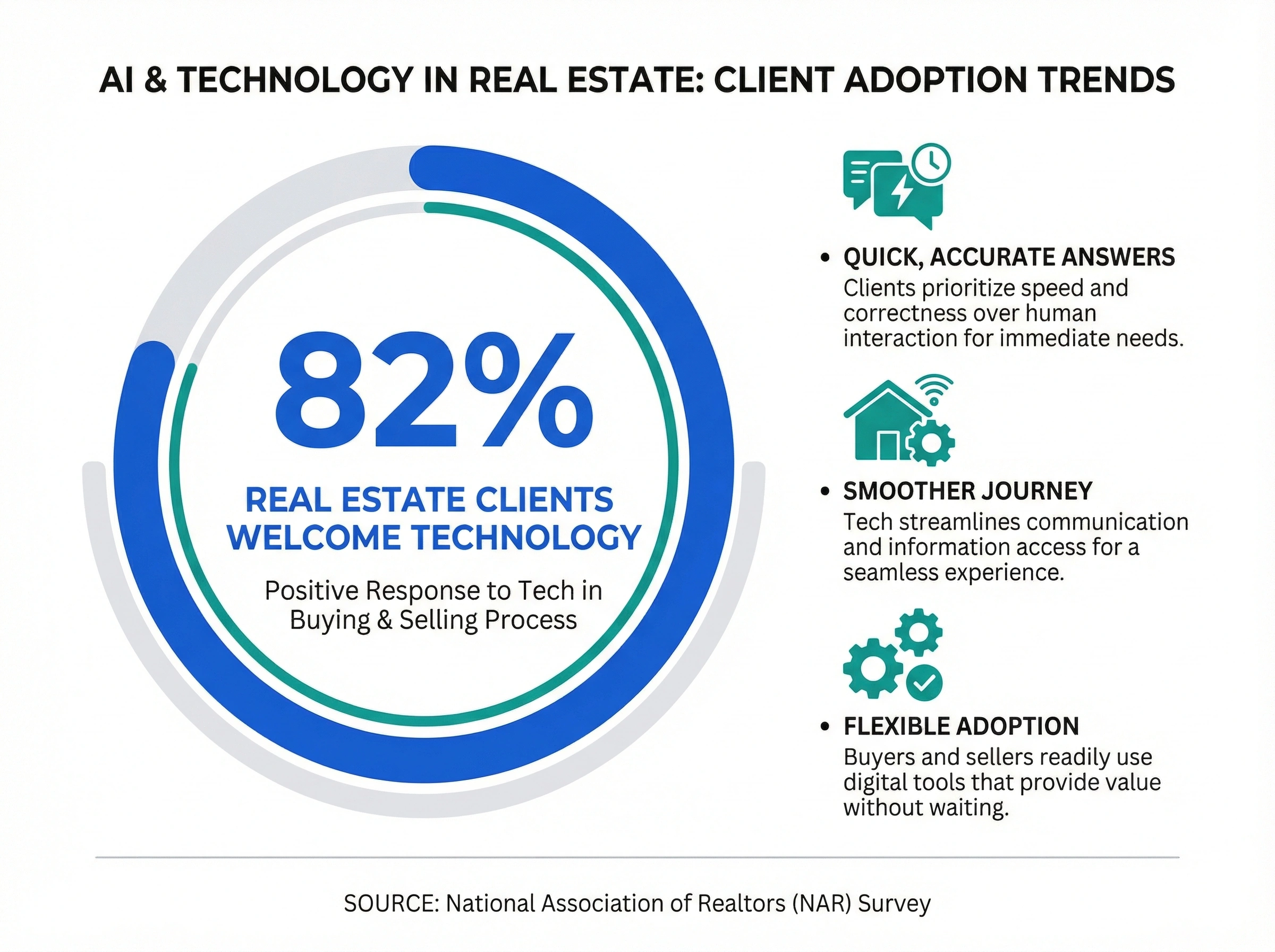
NAR's survey found that 82% of real estate clients respond positively to technology in the buying and selling process. Buyers today want quick, accurate answers. They don't care whether those answers come from a person or an AI, as long as they get what they need without waiting.
If you're curious about how AI phone systems work more broadly, we've covered the fundamentals in our guide to AI voice assistants for small business.
How an AI receptionist qualifies real estate leads
Not every call is a hot lead. Some are casual browsers, some are solicitors, and some are genuinely ready to buy today. A good AI receptionist sorts through these automatically so you can focus your limited time on the callers who matter most.
Here's a step-by-step approach that works well for most real estate teams:
Step 1: Greet and identify the caller's intent. The AI picks up and asks what they're looking for. A specific listing? General information about a neighborhood? Selling their home?
Each path triggers different qualifying questions. Here's what a typical buyer call sounds like:
Caller: "Hi, I saw the listing on Maple Drive. Is it still available?"
AI receptionist: "Yes, that property is still on the market. I'd love to help you schedule a tour. Can I ask a few quick questions so we can match you with the right agent?"
Caller: "Sure."
AI receptionist: "Great. Are you currently working with a buyer's agent? And have you been pre-approved for a mortgage?"
The conversation flows naturally. The AI gathers the info you need without sounding like a survey. Callers stay engaged because they're getting real answers about a property they care about, not being sent through a phone tree.
Step 2: Ask qualifying questions. For buyers, the AI asks about budget range, timeline, whether they're pre-approved for a mortgage, and what areas they prefer. For sellers, it asks about property type, approximate condition, and how soon they want to list. These aren't generic questions. They're the same ones a sharp receptionist at a top brokerage would ask.
Step 3: Score and route. Hot leads (pre-approved buyer looking to move within 30 days) get flagged right away. You get a text with their details and can call back within minutes. Casual browsers get logged for your next follow-up session. Solicitors get politely handled without wasting your time.
Step 4: Send a summary. After every call, you get a written summary with the caller's name, number, intent, and qualifying details. No more cryptic voicemails or trying to remember what that person from Tuesday wanted.
The data isn't entirely clear on how much AI phone systems affect close rates in real estate specifically, but the early signs look promising. Agents who respond faster to leads consistently outperform those who don't. An AI receptionist makes fast response the default, not the exception.
Your virtual receptionist for real estate also works hand-in-hand with call routing. You set the rules. Pre-approved buyers calling about a specific listing? Transfer to your cell immediately.
General inquiry about the market? Let the AI handle it and send you a summary. This kind of smart routing means you only get interrupted for calls that truly need your attention.
How different real estate teams use AI receptionists
AI phone answering works for real estate agents at every level. The way you use it just depends on the size and type of your operation.
Solo agents get the most dramatic benefit. You're the entire business. When you're at a showing, at closing, or driving between appointments, your AI receptionist becomes your front desk. It catches every lead, qualifies them, and sends you a text summary. You call back the hot ones during your next break. No more choosing between being present with a client and answering the phone.
Small brokerage teams (3-10 agents) use AI receptionists to split incoming leads fairly and route them to the right agent. A buyer calling about a condo in the north side goes to the agent who specializes in that area. A seller inquiry goes to your listing specialist. The AI handles the initial screening and sends each agent only the leads that match their focus.
Property management companies handle a high volume of calls from tenants, owners, and prospective renters. AI receptionists can triage maintenance requests (urgent vs. routine), answer common questions about lease terms or pet policies, and route calls to the right property manager. This saves hours of phone time every week and keeps tenants happy because someone always picks up.
Luxury and investment-focused agents use AI receptionists to pre-screen inquiries before spending their time. When you're selling $2M+ homes, your time is extremely valuable. The AI filters out casual browsers and connects you only with qualified buyers who have the financial capacity to move forward.
Teams expanding to new markets also benefit. When you open a second office or start covering a new zip code, call volume spikes before you have staff in place. An AI receptionist handles the overflow and gives you time to scale your team at the right pace.
No matter the team size, the core value is the same: you stop missing calls, and you stop wasting time on calls that don't move the needle.
5 ways an AI receptionist grows your real estate business
An AI answering service for realtors does more than just pick up the phone. Here are five specific ways it puts money back in your pocket.
1. You stop losing after-hours leads
Real estate doesn't follow a 9-to-5 schedule. Buyers browse listings at night, on weekends, and during lunch breaks. A family spots their dream home on Redfin at 10 PM and wants to schedule a tour. If nobody answers, they'll call the listing agent's competitor by morning.
An AI receptionist picks up every time. Whether it's Saturday night or Tuesday at midnight, callers get a professional response and a clear next step.
You wake up to a list of qualified leads and confirmed showings instead of missed-call notifications. That Monday morning feeling is a lot better when your calendar already has three showings booked from the weekend.
And it's not just buyer calls. Sellers searching for a listing agent often call multiple offices in a single evening. The agent who answers first typically gets the appointment. When your AI picks up at 9:30 PM and books a listing consultation for the next day, that's a seller who might never have called back if they'd gotten voicemail.
2. You qualify leads before you call back
Without an AI receptionist, you call back every missed number blindly. Some are worth your time. Plenty aren't. You spend 20 minutes on the phone with someone who's "just starting to look" and has no pre-approval, while a serious buyer's call sits in your voicemail.
With AI handling the initial conversation, you already know who's serious before you pick up the phone. Pre-approved buyer with a $500K budget looking in your area? Call them first. Casual browser who might buy in six months? Follow up by email.
This kind of real estate lead capture with AI completely changes how you spend your day. Instead of playing phone tag with everyone, you focus your energy on the 20% of leads that drive 80% of your closings.
It also helps with accountability. Every call gets logged, every lead gets tracked. When you review your weekly numbers, you can see exactly how many calls came in, how many converted to showings, and where leads are dropping off. That kind of visibility is hard to get when you're relying on memory and sticky notes.
3. You never double-book or forget a showing
AI systems that connect to your calendar can schedule showings directly. No more texting back and forth to find a time. No forgotten appointments. The buyer gets a confirmed slot, and you get a calendar notification with all the property details attached.
This matters more than you might think. Double-booking a showing wastes the buyer's time and makes you look disorganized. In a competitive market, that kind of mistake can cost you a client permanently. Some AI receptionists also send automated confirmation texts to the buyer, which cuts no-show rates and lets you plan your driving route for the day.
4. You look bigger and more professional
Honestly? Most real estate agents don't need a full-time human receptionist anymore. But they absolutely need someone answering their phone professionally at all times. An AI receptionist gives a solo agent the same polished phone presence as a large brokerage with a front desk team.
When a potential seller calls to discuss listing their $600,000 home, getting a professional greeting and thoughtful questions builds confidence. Getting voicemail, or worse, a personal cell phone ring that goes unanswered, doesn't.
This also helps with referrals. When a past client sends a friend your way, they're putting their own reputation on the line. If that friend calls and gets a professional, knowledgeable response, it reflects well on everyone. If they get voicemail three times, your referral pipeline dries up fast.
5. You save serious money compared to hiring
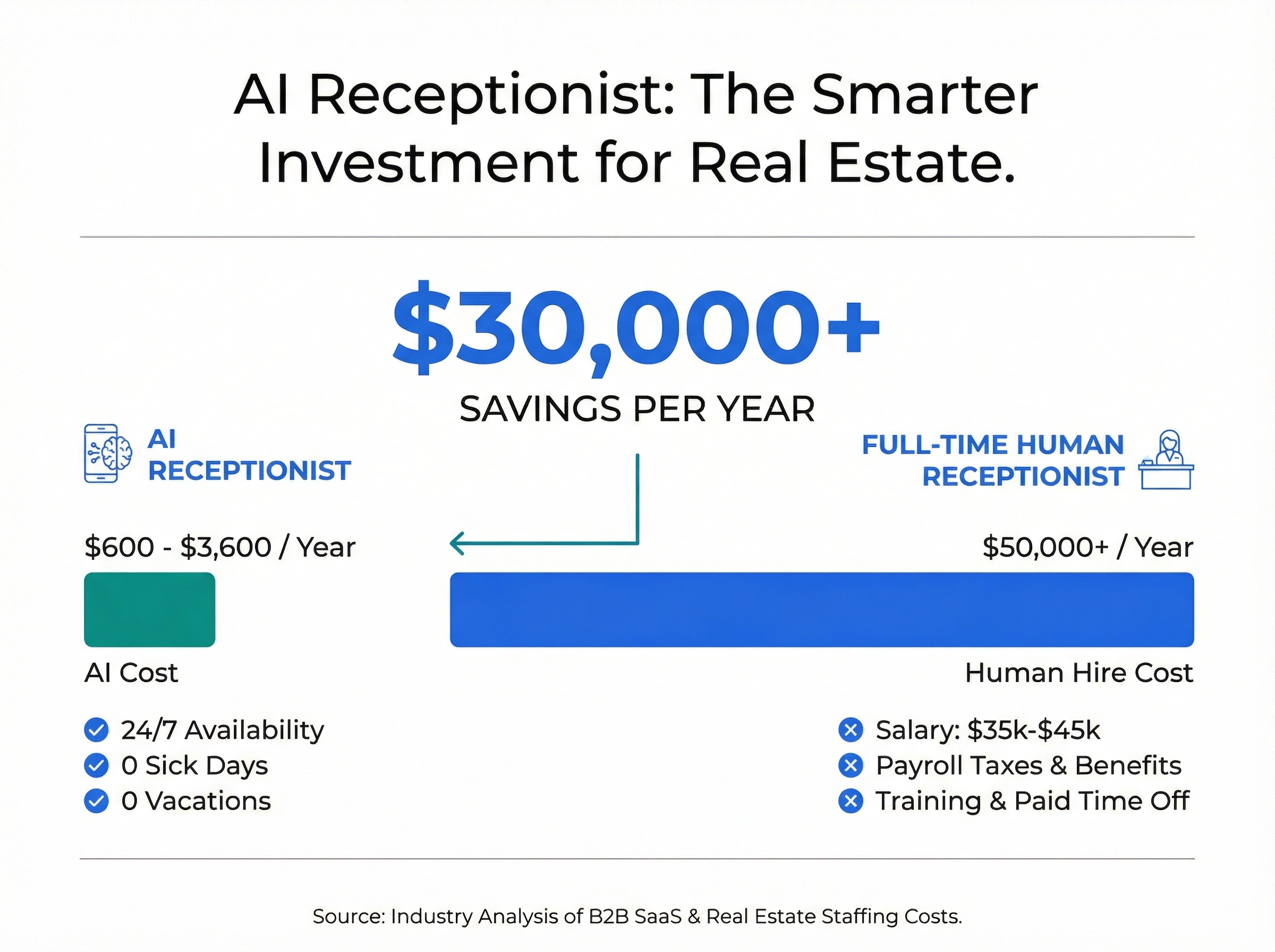
A full-time receptionist costs $35,000-$45,000 per year. Add payroll taxes, benefits, and training, and you're easily north of $50,000. AI receptionist tools typically run $50-$300 per month, and flat-rate options like dialnote's pricing plans keep that cost predictable. That's a savings of at least $30,000 per year, and the AI never takes sick days, vacations, or lunch breaks.
We've done a full cost breakdown of AI answering services if you want the detailed numbers.
What to look for in an AI receptionist for real estate
So what separates a good AI receptionist from one that frustrates your callers and makes you look bad? Not all AI phone tools are built for real estate. Here's what actually matters when you're choosing one.
Natural conversation ability. The AI should sound human, not robotic. Test it by calling yourself and asking a tricky question about one of your listings. If it stumbles or gives a generic answer, keep looking.
Real estate-specific training. Generic AI that can't answer "How many bedrooms does the house on Oak Street have?" isn't useful. The best tools let you upload your listings, neighborhood details, and common buyer questions so the AI gives specific, accurate answers.
Calendar integration. Your AI receptionist should plug directly into Google Calendar, Outlook, or whatever scheduling tool you use. If it just takes a message and expects you to manually book the showing later, it's barely better than voicemail.
CRM sync. Leads should flow automatically into your CRM. Whether you use Follow Up Boss, kvCORE, or something else, manual data entry wastes time and leads fall through the cracks. The AI should log every interaction without you touching anything.
Instant notifications. You need to know about hot leads right away. Look for tools that send text or email alerts within seconds of a call ending. A daily summary email at 5 PM doesn't help when a pre-approved buyer called at 10 AM.
Call transfer options. Sometimes a caller needs to talk to you now. The AI should transfer calls to your cell based on rules you define.
Pre-approved buyer asking about your new listing? Transfer immediately. Someone asking about market trends in general? Let the AI handle it.
Multilingual support. Depending on your market, you might need an AI that handles calls in Spanish or other languages. In diverse metro areas like Miami, Houston, or Los Angeles, this can be a major advantage.
Pricing transparency. Watch out for per-minute billing that spikes during busy months. The best AI receptionist providers charge a flat monthly rate, so your costs stay predictable even when call volume jumps during spring selling season.
Setup time. You shouldn't need weeks of configuration. Look for providers that let you go live in a day. Upload your listings, set your hours and routing rules, and you're running. If onboarding takes longer than a week, that's a red flag.
If you're in the process of choosing a business phone system, look for one that includes AI receptionist features built in rather than bolting on a separate tool. An integrated system means fewer moving parts and less chance of something breaking.
Beyond the AI receptionist: a full phone system for real estate
Even if you're not ready for an AI receptionist today, a modern phone system for real estate agents can change how your practice runs day to day. The phone is still the primary way clients reach you. Getting it right matters.
Here's what a platform like dialnote gives real estate agents and teams out of the box:
A real business number on your personal phone. You don't need a second device or a landline at an office you rarely visit. dialnote's mobile app puts your business number on the phone you already carry.
Clients see your professional caller ID, not your personal cell. And when the day is done, turn on Do Not Disturb and calls go straight to voicemail without ringing your phone.
Shared numbers for your team. Got a main office line? With shared numbers, any team member can pick up incoming calls from that number. If your office manager is busy, the call rolls to another agent. No more single points of failure where one person being unavailable means a lost lead.
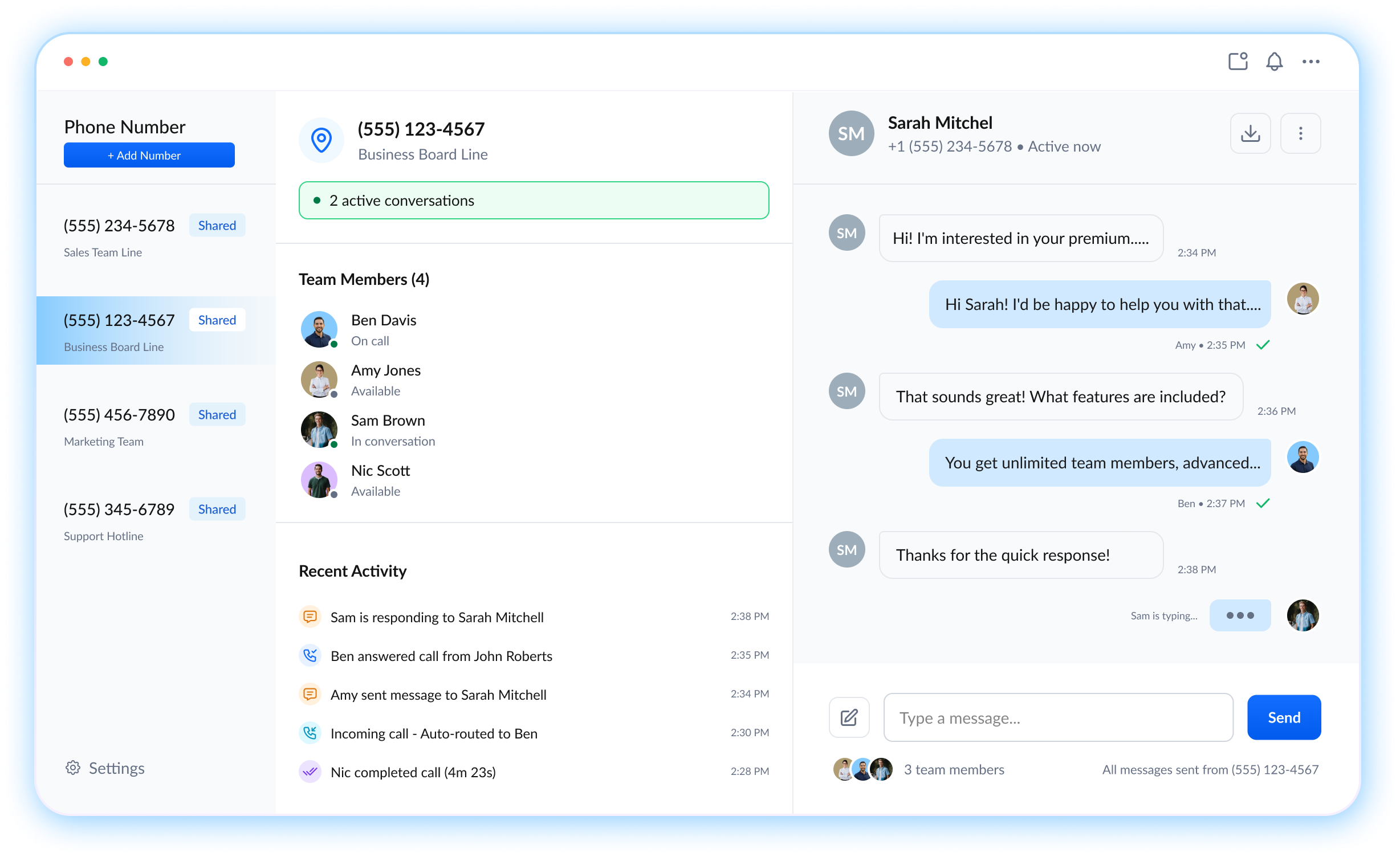
Smart call routing that fits your schedule. Set up simple rules: during showings, send calls to voicemail or your assistant. After hours, let the AI receptionist handle it.
Route buyer calls to one agent and seller inquiries to another. You control who gets what and when. Call routing is what turns a basic phone line into a real business tool.
Call analytics you'll actually use. See exactly how many calls you get each day, what times are busiest, and how many you're missing. This data helps you figure out if your Zillow ads are generating calls, whether you need a showing assistant, or if most leads come in after 6 PM. The analytics dashboard makes patterns visible at a glance.
CRM integration. When a call comes in, dialnote can log it directly in your CRM. No more scribbling names on sticky notes and forgetting to enter them later. Every call, every lead, every follow-up gets tracked automatically.
Call recording and transcription. Can't remember what a buyer said about their budget? Go back and listen. Need to recall the details of a pricing discussion with a seller? You've got the call recording. AI-powered call summaries give you the key points without replaying the whole conversation.
IVR and voicemail transcription. Even when calls go to voicemail (it happens), dialnote transcribes them into text automatically. You can scan 10 voicemails in 30 seconds instead of listening to each one. The transcription includes caller intent, so you know which messages need an immediate callback and which can wait.
The AI receptionist is powerful on its own, but it's just one piece of a system that can make your entire real estate phone operation sharper. You can start with a business number and call routing, then add the AI receptionist when you're ready to take things further.
Start catching every real estate lead with AI
Missing calls isn't just an annoyance for real estate agents. It's lost revenue. Every unanswered ring could be a buyer ready to move, and once they call another agent, you rarely get a second shot.
An AI receptionist fixes this without blowing up your budget. It answers every call, qualifies every lead, and makes sure you spend your time with the people most likely to close a deal.
The agents who pull ahead aren't always the ones with the biggest ad budgets or the most listings. They're the ones who answer every call and follow up fast. An AI receptionist gives you that edge without adding headcount.
If you're a solo agent or small team looking to stop leaving money on the table, dialnote offers an AI-powered phone system built for exactly this. It picks up calls 24/7, qualifies buyers with smart questions, sends you detailed summaries, and connects to your calendar so showings get booked automatically.
Your next deal could be one missed call away. Don't let it ring out.
Frequently asked questions
Most AI receptionist tools run $50-$300 per month, compared to $35,000-$45,000 per year for a full-time receptionist. You'll save $30,000+ annually while getting 24/7 coverage.
Yes. A good AI receptionist connects to your calendar and books showings directly. Buyers get a confirmed time slot, and you get a notification with all the details.
Modern AI receptionists sound natural and conversational. Most callers don't notice the difference, especially when the system is trained on your specific listings and common buyer questions.
It takes a detailed message with the caller's info and flags it for your follow-up. You get a text summary so you can call back quickly with the right answer.
No. AI receptionists work with your existing business phone number. Setup typically takes under 30 minutes and doesn't need any new hardware or phone lines.

Written by
Upasana Sahu
Senior Digital Marketing Specialist, SmartReach.io
Upasana Sahu is a Senior Digital Marketing Specialist at SmartReach.io with over 10 years of experience in content marketing, SEO, and digital strategy. She manages end-to-end blog operations, from content creation and on-page/off-page SEO to traffic...
Upasana Sahu is a Senior Digital Marketing Specialist at SmartReach.io with over 10 years of experience in content marketing, SEO, and digital strategy. She manages end-to-end blog operations, from content creation and on-page/off-page SEO to traffic...
Related Articles
How Can AI Receptionist Help Grow Your Insurance Agency?
Find out how an AI receptionist helps insurance agencies catch every call, qualify prospects, and close more policies around the clock.
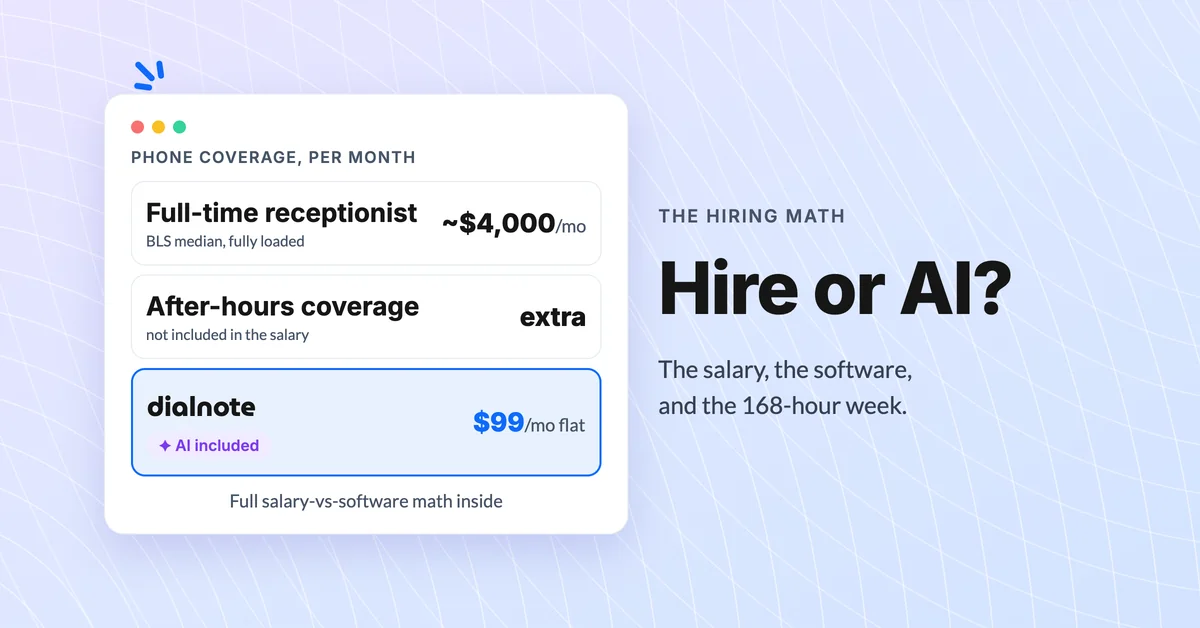
AI Receptionist vs Hiring: What Each Really Costs
Compare an AI receptionist vs hiring a receptionist: salary and benefits math, coverage hours, and what each option really costs over a year.
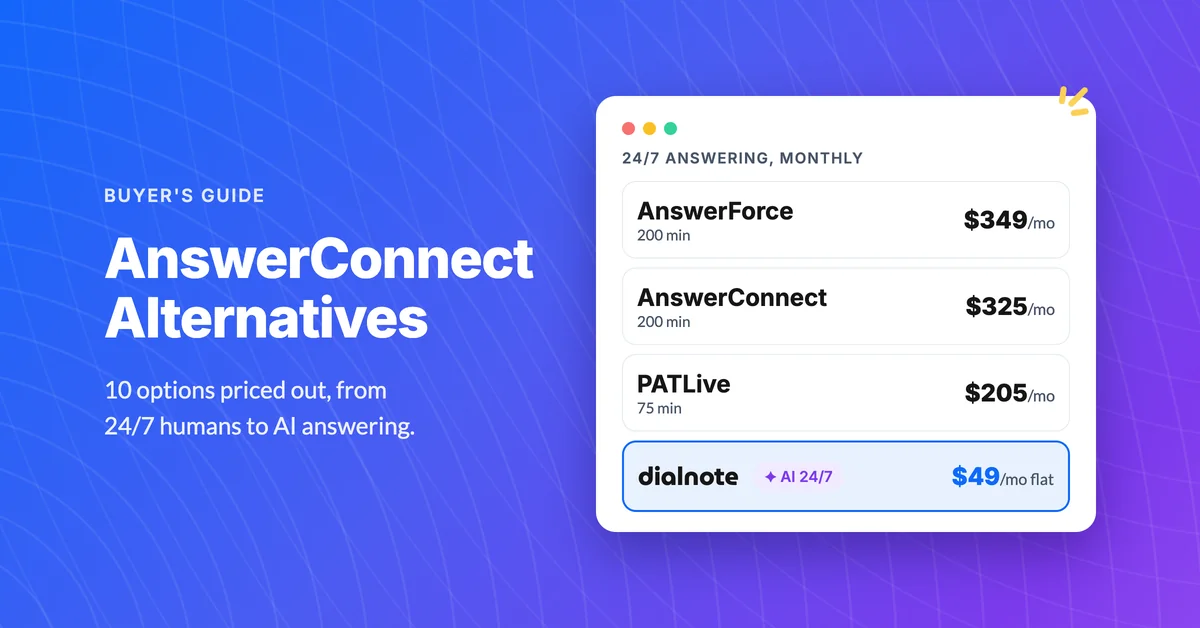
AnswerConnect Alternatives: 10 Better Options [2026]
AnswerConnect runs $325/mo for 200 minutes, and after-call work bills too. Compare 10 AnswerConnect alternatives on real cost per answered call.