How Can an AI Receptionist Help Your Franchise Grow?
You own seven pizza franchise locations across two states. It's a Tuesday afternoon, and location #3 in Orlando just posted a "help wanted" sign because their front desk person quit yesterday. Location #5 in Tampa has three missed calls from the last hour sitting on the voicemail nobody checks. And location #1, your flagship store, is dealing with a lunch rush where the phone won't stop ringing while two employees handle a line out the door.
All seven locations have the same logo, the same menu, the same uniforms. But the phone experience? Completely different at every single one.
This is the franchise phone problem that nobody talks about. You've spent years building brand consistency in person. Your signage is perfect. Your customer service training is solid. But the second someone picks up (or doesn't pick up) the phone, all that consistency falls apart. An AI receptionist for franchises fixes this by answering every call at every location with the same professional voice, the same greeting, and the same quality, whether it's 2 PM on a Monday or 10 PM on a Saturday.
According to FranchiseWire, missed calls are one of the biggest silent revenue killers for franchise businesses. And the problem gets worse with every location you add.
TL;DR:
- An AI receptionist for franchises answers every call at every location with the same greeting, voice, and quality, 24/7, so brand consistency doesn't break down on the phone.
- Missed calls quietly drain franchise revenue: 62% of calls to service businesses go unanswered, and 85% of callers won't try again if you don't pick up the first time.
- A dedicated receptionist costs $2,500-$3,500 per month per location, while an AI receptionist covers your whole network for a fraction of that and scales to new locations in minutes.
- Beyond answering calls, an AI receptionist captures leads, routes callers to the right location, and gives you cross-location call analytics you can't get from scattered phone setups.
The missed call problem across franchise locations
Franchise businesses lose more calls than almost any other business type. And the math gets ugly fast.
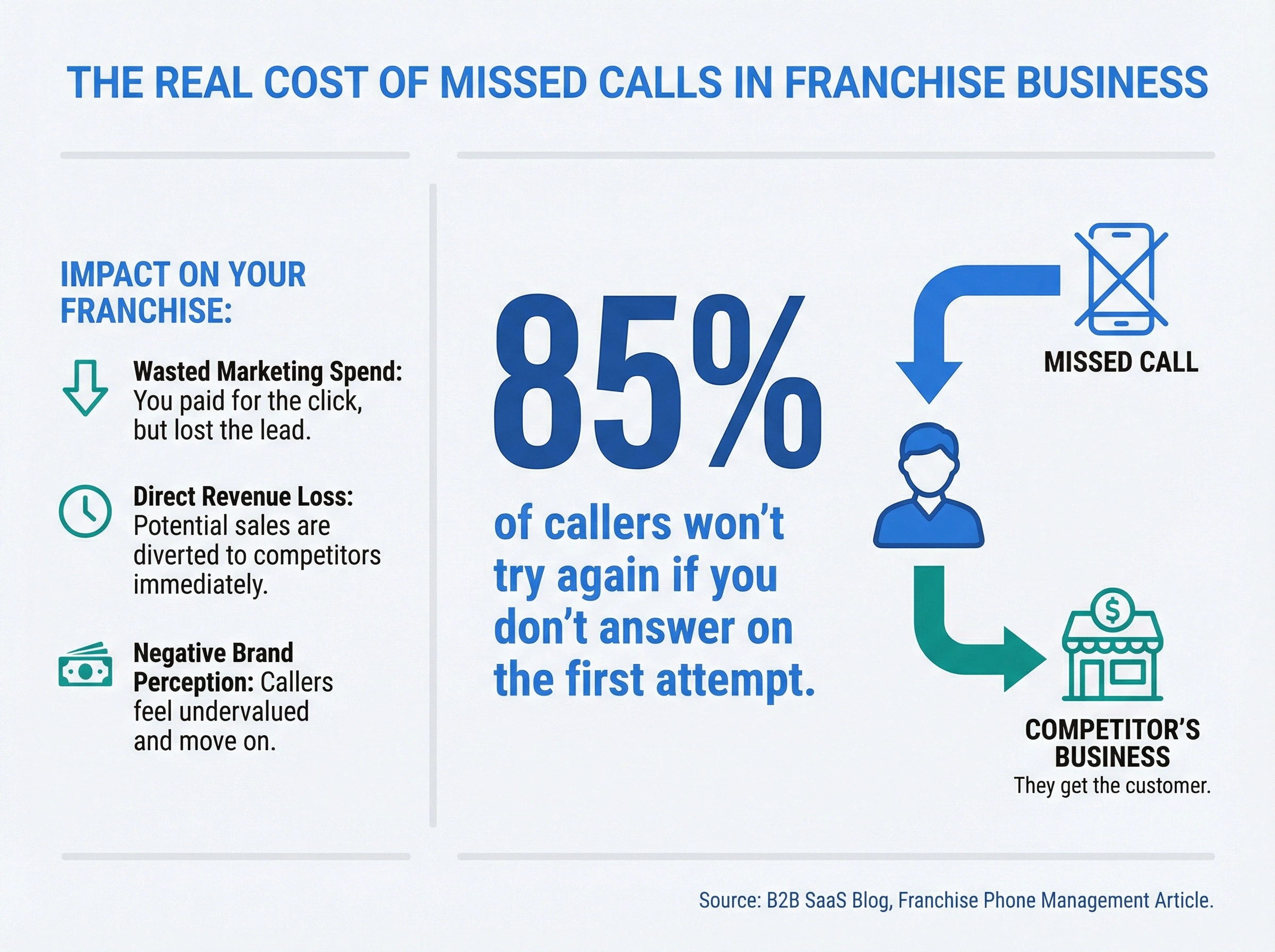
According to research from HouseCallPro, 62% of calls to service businesses go unanswered. For franchise operations running multiple locations with lean teams, that number can climb even higher. Each missed call isn't just a lost conversation. It's a lost customer who will call your competitor instead.
Here's the part that really stings: 85% of callers won't try again if you don't answer on the first attempt. They don't leave voicemails. They don't send emails. They call the next business on Google. Your franchise just paid for that marketing click, and your competitor got the customer.
For a franchise network, multiply that across every location. If you've got 10 locations each missing just 5 calls a day, that's 50 potential customers walking away daily. Even at $50 per customer, that's $2,500 a day in lost revenue. Now multiply that by your location count.
The problem compounds in ways unique to franchises:
- Staffing inconsistency. Location A has a dedicated receptionist. Location B has the manager answering phones between tasks. Location C relies on whoever happens to be near the phone.
- Peak hour overlap. Your busiest times are the same across locations, so every store struggles with phones at the exact same moment.
- After-hours gaps. Most franchise locations close at a set time, but customers call whenever they want. Evening and weekend calls hit voicemail or ring forever.
- Training gaps. New employees at each location answer calls differently. Some are great. Some hang up on callers by accident.
The franchise industry is growing fast. The International Franchise Association projects 12,000+ new franchise businesses and $920 billion in economic output for 2026. But growth means more locations, more phones, and more calls to manage. Without a system that scales, every new location just adds another source of missed revenue.
Why do franchises struggle with phone management?
The short answer: what works for one location completely breaks at five.
When you opened your first location, you probably answered every call yourself. You knew every regular customer's name. You handled scheduling, complaints, and new inquiries personally. It worked because you were right there.
Then you opened location two. Suddenly you can't be in both places. You hire someone to answer phones. They do okay, but they don't know customers the way you do. They put callers on hold too long. They forget to write down messages.
By location five, you've got five different people answering phones five different ways. One location says "Thank you for calling, how can I help you?" Another says "Yeah, this is Mike." And your newest hire at location three puts every call straight to voicemail because they're scared of messing up.
Here's what's really happening under the surface:
No centralized system. Each location might have its own phone setup. Some use cell phones. Some use a basic landline. There's no shared view of who called, what they needed, or whether anyone followed up.
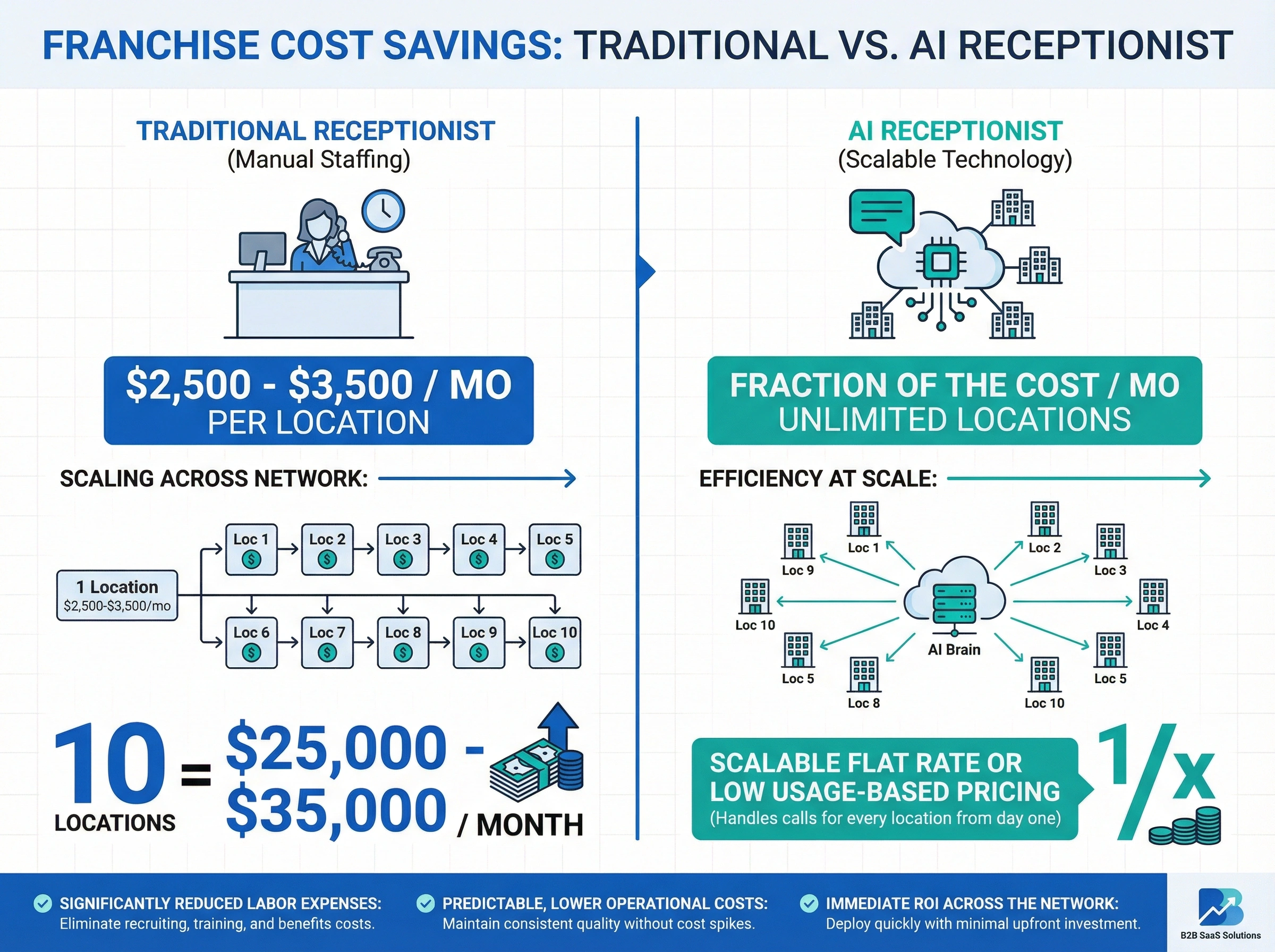
The staffing math doesn't work. A dedicated receptionist costs $2,500-$3,500 per month per location. If you've got 10 locations, that's $25,000-$35,000 monthly just for someone to answer phones. Most franchise owners can't justify that expense, so they make do with whoever's available.
Consistency is impossible to enforce remotely. You can send training manuals and scripts, but you can't sit in every location making sure calls get handled right. Franchise owners who've tried to fix this with mystery shopper programs know the results are usually disappointing.
Technology fragmentation. Different locations end up with different phone systems, different voicemail setups, and different ways of tracking calls. When the franchisor asks "how many calls did we miss last month across all locations?" nobody can answer that question.
The result? Your brand experience over the phone is a coin flip. A customer calling location A gets a friendly, professional answer. The same customer calling location B gets four rings and a generic voicemail. That gap hurts your brand more than any inconsistent signage ever could.
What can an AI receptionist do for a franchise?
An AI receptionist for franchises answers every call at every location with the same professional quality, 24 hours a day, 7 days a week. No sick days. No lunch breaks. No "I'm too busy to pick up."
Think of it as a virtual front desk that works across your entire franchise network. When a customer calls any of your locations, the AI picks up immediately, greets them by your brand name, and handles their request. It can book appointments, answer questions about hours and services, route calls to the right person, and take detailed messages when nobody's available.
For franchise businesses specifically, an AI receptionist covers the gaps that cause the most damage:
- Consistent greetings and brand voice across every location (more on why this matters below)
- Location-specific routing so a caller asking about your Chicago store doesn't end up talking to someone in Atlanta
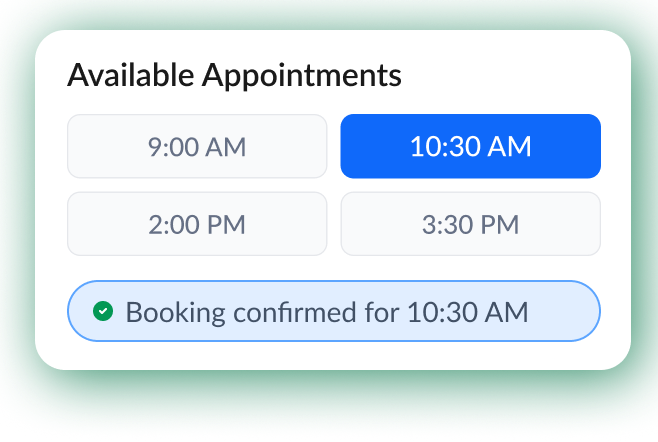
- Appointment booking directly during the call, checking availability for that specific location
- After-hours call capture that keeps working when your locations close for the night
- FAQ handling for "What are your hours?" and "Do you offer financing?" without tying up staff
- Bilingual support in English and Spanish, reaching customer segments many franchises miss
Here's what makes this different from a traditional answering service. Old-school services hire human operators who follow scripts. They're expensive (often $500-$1,500 per month per location), they're available only during their own business hours, and quality varies wildly between operators. You're outsourcing your brand's first impression to strangers who handle calls for 20 other businesses too.
An AI receptionist is yours. It's trained on your brand, your services, your pricing, and your locations. It doesn't get tired at the end of a long shift or distracted between calls.
Can it handle everything? Not quite. About 70-85% of routine calls get resolved without any human involvement. For the rest (complex complaints, sensitive situations, calls that need a personal touch), the AI takes a detailed message and routes it to the right person at the right location. That's still dramatically better than a missed call or a generic voicemail.
What's interesting about franchise adoption specifically: according to a Franchise Creator report, 33% of franchisors now identify AI integration as a top business priority. The ones moving fastest are in customer-facing industries where phones ring constantly.
How AI receptionists keep your brand consistent
Brand consistency is the whole point of franchising. Customers choose a franchise because they know exactly what they'll get. Same product, same service, same experience at every location.
But phone calls are the blind spot.
Walk into any franchise location and the brand experience is controlled down to the paint color on the walls. But call that same location? You might get a cheery greeting from a trained employee, or you might get six rings and a voicemail that says "leave a message after the beep." The franchise owner has almost no control over this.
An AI receptionist for franchises solves this by creating one phone experience that works everywhere:
Same greeting, every time. You configure the greeting once, and every location uses it. "Thanks for calling [Brand Name] in [City], how can I help you?" Simple. Professional. Consistent.
Same call flow, every location. Whether a customer is asking about services, booking an appointment, or filing a complaint, the AI follows the same process. No more location-by-location variation.
Same quality at 8 AM and 8 PM. Human receptionists have good days and bad days. The AI doesn't. The caller at 8 PM gets the same attentive experience as the caller at 8 AM.
Real-time brand monitoring. Unlike human staff, an AI receptionist doesn't go off-script. It won't say something inappropriate, forget your current promotion, or give wrong information about pricing. Every interaction follows your rules.
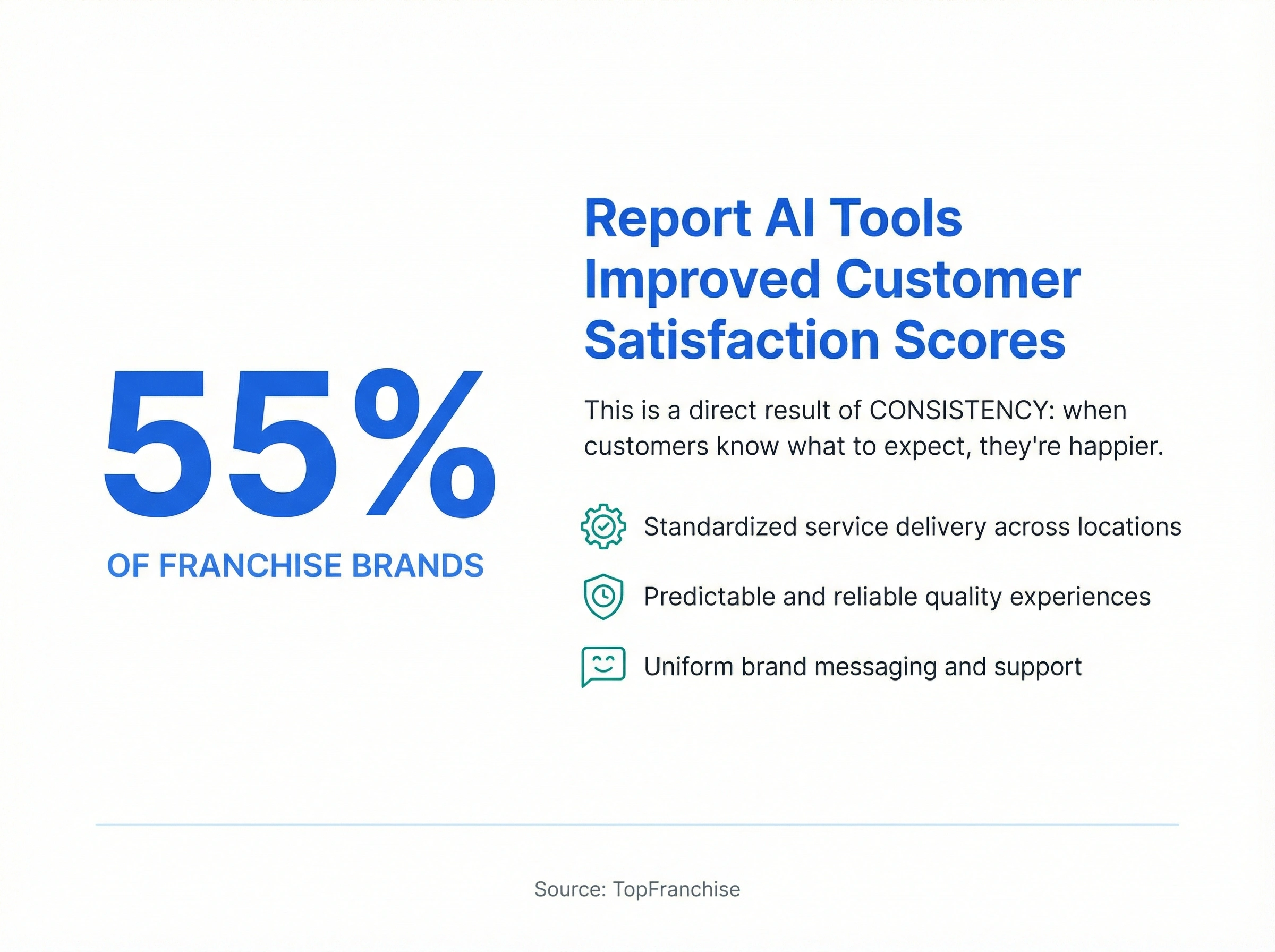
The data supports this approach. According to TopFranchise, 55% of franchise brands report that AI tools have improved their customer satisfaction scores. That's a direct result of consistency: when customers know what to expect, they're happier.
This matters more than most franchise operators realize. According to PwC research, 33% of customers leave after just one bad experience, and 92% abandon a brand after two or three poor interactions. One bad phone call at one location can cost you a customer across your entire network.
Honestly? If you're running a franchise and your phone experience changes from location to location, you don't really have a brand. You have a logo that different people answer differently. An AI receptionist is the fastest way to fix that.
5 ways an AI receptionist helps franchises grow
Growing a franchise means adding locations. Adding locations means adding complexity. Here's how an AI receptionist for franchises turns that complexity into a growth advantage.
1. Capture every lead across every location
When you're running multiple locations, leads come in from all directions. Google Ads for each market. Local SEO. Walk-in referrals calling later. Community sponsorships. And every single one of those leads starts the same way: with a phone call.
An AI receptionist makes sure no lead slips through at any location. It picks up on the first ring, qualifies the caller, captures their information, and either books them directly or sends the lead summary to the right manager. No more leads lost to voicemail at your understaffed Tuesday afternoon location.
Businesses using AI to answer calls see up to an 18% improvement in call-to-meeting conversions compared to manual processes. Across 10 franchise locations, that's a significant revenue lift.
2. Scale without hiring a receptionist at every location
Here's a question franchise owners face with every new location: do I hire a receptionist?
You already know the staffing math from earlier. Multiply that per-location cost by 15 locations and you're spending $37,500-$52,500 per month just to have someone answer phones. For most franchise models, that's not realistic.
An AI receptionist handles calls for every location from day one. When you open location #16, you don't post a job listing and wait three weeks to hire. You add the location to your AI system in under an hour. It already knows your brand, your services, and your call flow. All you configure is the new location's specific hours and staff directory.
This is especially valuable for franchise operators in rapid growth mode. If you're planning to open five locations this year, your phone system shouldn't be the bottleneck. Property management companies face similar multi-location phone challenges, and the solution is the same: remove the per-location staffing dependency.
3. Build instant credibility in new markets
Opening in a new city is tough. Nobody knows your brand yet, and first impressions happen fast. When a potential customer calls your brand-new location for the first time, the AI picks up immediately and sounds like you've been in that market for years. No "sorry, we're still getting set up" energy.
That's a real edge over competitors who are fumbling with new hires and training manuals at their own new locations.
4. Cut costs across the franchise network
The savings compound across your network, and dialnote's pricing plans are built to scale as you add locations. Here's a rough comparison for a 10-location franchise:
Traditional staffing:
- 10 receptionists at $3,000/month = $30,000/month
- Benefits, training, turnover costs = $5,000-$10,000/month
- Total: $35,000-$40,000/month
AI receptionist:
- AI service covering all 10 locations
- Setup and customization per location
- Total: Significantly less per month
That's a massive difference that goes straight to your bottom line. And the AI doesn't call in sick, doesn't need two weeks of training, and doesn't quit after three months. Staff turnover alone costs franchise owners thousands in recruiting and retraining. An AI receptionist eliminates that cycle completely for the phone-answering role.
5. Get data visibility you've never had before
This is the one most franchise owners don't think about until they have it. And then they wonder how they ran their business without it.
An AI receptionist paired with call analytics gives you a dashboard showing:
- Total calls per location, per day, per hour
- How many calls converted to appointments
- Peak call times so you can staff accordingly
- What questions customers ask most
- Which locations are underperforming on phone engagement
Without this data, franchise management is guesswork. With it, you can spot problems before they become expensive. Location #7 has a 40% lower conversion rate than the network average? Now you know to investigate. Location #3 gets twice the after-hours calls? Maybe they need different hours.
This kind of visibility used to require expensive call center software. An AI receptionist gives it to you as part of the package.
What should you look for in a franchise phone system?
Not every AI receptionist works for franchises. A system built for a single-location dentist's office won't cut it when you're managing 20 locations across three states. Here's what to prioritize.
Multi-location management from one dashboard. You need to configure, monitor, and adjust settings for every location from a single admin panel. If you have to log into 20 different systems to change a holiday greeting, that's not a franchise solution.
Location-specific customization. While the brand voice stays consistent, each location needs its own hours, services, staff directory, and appointment calendar. The AI should know that your Denver location closes at 7 PM while your Miami location closes at 9 PM.
Smart call routing. Calls should route based on the number dialed, the caller's area code, or the caller's stated preference. If someone calls your main franchise number asking about the Austin location, the AI should handle it smoothly without transferring them three times. A good IVR and call routing system makes this automatic.
Scalability. Adding a new location should take minutes, not weeks. The system should let you clone an existing location's setup and customize the details. If opening a new store requires a two-week phone system implementation, you've got the wrong vendor.
Centralized reporting. Your franchise headquarters needs to see performance across all locations in one view. Individual location managers need to see their own metrics. Both should be available without pulling data into spreadsheets manually.
Integration with your existing tools. Your franchise probably runs on a mix of CRM, scheduling, and management software. The phone system needs to push data into those tools automatically. Manual data entry defeats the purpose.
Bilingual or multilingual support. If your franchise operates in markets with diverse populations, your AI needs to handle calls in multiple languages. This isn't a nice-to-have in most U.S. markets. It's a requirement.
We're not 100% sure which single feature matters most for every franchise. It depends on your industry, your size, and your growth plans. But if we had to pick one thing: choose a system that makes adding location #20 just as easy as adding location #2. Everything else can be configured later. Scalability can't be retrofitted.
How dialnote helps franchises answer every call
Running a franchise means your phone system has to work harder than most. You're not managing one location's calls. You're managing a network where every missed call at any location reflects on your entire brand.
dialnote is built for exactly this kind of challenge. It gives franchise operators a complete phone system with an AI receptionist that covers every location, every hour, without the overhead of staffing a front desk at each site.
Here's how it works in practice for a franchise:
One system, every location. dialnote runs across all your franchise locations from a single platform. Each location gets its own number, its own greeting, and its own call rules, but you manage everything from one place. When you open a new location, you add it to the system and configure it in minutes.
AI receptionist that knows your brand. The AI answers calls with your franchise's name and greeting. It handles appointment booking, answers common questions, and routes calls to the right people at the right location. Every caller gets the same professional experience regardless of which location they reach.
Smart routing across your network. With dialnote's auto-attendant and IVR system, calls flow to the right location, the right department, and the right person automatically. You set the rules once, and the system handles the rest. Time-based routing means calls go to different destinations based on business hours, holidays, or staffing levels.
Call analytics for the whole franchise. dialnote's call analytics dashboard shows you performance across every location. You can see call volume, missed calls, peak times, and conversion rates at a glance. This data helps you make smarter decisions about staffing, marketing spend, and hours of operation.
AI voice agent for deeper conversations. For franchises that need more than basic call answering, dialnote's AI voice agent handles complex interactions like lead qualification, detailed intake, and knowledge-based Q&A. It's built to handle the kind of calls that a basic phone menu can't.
Works on any device. Your franchise managers don't need desk phones. dialnote runs on mobile, desktop, and tablet. A location manager can take business calls from their personal phone without giving out their personal number. That flexibility is critical for franchise owners who bounce between locations throughout the week.
Here's what it comes down to: dialnote gives franchise operators the phone infrastructure that scales with them. Whether you've got 3 locations or 30, every call gets answered, every lead gets captured, and every location sounds like it belongs to the same brand.
AI receptionist for franchises: the growth multiplier
The franchise industry is booming, with thousands of new businesses opening every year. That growth creates opportunity, but it also creates a real challenge: how do you scale your operations without your customer experience falling apart?
Phone calls are where most franchises hit the wall. You can systematize your product, your training, and your store layout. But phone calls? They're unpredictable, high-volume, and happening across every location at the same time.
According to Franchising.com, 87% of franchisees agree that more AI tools would improve their marketing and operational performance. And 80% of franchise companies that have adopted AI report improved operational efficiency.
The franchises moving fastest aren't the ones with the biggest budgets. They're the ones that figure out how to make every location operate like their best location. An AI receptionist is a direct path to that goal. It takes the phone experience of your top-performing store and replicates it everywhere, instantly.
Think back to that pizza franchise owner with seven locations. Instead of location #3 missing calls because the front desk person quit, the AI keeps answering. Instead of location #5 stacking up voicemails nobody checks, every call gets a live response. Instead of location #1 choosing between the lunch rush and the ringing phone, both get handled.
That's not a small improvement. That's the difference between a franchise that grows and one that gets stuck.
If you're running a franchise and you're still relying on whoever happens to be near the phone, it's time to rethink that. An AI receptionist for franchises doesn't just answer calls. It protects your brand, captures your leads, and gives you the data to grow smarter.
The franchises that figure this out first will have a real edge. The ones that wait will keep losing customers to the businesses that pick up the phone.
Frequently asked questions
Most AI receptionist services run $50-300 per month per location. Compare that to $2,500-$3,500 per month for a full-time receptionist at each franchise location, and the savings add up fast across multiple sites.
Yes. A good AI receptionist routes calls based on location, department, or service type. Each franchise location can have its own greeting, hours, and call rules while the franchisor keeps brand consistency across all sites.
Most callers don't notice. Modern AI receptionists sound natural and handle common questions smoothly. For complex situations, the AI takes a detailed message and routes it to the right person at that location.
Initial setup takes about 30-60 minutes for one location. Rolling it out to additional locations is faster since you can clone settings and customize greetings, routing, and hours for each site.
Many AI receptionist providers integrate with popular CRM and scheduling tools. Look for a system that pushes call data, appointment bookings, and lead information directly into your existing franchise management platform.

Written by
Lancelot Dsouza
Chief Marketing Officer, SmartReach.io
Lancelot Dsouza is the Chief Marketing Officer at SmartReach.io, where he built the Marketing, Sales, and Customer Success verticals from the ground up. With over 25 years of experience spanning digital marketing, business development, and strategic...
Lancelot Dsouza is the Chief Marketing Officer at SmartReach.io, where he built the Marketing, Sales, and Customer Success verticals from the ground up. With over 25 years of experience spanning digital marketing, business development, and strategic...
Related Articles
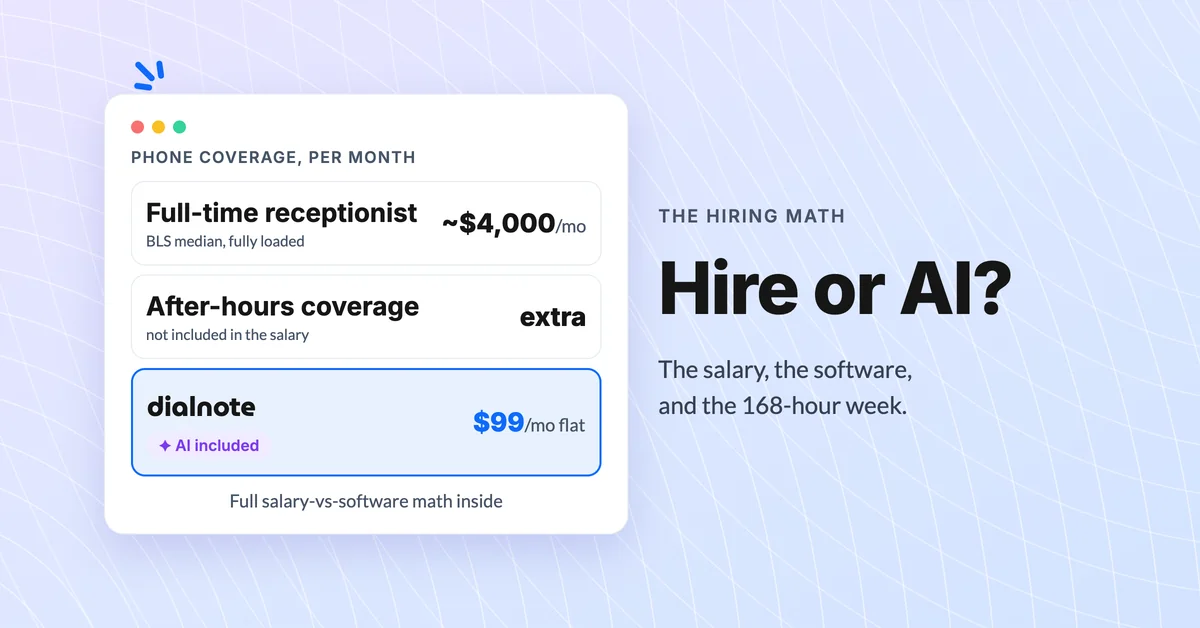
AI Receptionist vs Hiring: What Each Really Costs
Compare an AI receptionist vs hiring a receptionist: salary and benefits math, coverage hours, and what each option really costs over a year.
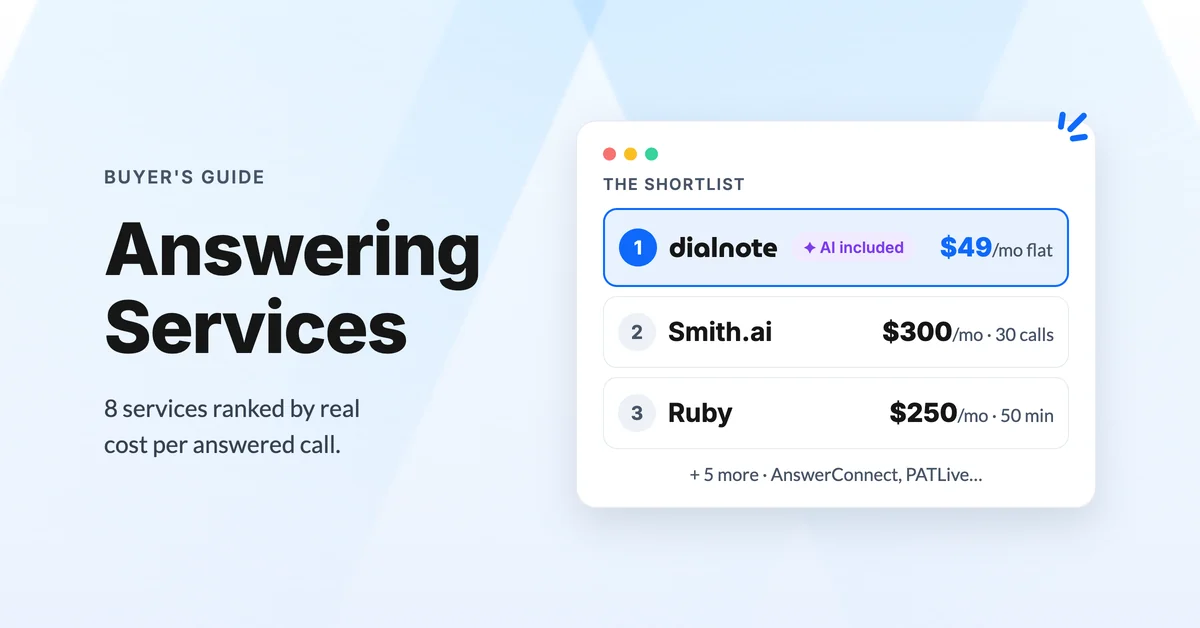
Best Answering Service for Small Business [2026]
Compare the best answering services for small business in 2026: live, AI, and hybrid options ranked by real cost per call and coverage.
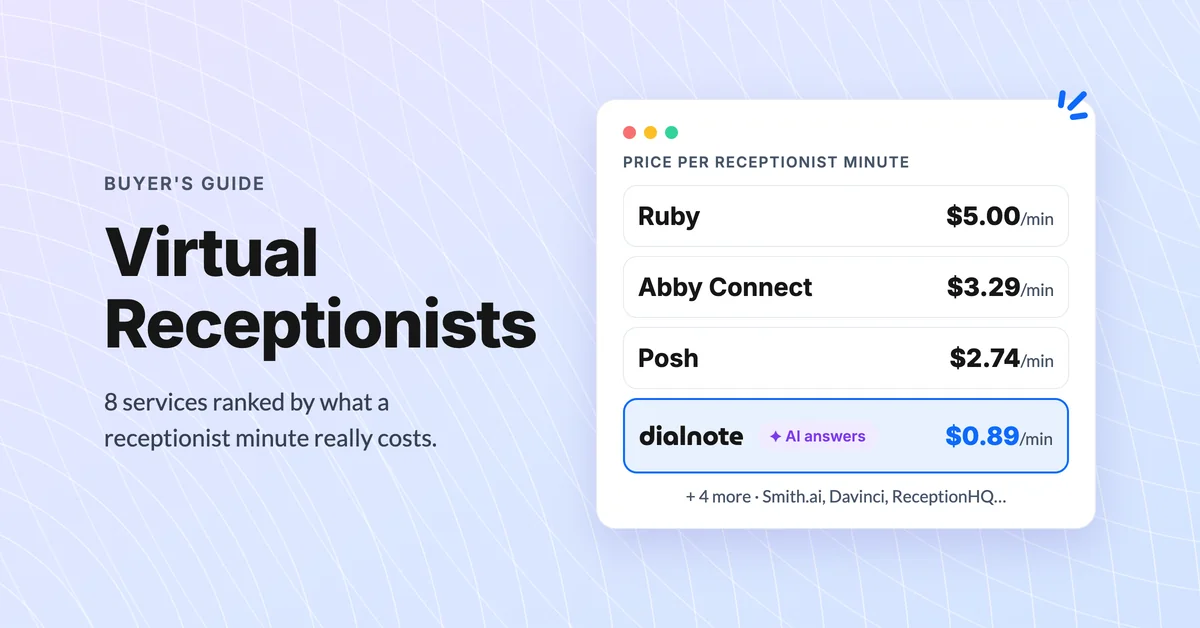
Best Virtual Receptionist Services Ranked [2026]
Compare the best virtual receptionist services of 2026 by price per receptionist minute, booking depth, and coverage, including the AI option.