RingCentral vs Dialpad: Best Business Phone?
Maya heads up operations at a growing B2B sales agency. When her team hit 20 people, she found herself deep in the RingCentral vs Dialpad evaluation that every ops lead eventually faces. RingCentral felt like the safe, established choice. Dialpad had AI features built in, which her reps had been asking about for months. But after two weeks of demos and spreadsheets, something didn't add up with either option. Sound familiar?
Picking a business phone system in 2026 isn't just about call quality and voicemail. It's about how AI features are priced, how your costs change as your team grows, and whether the platform actually works the way the marketing page describes. The fine print matters here more than most buyers expect. For a 20-person team, the gap between platforms can mean thousands of dollars a month: see the full cost breakdown below.
This comparison covers both platforms honestly, and we'll also walk through a third option, dialnote, which is part of the SmartReach.io group. dialnote was built to address the AI gaps and per-seat pricing friction that show up in most traditional VoIP tools. If you're evaluating all your options, it's worth including in the analysis.
TL;DR:
- In the RingCentral vs Dialpad matchup, Dialpad wins on built-in AI (transcription, call summaries, and sentiment analysis are on every plan from $15/user/month), while RingCentral wins on integrations (300+ apps) and enterprise-grade uptime.
- RingCentral gates most AI behind add-ons: RingSense for Sales runs $60/user/month and the AI Receptionist is $59/month, so a 20-person team can spend $2,000+/month once add-ons and fees stack up.
- Both platforms use per-seat pricing, so your phone bill grows every time you hire, and both cover only a limited set of international markets.
- dialnote is a strong third option: it's part of the SmartReach.io group and bundles an AI receptionist, AI SMS agents, auto CRM sync, and AI call evaluation into unlimited-users plans starting at $49/month, with calling to 90+ countries.
RingCentral and Dialpad: a quick overview
RingCentral is one of the most established business communications platforms in the market. Founded in 1999, it serves millions of users across enterprises and mid-sized organizations with a focus on reliability (a claimed 99.999% uptime SLA), deep integrations with over 300 third-party apps, and a feature set built around large-scale IT deployments. It's a mature platform that handles complex organizational needs well.
Dialpad took a different approach from the start. It positioned itself as an AI-first phone system, and it's largely delivered on that claim. The platform includes real-time transcription, AI call summaries, and sentiment analysis on every plan, which is more than most competitors offer at the base level. Dialpad targets a broad range of team sizes, though its Enterprise plan requires 100 seats minimum and moves to custom pricing.
Both platforms have earned their reputations. But reputation doesn't mean the right fit for your team. The way each platform handles AI pricing, seat-based costs, and international coverage tells a different story once you look past the feature lists.
How do the features stack up?
RingCentral and Dialpad share many surface-level similarities but diverge sharply on AI access, pricing structure, and what's genuinely included versus sold separately.
Here's a side-by-side view across all three platforms:
| Feature | RingCentral | Dialpad | dialnote |
|---|---|---|---|
| Starting price | $20/user/month | $15/user/month | $49/month (unlimited users) |
| Pricing model | Per seat | Per seat | Unlimited users or per seat |
| Unlimited users option | No | No | Yes |
| AI transcription | Advanced+ plans | All plans | All plans |
| AI call summaries | Add-on ($60/user/mo) | All plans | All plans |
| AI receptionist | Add-on ($59/mo) | Add-on | Included |
| AI SMS agent | No | No | Included |
| AI call evaluation | Add-on | Pro+ plans | Included |
| Auto CRM updates | Via integrations | Via integrations | Included |
| Bulk SMS | No | No | Coming soon |
| Call queueing | Advanced+ plans | Pro+ plans | Included |
| IVR | Yes | Yes | Yes |
| SMS limits | 25-200/user/month | Limited by plan | Included, fair use |
| Integrations | 300+ | 10-20 | Native CRM + Zapier (5,000+ apps) |
| Video conferencing | Yes (200 participants) | Yes (5-hr cap) | No (calls only) |
| International numbers | Limited countries | Limited | US, CA, UK, India, France |
| Calling limits | Fair use applies | Fair use applies | In-region pool + wallet (fair use) |
The table tells most of the story. RingCentral leads on integrations. Dialpad leads on base-level AI. dialnote leads on pricing model and AI depth combined. What the table doesn't capture is how quickly costs compound once you start adding the features your team actually needs.
How do AI capabilities in RingCentral vs Dialpad compare?
AI is the most important differentiator in business phone systems right now. But does paying more per seat actually buy you more AI?
Dialpad has a genuine edge over RingCentral on bundled AI. Real-time transcription, call summaries, and sentiment analysis are included on the $15/month Standard plan. You don't need to upgrade to access them.
RingCentral, by comparison, gates most of its AI tools behind the Advanced and Ultra tiers. Its most capable product for sales teams, RingSense for Sales, runs $60/user/month as a separate add-on.
Where both platforms share a gap is what they don't include natively. Neither RingCentral nor Dialpad provides an AI receptionist that answers inbound calls and routes customers automatically without paying extra. Neither includes an AI SMS agent that handles inbound texts. Neither auto-updates your CRM after every call without building a separate integration or manual workflow.
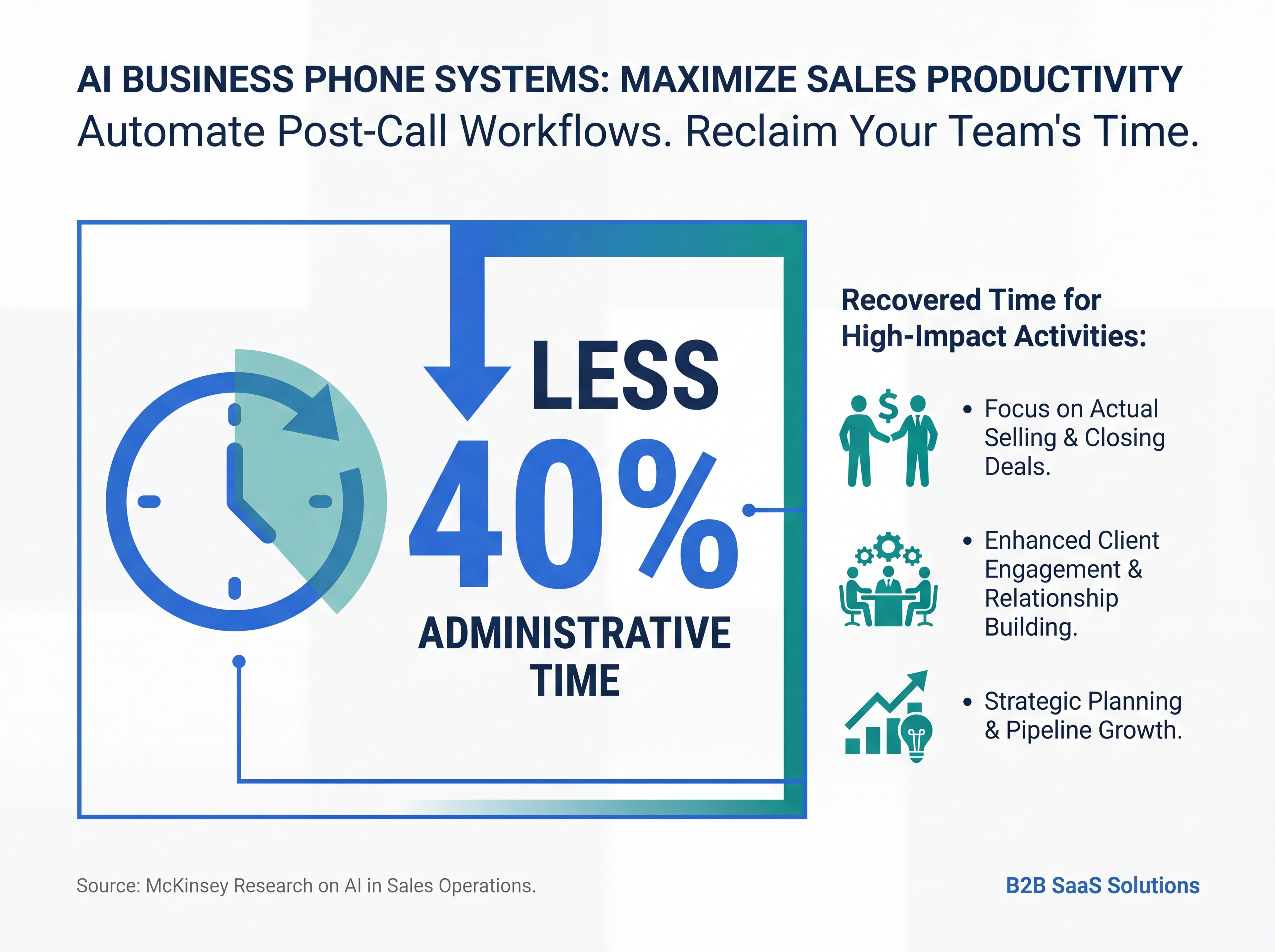
These aren't minor gaps. For a sales team handling 50+ calls a day, automated post-call CRM updates alone save hours of admin work per week. According to McKinsey research on AI in sales operations, teams that automate post-call workflows cut administrative time by up to 40%. That's real capacity returned to your team for actual selling.
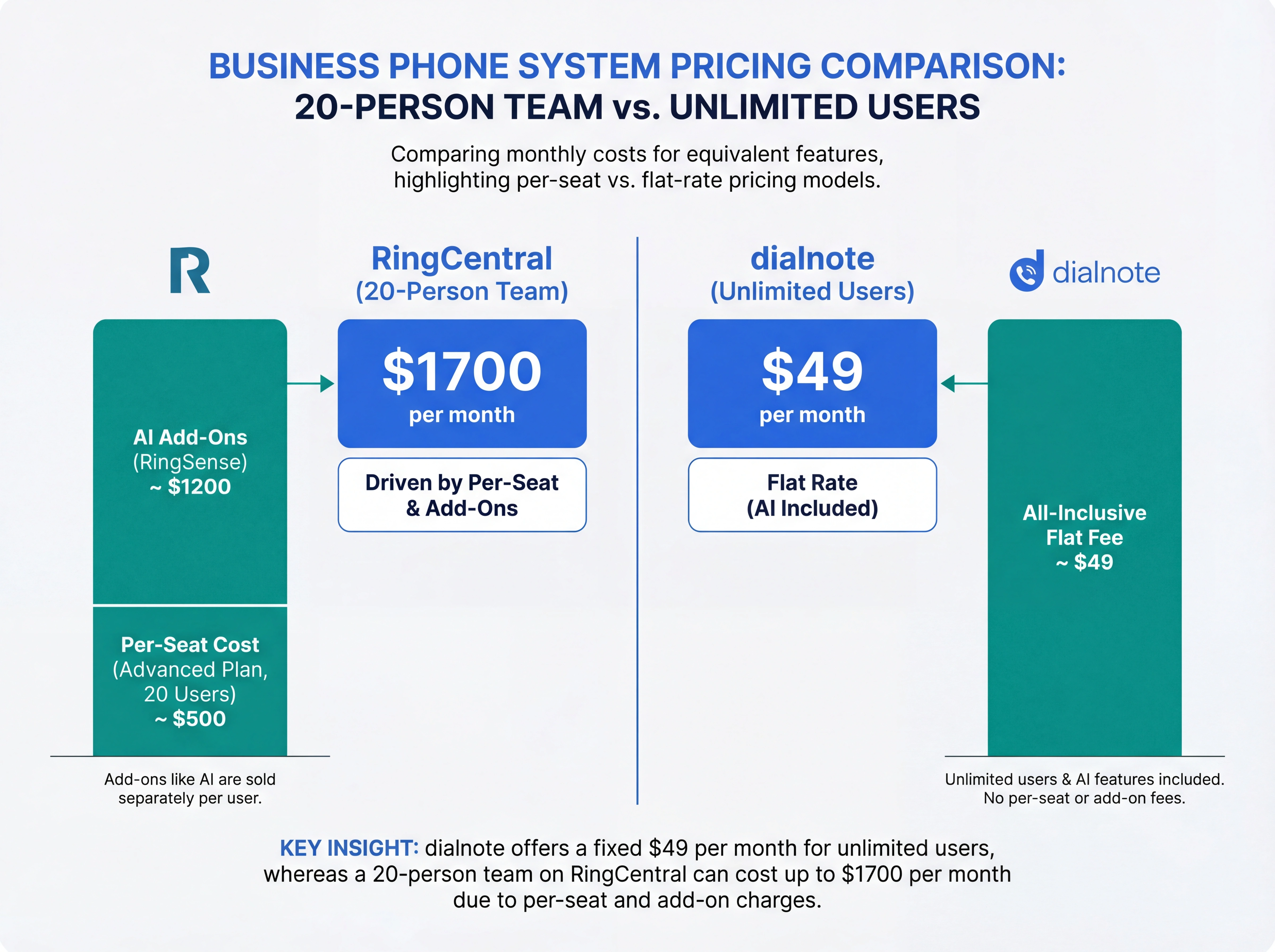
For RingCentral specifically, the add-on math gets steep fast. A 20-person team that wants AI call summaries and RingSense pays $60/user/month on top of their base plan. That's $1,200/month just for AI features that competitors include by default. Add the AI Receptionist ($59/month, 100 minutes included) and you're spending more on AI add-ons than on the base platform itself.
Dialpad's AI is more accessible. But the SMS automation gap, the limited CRM auto-update capability, and the absence of a built-in AI SMS agent mean that even Dialpad's AI story is incomplete for teams that run multi-channel outreach.
dialnote bundles an AI receptionist, AI SMS agents, auto CRM updates, and AI call evaluation into all its plans. You can test dialnote's AI receptionist live on their website without booking a demo. That kind of real-world testing is unusual in this space and genuinely useful before you commit.
What's the true cost of each platform?
Most comparison articles stop at listing starting prices. That's not helpful when the real cost depends on team size and which features you actually need.
RingCentral pricing:
- Core plan: $20/user/month (annual billing)
- Advanced plan: $25/user/month (annual billing)
- Ultra plan: $35/user/month (annual billing)
- RingSense for Sales add-on: $60/user/month
- AI Receptionist add-on: $59/month (100 minutes included)
- Compliance fee: $3-5 per line per month
- SMS overages: charged beyond plan limit (25-200/user/month depending on plan)
A 20-person team on the Advanced plan runs $500/month before add-ons. Add RingSense for your sales reps and you're at $1,700/month. Stack in compliance fees and SMS overages and you're at $2,000+ per month for a team that size.
Dialpad pricing:
- Standard plan: $15/user/month (annual billing)
- Pro plan: $25/user/month (annual billing)
- Enterprise: custom pricing, requires 100-seat minimum
- Toll-free numbers: $15-17/number/month plus $0.02/minute overage
- Extra local numbers: $5/number
- Internet fax: $10/month add-on
- Video meetings for large groups: $15/user/month add-on
A 20-person Pro team is $500/month. Add a few international numbers and internet fax and you're at $580-620/month, without any AI features beyond the base plan.
dialnote pricing:
- Unlimited users plans start at $49/month
- Per-seat plans exist for teams that want billing under $49/month
- AI features included, not sold separately
Why does the pricing model matter so much? Because per-seat pricing compounds every time you hire. A 20-person team at $25/seat is $500/month. A 30-person team at the same rate is $750/month. A 40-person team is $1,000/month. dialnote's unlimited users model means headcount growth doesn't automatically mean phone bill growth.
One point worth being direct about: every VoIP provider that advertises "unlimited calling" operates a fair use policy. dialnote's included calling pool applies when you've taken a number in your region and are calling within that same region, with anything beyond the pool or outside your region billed from your wallet at published per-country rates. RingCentral and Dialpad run similar fair use limits. If your team has very high call volumes, check the overage policy with any provider before signing contracts.
What real users are saying about both tools
Published feature lists and pricing pages only tell part of the story. Patterns across G2, Capterra, and Reddit discussions from actual users reveal a different picture.
RingCentral user complaints: Customer support comes up as the most consistent issue across review platforms. Users describe support as slow, unhelpful, and difficult to reach for anything complex. Setup is painful for smaller teams without dedicated IT resources. Cancellation is another recurring theme, with some users reporting termination fees as high as $500.
SMS limits (25-200 messages/user/month, depending on plan) frustrate teams with active text outreach. Advanced analytics sit behind a paywall on higher-tier plans.
Dialpad user complaints: Mobile app quality has declined in recent reviews. Reports of dropped inbound calls and app crashes come up consistently across multiple review platforms, which is a real concern for field teams or remote workers who rely on mobile. Call routing problems cause missed calls without reliable resolution from support.
Third-party integrations top out at around 10-20 compared to RingCentral's 300+. Billing disputes also surface more often than they should for a product at this price point.
We're not 100% sure why Dialpad's mobile app has deteriorated in user ratings over the past year, but the pattern is consistent enough to take seriously. If your team uses mobile as its primary calling interface, that's worth factoring into your evaluation.
Neither platform gets strong marks on support quality. For teams that aren't self-sufficient with technical troubleshooting, that's worth weighing before signing a contract.
Where both platforms fall short
Honestly? Both RingCentral and Dialpad were designed for a world where AI is an optional feature. That worked fine five years ago. It's the wrong starting point for teams building workflows today.
RingCentral's AI story is largely an add-on story. The core platform is reliable and deeply integrated, but the AI tools that modern sales teams use daily (call evaluation, CRM automation, AI receptionists) all require additional spend on top of an already per-seat base price. For growing teams, that math gets uncomfortable quickly.
Dialpad made a genuine push toward AI-first positioning. The transcription and summaries on every plan are real and useful. But the SMS automation gap, limited CRM auto-update capability, and the 10-20 integration ceiling are constraints that enterprise teams and fast-growing SMBs often hit. The Enterprise tier helps, but it requires 100 seats and custom pricing, which removes the flexibility smaller teams need.
Both platforms also fall short on international coverage. If your team calls customers in Southeast Asia, the Middle East, Latin America, or Eastern Europe, local number availability becomes a direct revenue problem. Neither RingCentral nor Dialpad offers the breadth of local numbers that global teams need, which affects caller ID localization and answer rates on outbound campaigns.
Comparing OpenPhone vs RingCentral or OpenPhone vs Dialpad reveals the same gap across the board: most VoIP platforms were built around calls and messages with AI added later. That bolt-on approach limits how deeply automation integrates into your actual workflow. The Dialpad vs Nextiva comparison shows the same AI-gating pattern playing out on Nextiva's side of the market.
Why dialnote stands out as the stronger alternative
dialnote isn't a standalone startup. It's part of the SmartReach.io group, which builds B2B software used by thousands of companies globally. SmartReach competes directly with platforms like Outreach, Salesloft, Lemlist, and Pardot. The team behind dialnote has spent years building tools for sales teams, which means they understand what a phone system actually needs to do for a B2B workflow, not just what it technically offers.
That context shows in how dialnote was put together. AI automation isn't bolted on. It's the starting point.
Here's what dialnote includes that neither RingCentral nor Dialpad offers out of the box:
Unlimited users pricing. dialnote's pricing plans start at $49/month for your entire team. Your bill doesn't increase when you add a new hire. Per-seat options exist for teams that want to bill below $49/month, but the flat model removes the per-seat anxiety that comes with every hiring decision.
AI features included from day one. AI transcription, AI call summaries, AI receptionist, AI SMS agents, AI call evaluation, and auto CRM updates are all part of dialnote's base plan. To put that in context: RingCentral only includes AI transcription on its Advanced plan, and AI call summaries require the $60/user/month RingSense add-on. Dialpad gets closer on AI depth, but AI call evaluation and full CRM automation require the Pro or Enterprise tier. Neither platform includes an AI SMS agent on any plan. With dialnote, you don't spend time figuring out which add-ons you need before onboarding your team.
AI SMS agent. Two-way AI texting built in by default, not sold separately.
Calling to 90+ countries. dialnote's shared wallet covers international calls to 90+ countries at published per-country rates, and local numbers are available in the US, Canada, UK, India, and France (more opened on request). Local caller ID in those markets directly improves answer rates on outbound calls.
dialnote covers calling to 90+ countries from one shared wallet, with local numbers in the US, Canada, UK, India, and France (more opened on request). For teams calling into India or other covered markets, local caller ID directly affects answer rates.
No video bloat. dialnote focuses on calls rather than building a competing video product, so you keep running meetings on the Zoom or Meet account your team already uses.
If you want to see how the AI actually works before committing, test dialnote's AI receptionist on their website. It handles a real call, so you can evaluate the quality yourself rather than trusting a demo script. For teams exploring the full range of Dialpad alternatives, dialnote consistently stands out on AI depth per dollar. If Aircall is also in your shortlist, our Dialpad vs Aircall comparison covers that decision directly.
Which platform is right for your team?
Here's the practical breakdown based on what each platform does best.
Choose RingCentral if:
- Your organization has 100+ users with an IT team to manage deployment
- You need deep integrations with enterprise tools like Salesforce, ServiceNow, or SAP
- Uptime SLA and reliability guarantees are your top priority
- Your team can absorb the add-on costs for AI features
Choose Dialpad if:
- You want AI transcription and call summaries included on every plan without upgrading
- Your team operates primarily in the US and Canada
- A smaller integration library won't limit your workflow
Choose dialnote if:
- You want AI automation included from day one without calculating add-on costs
- Your team is growing and you want a predictable monthly bill regardless of headcount
- You need an AI receptionist and AI SMS agent that work without manual configuration
- Your customers are spread across multiple countries and local numbers matter
- You want a phone system built by a team that knows B2B sales operations from the inside
The RingCentral vs Nextiva comparison shows a familiar pattern: traditional enterprise platforms often trade pricing flexibility and AI depth for scale. For most growing teams, that's not the right trade.
dialnote's unlimited users model means you don't recalculate your phone budget every time you hire. The built-in AI means fewer internal conversations about whether you can afford the AI add-on this quarter. If you're still deciding, try the AI receptionist demo and see how it handles a real inbound call.
Frequently asked questions
Dialpad includes AI transcription and call summaries on every plan — a real edge over RingCentral for built-in AI. RingCentral wins on integrations (300+) and enterprise uptime. Which is better depends on whether AI automation or integration depth matters more to your team.
Dialpad, Nextiva, and 8x8 are commonly cited, but dialnote is gaining ground as a more AI-forward alternative. dialnote includes AI features that RingCentral only offers as paid add-ons, and its unlimited users pricing directly challenges RingCentral's per-seat model.
dialnote includes features Dialpad doesn't offer on any plan — an AI receptionist, AI SMS agents, and auto CRM sync — all built in. It also offers unlimited users pricing from $49/month, so teams don't pay more as they grow.
Dialpad starts at $15/user/month vs. RingCentral's $20/user/month. But dialnote's unlimited users plans from $49/month are often the cheapest option for teams of five or more, since you stop paying per seat entirely.
Dialpad works in India, but local Indian numbers aren't always available and international rates apply for calls outside the US and Canada. dialnote offers local Indian numbers, which improves caller ID localization, plus calling to 90+ countries from one shared wallet.

Written by
Lancelot Dsouza
Chief Marketing Officer, SmartReach.io
Lancelot Dsouza is the Chief Marketing Officer at SmartReach.io, where he built the Marketing, Sales, and Customer Success verticals from the ground up. With over 25 years of experience spanning digital marketing, business development, and strategic...
Lancelot Dsouza is the Chief Marketing Officer at SmartReach.io, where he built the Marketing, Sales, and Customer Success verticals from the ground up. With over 25 years of experience spanning digital marketing, business development, and strategic...
Related Articles
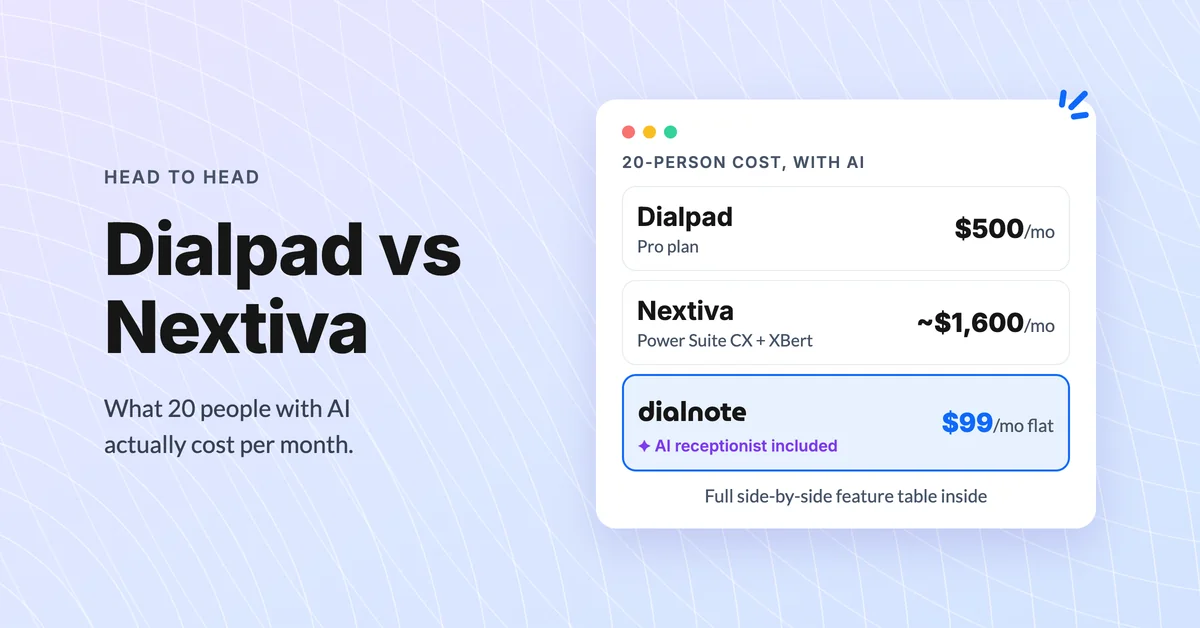
Dialpad vs Nextiva: Which Phone System Wins?
Compare Dialpad vs Nextiva on pricing, AI features, and real-world limits. Discover which business phone system fits your team best in 2026.
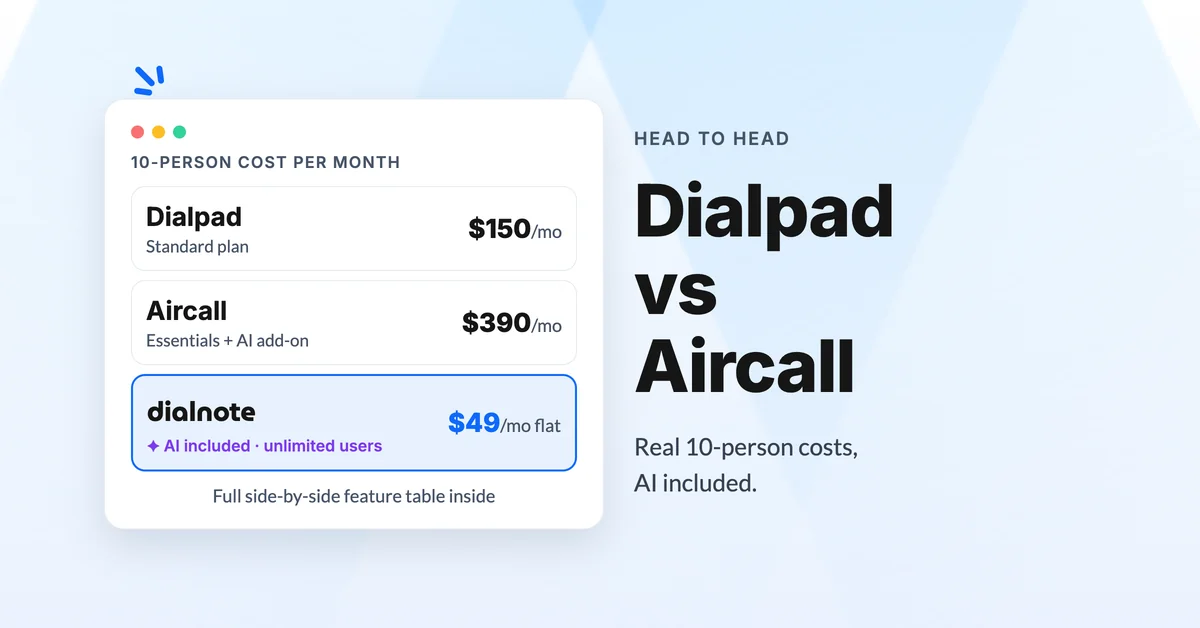
Dialpad vs Aircall: Which Phone System Wins?
Compare Dialpad vs Aircall on pricing, AI features, and real user reviews. Find out which business phone system best fits your growing team.
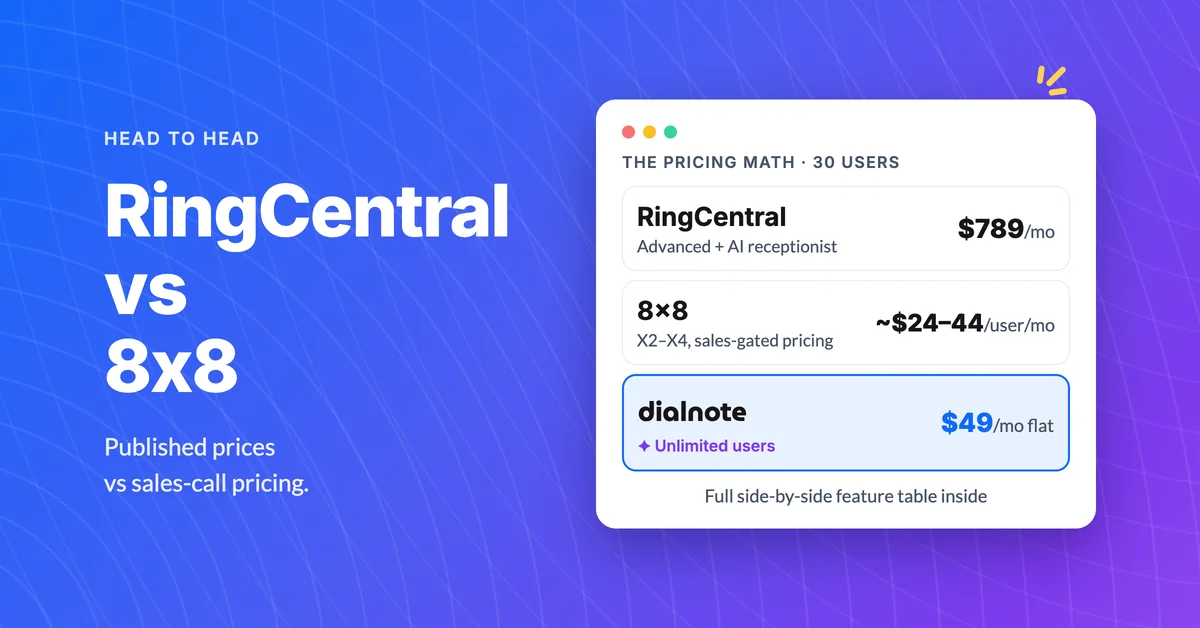
Is RingCentral or 8x8 the Better Business Phone?
Compare RingCentral vs 8x8 on pricing, AI features, and user reviews. Find out which business phone system wins and why dialnote is worth a look.