OpenPhone vs Nextiva: Which Is Better in 2026?
If you're comparing OpenPhone vs Nextiva in 2026, you're looking at two solid but very different business phone systems. OpenPhone (now rebranded to Quo) is built for lean startups. Nextiva targets mid-size teams that want a full unified communications stack. Both get the job done, but they come with trade-offs on pricing, features, and AI capabilities.
Tanya runs a sales team of 10 at a growing agency. Last quarter, her phone bill hit $350/month on Nextiva's Core plan, and every new hire added another $36 to the tab. Her reps were spending 45 minutes a day writing up call notes manually. Sound familiar?
She looked at OpenPhone as a cheaper option. On paper, the pricing worked. But when she dug into what's actually included, the picture got murkier. That's what this comparison is really about: cutting through the marketing pages and showing you what each platform actually delivers.
If Dialpad is also in your mix, our Dialpad vs Nextiva comparison shows exactly how Nextiva's AI features and pricing stack up against another common alternative teams evaluate side by side.
We also include dialnote in this comparison because it fills a gap that both OpenPhone and Nextiva leave open: AI-powered calling with unlimited users at a flat monthly cost. If you're shopping for a business phone system, it's worth seeing how all three stack up.
TL;DR:
- OpenPhone vs Nextiva comes down to price versus depth: OpenPhone (now Quo) starts at $15/user/month for lean startups, while Nextiva starts at $30/user/month with a fuller unified communications stack for mid-size teams.
- Both OpenPhone and Nextiva charge per seat, so your bill climbs with every new hire. dialnote charges a flat rate with unlimited users, starting at $49/month.
- All three advertise "unlimited" calling, but each has fair use limits in the fine print, so budget for calling charges no matter which provider you pick.
- dialnote is the only one of the three that includes AI call summaries and transcription on its entry-level plan, plus a native AI SMS agent, numbers in 5 countries (US, Canada, UK, India, France), and calling to 90+ countries.
- For a team of 10 that needs calling, AI summaries, and a receptionist, dialnote runs about $99/month versus roughly $255/month for OpenPhone and $750+/month for Nextiva's Power Suite.
What makes OpenPhone and Nextiva different?
OpenPhone (recently rebranded to Quo) is a lightweight phone system built for startups and small teams. Nextiva is a larger unified communications platform that serves SMBs up to enterprise. They solve different problems at different price points.
OpenPhone/Quo keeps things simple. You get a business number, calling and texting within the US and Canada, and a clean app. Their AI agent, Sona, handles basic call answering and message-taking. It's a good fit if you need a no-frills second line for a small team.
Nextiva goes bigger. You get voice, video, SMS, and a full contact center stack if you need it. Their AI features focus on agent assist and transcription, mostly on their higher-tier plans. It's built for teams that want everything under one roof.
dialnote sits in between. You get calling, texting, AI-powered call handling, and analytics, all with unlimited users starting at $49/month. No per-seat math. No surprise bills when your team grows. Plus, every plan includes a generous pool of domestic calling minutes for your number's region, shared across the whole team under fair use, so if your team is in Australia, the UK, or the US, in-region calls come out of that included pool instead of a per-seat add-on. It's backed by the same group behind SmartReach.io, a team that's been building B2B communication tools for over 25 years.
How do OpenPhone and Nextiva compare on pricing?
OpenPhone starts at $15/user/month (annual billing) on their Starter plan. Nextiva's cheapest plan with voice is Core at $30/user/month (annual). Both charge per seat, so costs scale linearly with your team.
Here's what each platform charges:
OpenPhone/Quo plans:
- Starter: $15/user/month (annual) or $19/month monthly
- Business: $23/user/month (annual) or $33/month monthly
- Scale: $35/user/month (annual)
Nextiva plans:
- Digital: $20/user/month (annual), no voice
- Core: $30/user/month (annual), voice + basic
- Engage: $40/user/month (annual), call recording + analytics
- Power Suite: $75/user/month (annual), full contact center
dialnote plans (unlimited users):
- Team: $49/month flat, unlimited team members
- Business: $99/month flat, unlimited team members + 5 AI agents
- Pro: $199/month flat, unlimited team members + 10 AI agents
Notice the difference? With OpenPhone and Nextiva, adding a 5th, 10th, or 20th team member bumps your bill every time. With dialnote, it doesn't. Your 4th teammate costs the same as your 40th.
If you need per-user pricing and your billing needs to stay under $49/month, dialnote offers that too, starting at $15/user/month. But for most growing teams, the unlimited plans on dialnote's pricing page are where the value is.
The "unlimited calling" myth
Honestly? "Unlimited calling" is marketing spin. Every platform on this list advertises it. But they all have fair use policies hiding in the fine print.
OpenPhone's fair use policy reserves the right to "impose limits and charge overages" if your usage isn't "consistent with normal, fair, and reasonable use." One source cites limits around 1,000 minutes and 3,000 messages. For a busy sales team making 50+ calls a day, that cap gets hit fast.
Nextiva's policy is slightly more generous for standard calling, but toll-free minutes are capped at 2,000 on the Engage plan and 10,000 on Power Suite. They also ban predictive dialers entirely.
dialnote's plans include a set pool of domestic calling minutes for your number's region (700/month on Team, scaling to 2,800 on Pro), shared across your whole team under fair use. That means if you're based in Australia and take an Australian number, your in-region calls come out of that pool. The difference? dialnote is transparent about what's included and doesn't hide the limits behind vague language. Plus, if you go over your pool or call internationally, it's clear: those minutes draw from one shared prepaid wallet at published per-country rates.
Bottom line: Budget for calling charges over and above any "free" limits. Every provider has them. At least with dialnote, you know what you're paying.
What does a team of 10 actually pay?
For a team of 10 on yearly billing, here's the monthly cost:
| Platform | Plan | Monthly cost (team of 10) | Calling charges |
|---|---|---|---|
| OpenPhone | Business | $230/month | Included (fair use limits apply) |
| Nextiva | Core | $300/month | Included (fair use limits apply) |
| Nextiva | Engage | $400/month | Toll-free capped at 2,000 min |
| dialnote | Team | $49/month | Included (fair use limits apply) |
| dialnote | Business | $99/month | Included (fair use limits apply) |
That's not a typo. dialnote's Business plan with AI agents, advanced analytics, and unlimited users costs $99/month total, while Nextiva Core alone runs $300/month for 10 seats with no AI features. You'd save over $2,400 a year by switching.
And remember: all three platforms have fair use limits on their "unlimited" calling. So add calling overage costs to your budget regardless of which provider you pick.
What AI features actually matter for business calls?
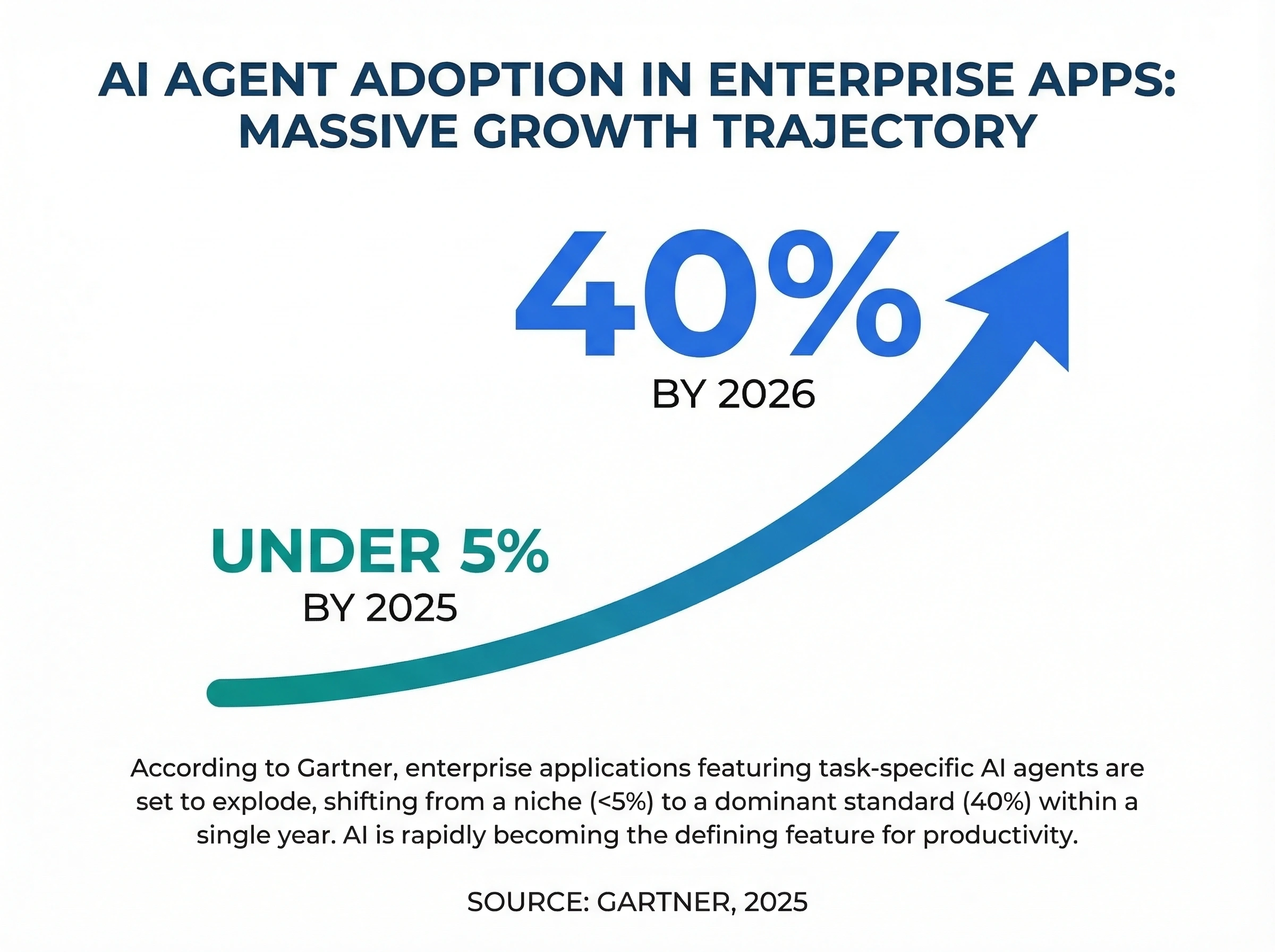
This is where the comparison gets interesting. According to Gartner, 40% of enterprise apps will have task-specific AI agents by 2026, up from under 5% in 2025. AI isn't a nice-to-have anymore. It's the feature that separates a phone system from a productivity tool.
But what happens when your AI doesn't actually do anything useful?
OpenPhone's AI (Sona):
- Answers calls and takes messages (10 free calls/month, then $25+/month)
- AI call summaries and transcripts (Business plan and up)
- AI call tags (Scale plan only)
- No AI SMS agent, no call evaluations, no bulk SMS
Nextiva's AI:
- AI transcription and call summaries (Power Suite at $75/user/month)
- AI agent assist for real-time coaching (Enterprise plans)
- AI receptionist (XBert, available as add-on)
- No native AI SMS agent, limited AI on lower plans
dialnote's AI:
- AI receptionist that answers calls 24/7, handles FAQs, captures leads, and books appointments (included on Business plan and above; $30/month base top-up for AI agent usage)
- AI call summaries and transcription on every plan, including Team
- AI SMS agent for automated text responses
- AI call evaluations with disposition codes and tagging (Pro plan)
- AI CRM updates that push call data automatically
- 14-language support for multilingual teams
- AI agents that transfer calls, route to departments, and send scheduling links
Most business phone systems bolt on AI as an afterthought. It shows. OpenPhone gives you 10 free Sona calls a month and charges for more. Nextiva locks AI transcription behind their $75/user plan. dialnote includes AI on every tier, starting with the $49/month unlimited plan.
One thing worth knowing: across the board, AI receptionist features come with AI usage costs. Most providers charge roughly $1 per minute for AI-handled calls. That applies to OpenPhone's Sona, Nextiva's XBert, and dialnote's AI agents alike. So when you're budgeting, factor in AI usage on top of your plan cost.
For inbound call centers especially, features like AI receptionist, AI SMS agent, call evaluations, bulk SMS, and call queueing aren't luxury add-ons. They're table stakes. dialnote provides all of them. For a broader rundown of how the major platforms stack up on these same features, see our comparison of the best call center software.
Want to see it yourself? dialnote offers a free AI receptionist demo on its website so you can test the experience before signing up.
OpenPhone vs Nextiva vs dialnote: full feature comparison
Here's the full breakdown. We've included the features that matter most for growing teams:
| Feature | OpenPhone (Quo) | Nextiva | dialnote |
|---|---|---|---|
| Starting price | $15/user/month | $30/user/month | $49/month (unlimited users) |
| Unlimited users | No (per-seat) | No (per-seat) | Yes |
| Unlimited calling (US/CA) | Yes (fair use) | Yes (fair use) | Included in-region pool + wallet |
| International calling | Per-minute rates | Per-minute rates | 90+ countries, per-country (wallet) |
| AI receptionist | Sona (10 free calls/mo) | XBert (add-on) | Built-in (Business+) |
| AI call summaries | Business plan+ | Power Suite ($75/user) | All plans |
| AI SMS agent | No | No | Yes |
| AI call evaluations | No | Enterprise only | Pro plan |
| Bulk SMS | No | Limited | Coming soon |
| Call queueing | No | Engage plan+ | Pro plan |
| Call recording | Manual (Starter) | Engage plan+ | Manual (Team), Auto (Business+) |
| Video meetings | No | Yes (built-in) | No (calls only) |
| IVR/Phone menus | Business plan+ | All plans | All plans |
| CRM integrations | HubSpot, Salesforce | HubSpot, Salesforce, Zoho | HubSpot, Salesforce, Pipedrive, Zoho + more |
| Number coverage | US/CA only | US/CA primarily | US, CA, UK, India, France |
| 24/7 support | No (email only on Starter) | Yes (all plans) | Email + chat (Priority on Business+) |
A few things jump out. dialnote is the only platform offering AI call summaries on its entry-level plan. It's also the only one with a native AI SMS agent. And with numbers in five countries (US, Canada, UK, India, France) plus calling to 90+ countries, you're not locked into North America. If your team handles international calls, that matters.
If your team relies on video meetings, Nextiva has it built in. dialnote doesn't bundle video; teams keep using the Zoom or Meet account they already have alongside it.
What are real users saying?
Hard to say whether review scores tell the full story, but the patterns are consistent across G2, Capterra, TrustRadius, and Reddit.
OpenPhone/Quo feedback:
- Users love the clean interface and easy setup
- Biggest complaints: customer support is email-only on lower plans, bugs with contacts and call handling go unfixed for months, and "do not disturb" features don't work properly
- Some report dropped calls and reliability issues
- No phone support at all, just tickets
- Reddit threads frequently mention frustration with unresolved bugs, including contacts disappearing, calls not coming through, and coworker line-sharing issues
Nextiva feedback:
- Strong marks for uptime (99.999% SLA) and 24/7 support
- Complaints about the mobile app being buggy, echo on calls, and dropped connections
- Setup is simple for basics but custom configurations take forever
- Contracts auto-renew for full terms, which catches people off guard
- Users report that anything beyond basic setup requires long back-and-forth with support
dialnote feedback:
- Users highlight the AI receptionist and call summaries as standout features
- The unlimited users model gets positive attention from growing teams
- As a newer platform, it has fewer total reviews, but the SmartReach.io group behind it is known for responsive, hands-on support across its products
- Clear escalation paths and direct access to the team when you need help
One pattern shows up across every platform: people consistently underestimate how much time AI call summaries save. According to McKinsey, AI reduces post-call documentation time significantly, freeing agents to focus on the next customer instead of writing up notes. When your reps aren't spending 30-45 minutes a day typing up call recaps, that's real productivity back in their pockets.
How AI changes the support and calling experience
The difference between a phone system with AI and one without is night and day. Think about what happens when a call comes in at 8 PM on a Friday. Without an AI receptionist, it goes to voicemail. Most callers don't leave one. That's a lost lead.
With dialnote's AI receptionist, that same call gets answered. The AI greets the caller, answers common questions from your knowledge base, captures their info, and books a meeting for Monday morning. Your rep walks in on Monday with a warm lead sitting in their CRM. No follow-up phone tag needed.
OpenPhone's Sona can do some of this, but only 10 calls a month for free. After that, you're paying extra. Nextiva's XBert is an add-on with separate pricing. With dialnote's Business plan, it's just... included. Five AI agents ready to go.
For teams that handle a lot of inbound calls, especially in home services, healthcare, or real estate, this makes all the difference.
Which phone system gives you the best ROI?
So what does that actually cost your team each month, when you factor in what you actually get?
Let's compare a real scenario: a team of 10 that needs calling, AI call summaries, and a receptionist.
| What you need | OpenPhone | Nextiva | dialnote |
|---|---|---|---|
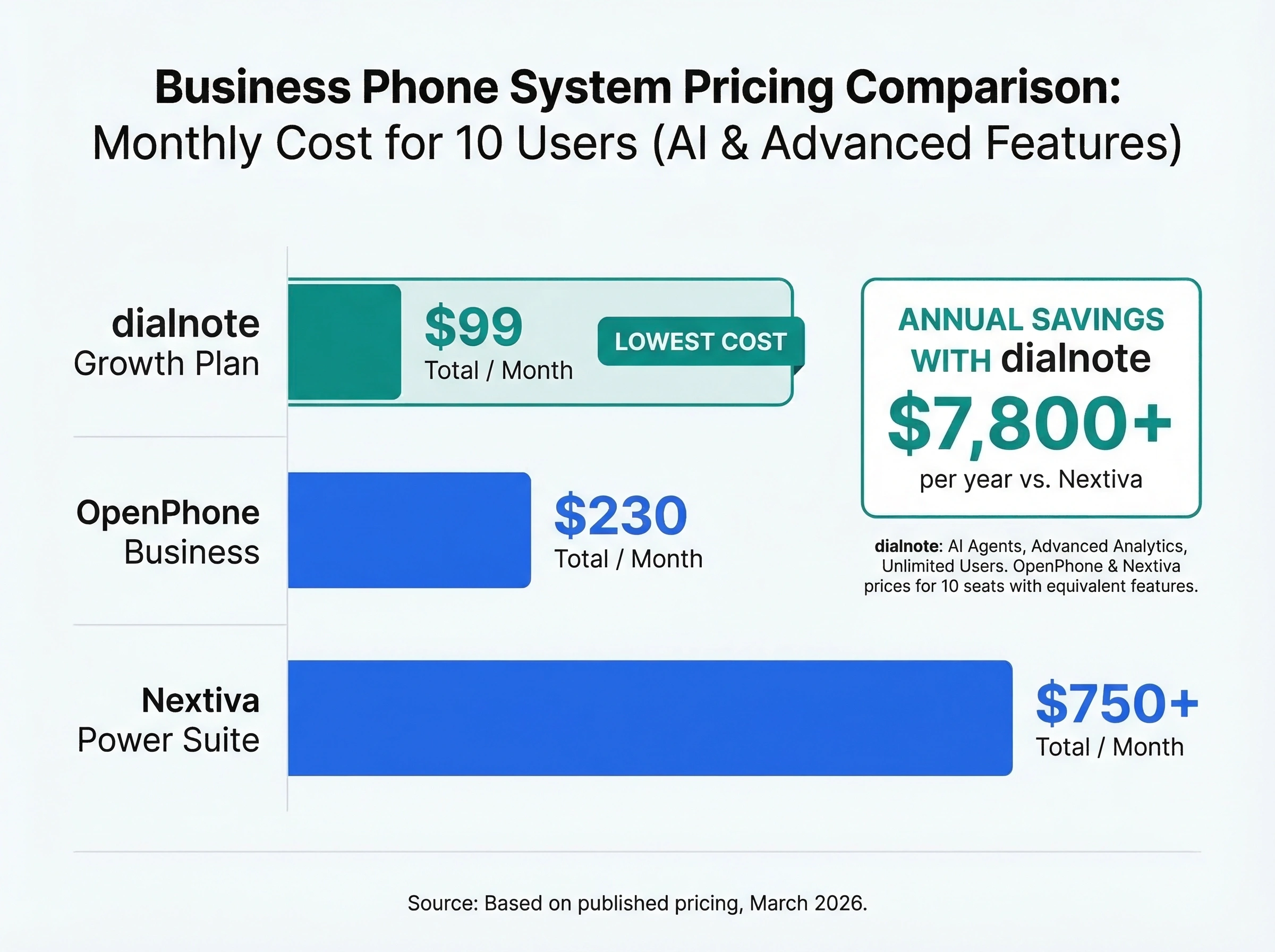
| Base plan (10 users) | Business: $230/mo | Power Suite: $750/mo | Business: $99/mo |
| AI receptionist | Sona: ~$25/mo (10 calls free) | XBert: add-on cost | Included on Business (5 AI agents) |
| AI call summaries | Included (Business) | Included (Power Suite) | Included (all plans) |
| Call recording | Included (Business) | Included (Power Suite) | Included (Business) |
| Total monthly | ~$255/month | ~$750+/month | ~$99/month |
| Annual cost | ~$3,060 | ~$9,000+ | ~$1,188 |
dialnote saves you roughly $1,872/year vs OpenPhone and over $7,800/year vs Nextiva's Power Suite. That's money you can put into hiring, training, or tools that actually move the needle.
Keep in mind: all three platforms charge AI usage costs on top of your plan. AI receptionist calls run roughly $1 per minute across the board. So your actual spend depends on how many AI-handled minutes you use each month. But even with AI usage factored in, dialnote's flat base pricing keeps total costs well below the per-seat alternatives.
And that's before counting the productivity gains. When your AI handles call summaries, routes calls automatically, and manages after-hours inquiries, your team spends less time on admin and more time on revenue. According to Gartner, agentic AI will autonomously resolve 80% of common customer service issues by 2029, cutting operational costs by 30%.
dialnote isn't just cheaper. It's built to give growing teams a phone system that scales without scaling costs.
So which should you pick: OpenPhone, Nextiva, or dialnote?
It depends on what you need. Here's the quick version:
Pick OpenPhone if you're a very small team (2-3 people) that wants a simple second business line with basic features. It's affordable at the per-user level and the app is clean.
Pick Nextiva if you need a full unified communications stack with built-in video, enterprise-grade uptime, and a large contact center. Be ready to pay for it.
Pick dialnote if you want AI-powered calling, unlimited users, and a phone system that doesn't punish you for growing your team. It's the strongest option for teams that care about AI features, cost efficiency, and international reach across 90+ countries.
We built dialnote because we saw teams stuck between cheap-but-limited systems and expensive platforms with AI locked behind top-tier plans. You shouldn't have to choose between affordability and smart features. We've been building B2B communication tools at SmartReach.io for over 25 years, used by thousands of companies, and we brought that same engineering depth to dialnote.
One more thing: dialnote isn't limited to US and Canadian numbers. You can pick numbers in the US, Canada, UK, India, and France (with more countries opened on request), and call out to 90+ countries, which makes it a fit for international teams that neither OpenPhone nor Nextiva can fully serve.
Give dialnote's AI receptionist a try and see the difference for yourself. The free trial takes 10 minutes to set up, and you don't need a credit card to start.
Frequently asked questions
OpenPhone is cheaper per user, but Nextiva offers more features like video and 24/7 support. For small teams that want AI and unlimited users, dialnote starts at $49/month flat with no per-seat charges.
OpenPhone advertises unlimited calling to the US and Canada, but it's subject to a fair use policy. Limits around 1,000 minutes apply, and heavy usage can trigger overage charges.
Nextiva's Core plan costs about $300/month for 10 users on annual billing. Their Power Suite with AI features runs $750/month for the same team size.
dialnote's Team plan at $49/month includes AI call summaries and transcription for unlimited users. That's cheaper than OpenPhone or Nextiva when you factor in team size.
Yes. dialnote sells numbers in the US, Canada, UK, India, and France, with calling to 90+ countries at transparent per-country rates. OpenPhone and Nextiva are mainly limited to US and Canadian numbers.

Written by
Lancelot Dsouza
Chief Marketing Officer, SmartReach.io
Lancelot Dsouza is the Chief Marketing Officer at SmartReach.io, where he built the Marketing, Sales, and Customer Success verticals from the ground up. With over 25 years of experience spanning digital marketing, business development, and strategic...
Lancelot Dsouza is the Chief Marketing Officer at SmartReach.io, where he built the Marketing, Sales, and Customer Success verticals from the ground up. With over 25 years of experience spanning digital marketing, business development, and strategic...
Related Articles
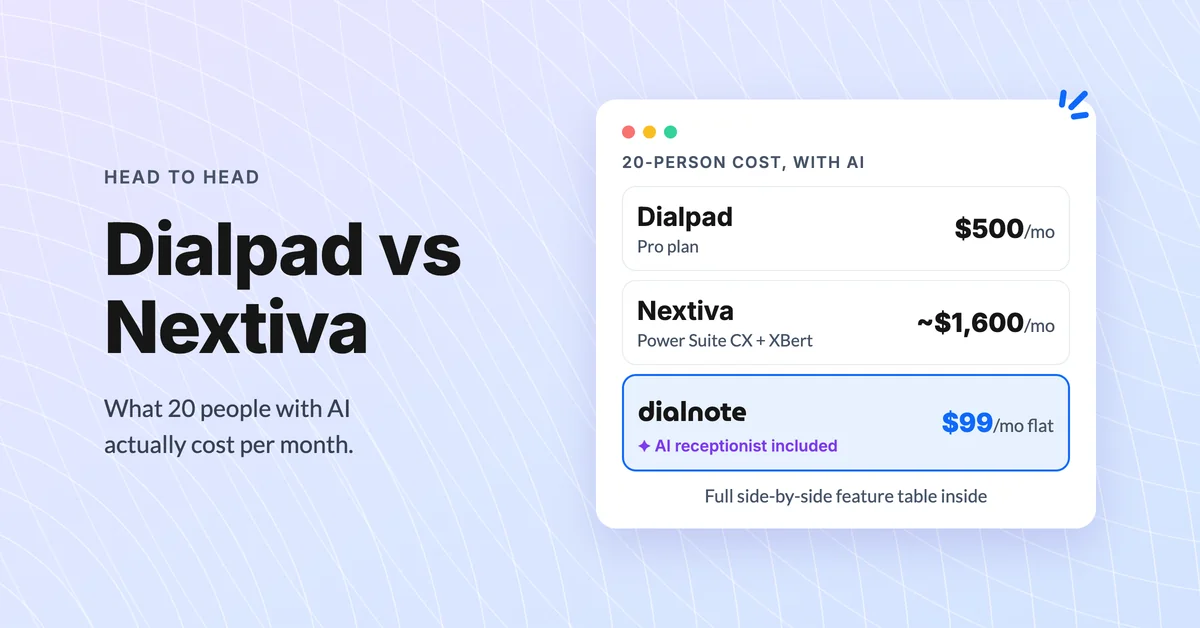
Dialpad vs Nextiva: Which Phone System Wins?
Compare Dialpad vs Nextiva on pricing, AI features, and real-world limits. Discover which business phone system fits your team best in 2026.
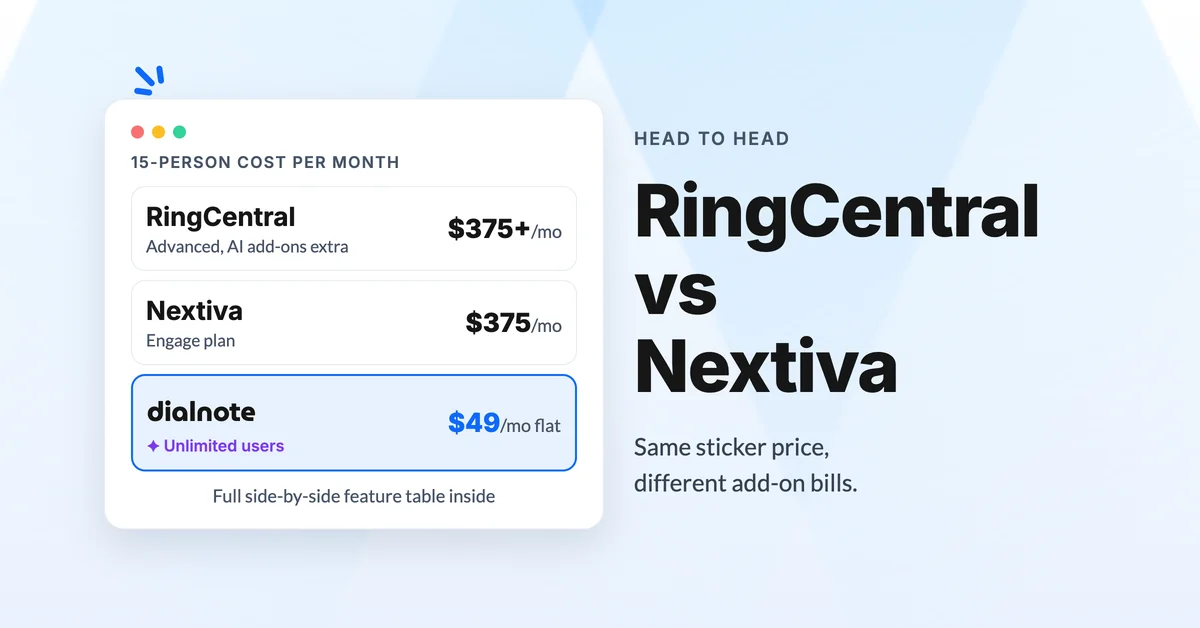
RingCentral vs Nextiva for Business Phone Systems
Compare RingCentral vs Nextiva on pricing, AI features, and user reviews. See why dialnote is the smarter choice for modern teams.
OpenPhone vs 8x8: Which Should You Choose?
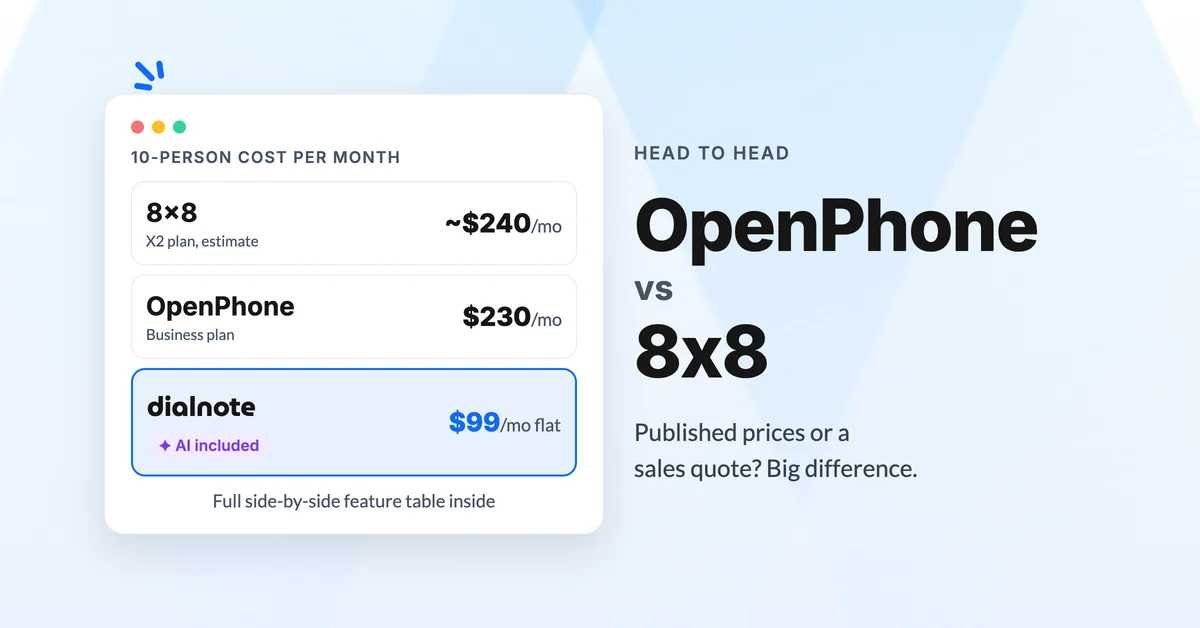
Compare OpenPhone vs 8x8 on pricing, quote-only sales, and AI answering, then see why dialnote may fit small teams better than both.