Why do you need an AI receptionist for e-commerce?
Your online store is open 24/7. Your phone line probably isn't. An AI receptionist for e-commerce changes that by answering every call, day or night, without adding headcount.
That gap between when customers want to reach you and when someone actually picks up? It's costing you more than you think. Orders get abandoned mid-checkout. Product questions go unanswered. And customers who can't get through on the first try rarely bother calling back.
The good news: tools like dialnote already handle most of what we'll cover here, from taking orders over the phone to sending abandoned cart reminders and fielding product questions at 2 AM. You don't need to build this from scratch.
Stan runs an online fitness equipment store with a three-person team. Last month, he pulled his phone logs and found 23 missed calls in a single week. Most came during peak hours when his crew was busy packing and shipping orders.
He traced at least five of those calls to customers asking about product specs before placing orders over $500. That's potentially $2,500 or more in lost revenue from just one week of missed calls.
TL;DR:
- An AI receptionist for e-commerce answers every call 24/7, checks order status, fields product questions, and handles returns without adding staff.
- Phone callers convert at a higher rate than website browsers, so sending high-intent buyers to voicemail quietly loses sales you never see.
- The math works fast: AI calls cost about $2-$3 each versus $6-$8 with a human agent, and most stores handling 50+ calls a month recover the cost within a quarter.
- The biggest wins come from after-hours and peak-season calls, when small teams can't staff the phone but shoppers still want answers.
- With dialnote you can go live in about an hour, with full training on your store's queries taking three to five days.
Why e-commerce phone support is harder than it looks
Running phone support for an online store isn't like running it for a local business. A dentist's office gets predictable call types at predictable times. E-commerce is a different animal entirely.
First, there's the Amazon effect. Online shoppers are trained to expect instant, accurate answers. They want to know exactly where their package is, exactly when it'll arrive, and exactly what to do if something's wrong.
If your store can't match that speed, they notice. And they remember.
Then there's the channel problem. Your customers are reaching out through email, live chat, social media DMs, and phone, sometimes all in the same day about the same order. Your small team is jumping between platforms, and the phone keeps ringing in the background. Something always slips.
Seasonal swings make it worse. A store that handles 20 calls a week in February might get 200 a week in November and December. Hiring temp staff for a two-month spike is expensive and slow.
Training them on your products, policies, and systems takes weeks you don't have. By the time they're up to speed, the rush is over.
And here's the part most e-commerce founders underestimate: phone callers convert at a much higher rate than website browsers. Someone who takes the time to call your store is further along in their buying decision than someone casually scrolling your product page. Losing those callers to voicemail is like turning away your most motivated shoppers at the door.
There's also the trust factor. E-commerce still has a credibility gap for many shoppers, especially for first-time buyers on a new site. When a customer calls and reaches a live, responsive voice (even an AI one), it signals that a real company stands behind the website.
That reassurance can be the difference between a completed order and an abandoned cart. Smaller brands competing against Amazon-level logistics need every trust signal they can get.
What is an AI receptionist for e-commerce?
An AI receptionist is a voice-powered virtual agent that answers phone calls for your online store automatically. It understands natural language, responds in real time, and handles common customer requests without any human involvement.
Think of it as a phone-based support agent that never clocks out. But unlike a basic IVR menu ("press 1 for orders, press 2 for returns"), an AI receptionist actually holds a conversation. Customers can ask open-ended questions like "where's my order?" or "do you carry this in size large?" and get a real answer back.
For e-commerce specifically, these systems connect to your store's backend. They pull up order tracking info, check inventory, share shipping timelines, and walk customers through your return process. Some can even process payments over the phone.
This isn't the same thing as a chatbot on your website. Chatbots handle text-based conversations, but an AI receptionist manages actual phone calls with voice interaction. For customers who prefer calling, and there are more of them than you'd think, this distinction matters a lot. A growing number of small businesses are already using AI voice assistants to handle routine calls, and e-commerce stores stand to gain the most from this shift.
Why do online stores lose sales from missed calls?
Online stores lose sales from missed calls because most small e-commerce teams can't staff a phone line during every hour customers want to shop. Peak call times often overlap with peak operational demands like fulfillment and shipping.
Here's what makes this tricky. E-commerce isn't a 9-to-5 business. Your store is open around the clock, but your team isn't.
Customers browse at midnight. They call with questions on weekends. During flash sales or holiday seasons, call volume can spike 3x or more, and that's exactly when your team is stretched thinnest.
Not all missed calls are equal, either. Some are quick questions ("what's your return window?") that take 30 seconds to answer. Others are high-intent buyers ready to place a $300 order but need one last question answered before they commit.
When both types hit voicemail, you lose the easy wins and the big ones alike. The frustrating part is you'll never know which calls were worth how much, because those customers just quietly go elsewhere.
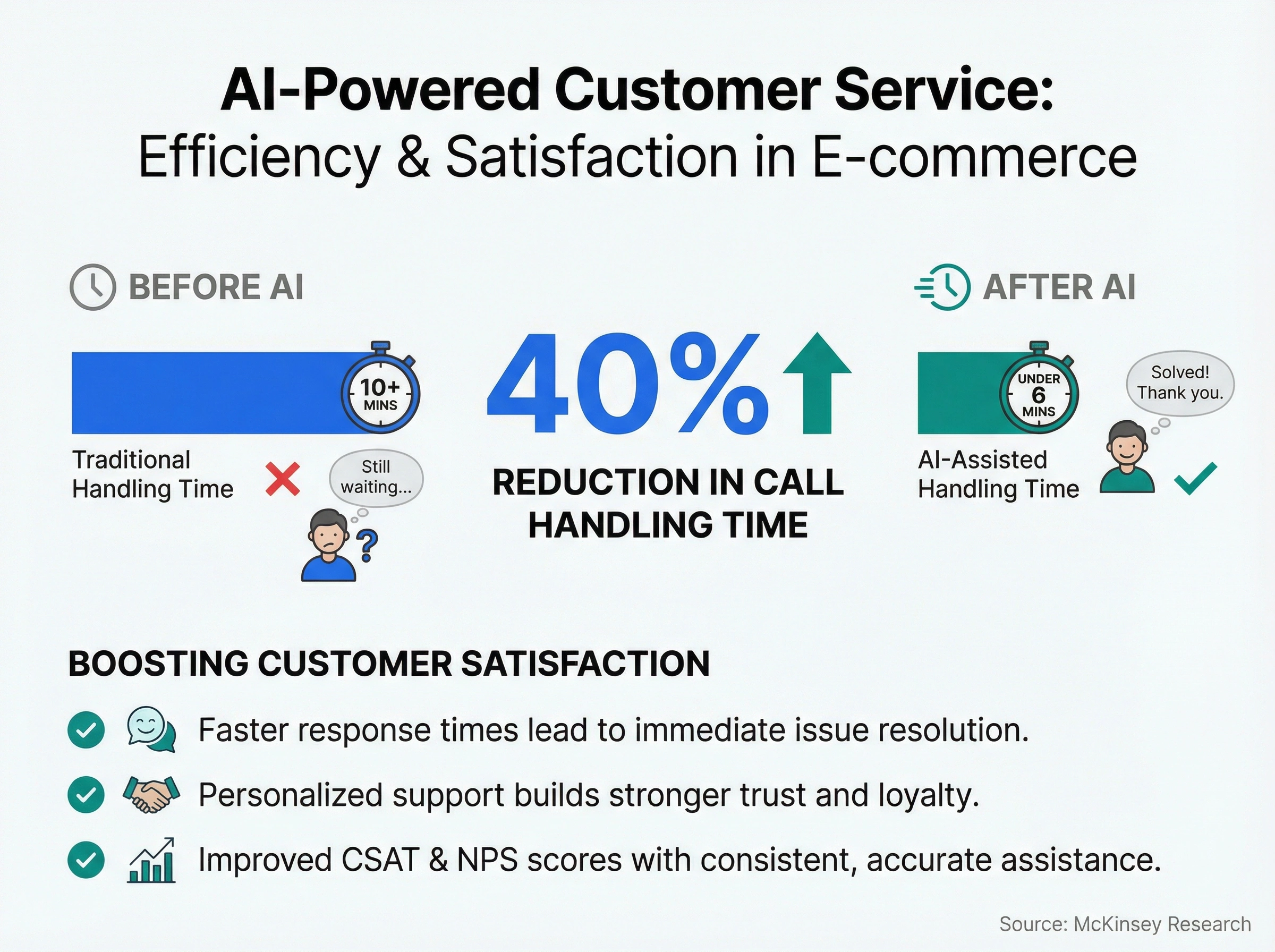
According to McKinsey research, companies that invest in AI-powered customer service see up to a 40% reduction in call handling time and significant improvements in customer satisfaction scores. The flip side? Stores that don't pick up lose those customers to competitors who do.
The trend is accelerating. A Gartner report projects that by 2028, 60% of customer service interactions will be handled by AI agents. E-commerce is leading this shift because online shoppers expect fast, always-on support.
Long customer wait times kill conversions. When a potential buyer calls your store and hits voicemail, they don't leave a message. They Google your competitor and call them instead. In e-commerce, where switching costs are basically zero, every unanswered call is a gift to someone else.
But what happens when a customer actually wants to talk to a real person? That's the common fear. And it's valid. Not every call can be handled by AI.
The good news is modern AI receptionists identify when a caller needs a human and transfer the call right away. Routine requests like order status checks or return questions don't need a person at all, and those make up the bulk of e-commerce phone traffic.
How does an AI receptionist handle e-commerce calls?
An AI receptionist handles e-commerce calls by connecting to your store's data and using natural language processing to understand and respond to customer requests in real time. It's not reading from a script. It's pulling live information and having an actual conversation.
Order tracking and shipping updates
A customer calls asking "where's my order?" The AI pulls up their order by phone number or order ID, checks the shipping carrier's status, and reads back the tracking details. No hold time. No transferring between departments. The entire interaction takes under a minute.
This matters more than you'd think. Order status is the number one reason e-commerce customers call. During peak shipping seasons like the holidays, these calls can flood your lines.
When an AI handles them automatically, your human team stays focused on the problems that actually need creative thinking.
Some AI receptionists go a step further and actually take new orders over the phone. A customer calls at 11 PM wanting to order a set of resistance bands? The AI captures the product selection, collects the delivery address, confirms the order details with the caller, and sends them a confirmation message via SMS. Your team walks in the next morning to a clean order summary ready for fulfillment. No one had to be awake for it.
Product questions and availability
"Do you carry this jacket in medium?" The AI checks your inventory in real time and gives a straight answer. If the item's out of stock, it can suggest alternatives or let the customer know when it'll be back. For stores with large catalogs, this saves your team from fielding dozens of repetitive questions every day.
Pre-purchase support
Here's one that most store owners overlook. A lot of callers aren't checking on existing orders. They're thinking about buying but need a question answered first. "Is this compatible with my existing setup?" "What's the difference between the Pro and Standard model?" "Can I get this by Friday if I order today?"
These are high-value calls. A customer who picks up the phone before buying is signaling strong intent. If the AI can give them a clear answer right away, the sale closes. If they hit voicemail, they're probably browsing your competitor's site within 30 seconds.
Model comparison questions are especially common for stores selling technical products. "Should I get the 10-pound or 15-pound kettlebell?" "What's different about the Pro versus the Basic plan?" When your knowledge base is solid, covering specs, use cases, and comparison notes, the AI handles these confidently. It doesn't guess. It pulls from the information you've uploaded and gives callers a specific, accurate answer.
Returns and refund requests
Return policies confuse people. Even if yours is clearly posted on your website, customers still call because they want confirmation from a real voice. An AI receptionist walks callers through the process step by step: confirming eligibility, explaining the timeline, and generating return labels when needed.
Returns rank among the highest-volume call types for e-commerce, and they're almost entirely automatable. When returns are handled smoothly, customers are more likely to buy from you again. When they're handled poorly (or not at all because nobody picked up), you lose that customer permanently.
After-hours support
This is where AI receptionists really earn their keep. Your team goes home at 6 PM, but your AI keeps answering calls until morning. For stores selling to multiple time zones (or running international campaigns), this alone can be a major revenue driver.
Think about it this way: if 30% of your web traffic comes in after business hours, and even a small fraction of those visitors have a phone question before buying, that's revenue you're currently leaving on the table every single night. An AI receptionist turns those late-night callers into customers instead of missed opportunities.
Honestly? Most e-commerce stores don't need a full call center. They need a phone system that picks up every single time and handles the routine stuff. An AI receptionist does exactly that, and it frees your team to focus on packing orders, sourcing products, and actually growing the business.
Abandoned cart recovery via SMS and WhatsApp
Here's a feature most store owners don't expect from a phone system. Some AI receptionists can auto-send SMS or WhatsApp messages to customers who abandoned their carts. A shopper adds items, starts checkout, and disappears. The AI follows up with a quick message: "Hey, you left something in your cart. Need help finishing your order?"
It's not pushy. It's a nudge at the right moment. And because it comes through SMS or WhatsApp (channels people actually check), response rates tend to be higher than email. For stores running flash sales or limited-stock items, this kind of follow-up can recover thousands in revenue each month that would've otherwise vanished.
Multilingual support for international stores
If you sell internationally (or even to bilingual communities domestically), language barriers cost you sales. Many AI receptionists can handle calls in multiple languages, switching automatically based on the caller's preference. For a store shipping to both the US and Latin America, that means Spanish-speaking customers get the same quality of support as English-speaking ones, without hiring bilingual staff.
Escalation to humans
When a caller has a complex issue, like a damaged item, a billing dispute, or an emotional complaint, the AI recognizes it can't resolve the situation alone. It collects the relevant details, logs everything in your system, and routes the call to a human agent or schedules a callback. Nothing falls through the cracks.
Is an AI receptionist worth it for your online store?
For most e-commerce stores handling more than 50 calls a month, an AI receptionist pays for itself within the first quarter. The cost savings and revenue recovery add up fast.
Let's look at the numbers. The average cost of an AI receptionist or AI voice agent runs about $1 per minute. A typical customer call lasts 2-3 minutes, so you're looking at $2-$3 per call. With a human agent, that same call costs around $6-$8 when you factor in salary, training, and downtime between calls.
If your store handles 500 calls a month, that's roughly $1,250 with AI versus $3,500 or more with human agents. That's over $27,000 saved in a year. And unlike a human team, an AI receptionist can handle 50 or more calls at the same time. During a Black Friday rush or flash sale, it won't buckle under volume.
But the real ROI comes from calls you're currently missing. If even 10% of your missed calls would have resulted in a sale, you're leaving serious money on the table.
Remember Stan's fitness equipment store? Those five missed calls per week at an average order value of $500 means roughly $10,000 in potential monthly revenue he isn't capturing. One missed call during a holiday sale could mean losing a customer for good.
There's also the repeat customer angle. E-commerce isn't just about the first purchase. A caller who gets quick, helpful support is more likely to come back and buy again. They're more likely to leave a positive review, too.
Over a 12-month period, the lifetime value of a retained customer often dwarfs the cost of the AI service that kept them happy in the first place.
Is it really worth the monthly cost? Most AI receptionist plans for small to mid-sized e-commerce stores run between $50 and $300 per month, and dialnote's pricing plans sit right in that range. Compare that to a part-time receptionist at $1,500 or more per month, and the math speaks for itself.
You're not just saving on salary. You're also saving on training, benefits, scheduling, and the inevitable turnover.
The data isn't entirely clear on whether AI receptionists directly reduce cart abandonment rates. But early numbers look promising, and the logic makes sense: when customers can get their questions answered before buying, they're more likely to complete the purchase. Some store owners report a 15-20% increase in phone-originated orders after adding AI phone support, though results vary widely depending on the product category and call volume.
One thing to keep in mind. Not every AI receptionist is built for e-commerce. You'll want one that connects to your store platform, pulls real-time data, and handles the specific types of calls online stores get. A generic virtual receptionist designed for dental offices or law firms won't cut it for order tracking and inventory questions.
Here's a rough comparison to put the costs in perspective:
| AI receptionist | Part-time human | Full-time human | |
|---|---|---|---|
| Monthly cost | $50-$300 | $1,500+ | $3,000+ |
| Hours covered | 24/7 | 20-30 hrs/week | 40 hrs/week |
| Calls handled simultaneously | 50+ at once | 1 at a time | 1 at a time |
| Training time | 1 hour to go live | 2-4 weeks | 2-4 weeks |
| Holiday/weekend coverage | Included | Extra cost | Extra cost |
The numbers don't lie. For stores that get steady call volume, AI wins on cost, coverage, and scalability.
Which e-commerce businesses benefit most?
Not every online store needs an AI receptionist right away. But some business models get outsized value from one.
High-ticket product stores
Stores selling furniture, electronics, fitness equipment, or anything over $200 tend to get more pre-purchase phone calls. Buyers want reassurance before spending that kind of money online. An AI receptionist that can answer detailed product questions closes those sales instead of losing them.
Subscription and recurring order businesses
Subscription box companies and stores with auto-replenishment deal with a constant stream of calls about billing dates, skipping shipments, and canceling or pausing subscriptions. These are repetitive, rule-based interactions that AI handles perfectly.
Flash sale and seasonal stores
If your revenue spikes during Black Friday, holiday seasons, or product launches, you already know the pain of scaling support. An AI receptionist handles the surge without any ramp-up time. It doesn't need to be hired two months early or let go in January.
DTC brands with complex product lines
Direct-to-consumer brands that sell technical products (supplements, skincare routines, specialty tools) field a lot of "which product is right for me?" calls. When the AI is trained on your product knowledge base, it can walk callers through compatibility, usage instructions, and recommendations based on their needs.
Stores with heavy return volumes
Apparel, footwear, and home goods stores deal with return rates of 20-30% or higher. Every return generates at least one phone call, often two or three. An AI receptionist handles the repetitive parts (checking return windows, explaining policies, generating labels) and only passes the tricky cases to your team. That alone can free up hours each week.
Skip an AI receptionist if your store gets fewer than 20 calls a month or if nearly all customer contact happens through email and chat. For everyone else, it's worth testing.
How to set up an AI receptionist for e-commerce
Setting up an AI receptionist for your online store takes less time than you'd expect. With dialnote, you can go live in about an hour. Getting the AI fully trained to handle your complete range of customer queries typically takes three to five days.
Step 1: Pick a platform that connects to your store
You need an AI receptionist that integrates with your e-commerce platform, whether that's Shopify, WooCommerce, BigCommerce, or another system. The integration is what allows the AI to access order data, inventory, and customer info in real time. It should also connect to your inventory management system and other e-commerce tools you rely on daily.
dialnote offers an AI receptionist built for businesses that rely on phone communication. The AI answers from knowledge bases you upload (return policy, shipping FAQ, product details) and collects the caller details you choose, like an order number and a callback number, then connects to your store stack through Zapier's 5,000+ apps, Shopify and WooCommerce included, with data syncing after each call. If you're not sure whether your stack is supported, check with their support team. Setup doesn't require a developer, and you can go live in about an hour.
Step 2: Set up your call flows
Decide what happens when a customer calls. Most stores set up flows for:
- Order status inquiries
- Product availability questions
- Return and refund requests
- General information (store hours, shipping policies, payment methods)
- Escalation to a human agent when needed
Map out the five or six most common call types your store gets, and build flows for those first. You can always add more later.
Step 3: Train the AI on your business
Upload your FAQ document, product catalog details, return policy, and shipping information. The more context the AI has, the better it handles calls. This isn't like training an employee for weeks. It's more like filling out a detailed form about how your business works.
Include specific details that callers ask about frequently: processing times, size guides, warranty terms, and any seasonal promotions you're running. The best results come from uploading real customer service transcripts or FAQ logs. These show the AI exactly how your customers phrase their questions, not just what the questions are about.
Think about the edge cases too. What happens when a customer asks about a product that's been discontinued? What if they want to combine two promotions? Covering these scenarios upfront means fewer escalations once you go live.
In dialnote this whole training step is one pass through the agent builder, no forms scattered across settings pages:
- Open AI Agents and click Create Agent → Voice Agent
- Pick AI-Powered Setup and describe your store in plain English
- Attach your return policy and shipping FAQ on the Knowledge Bases step
- Set Details to collect from callers, like order number and callback number
- Run a simulated call on Review & Test
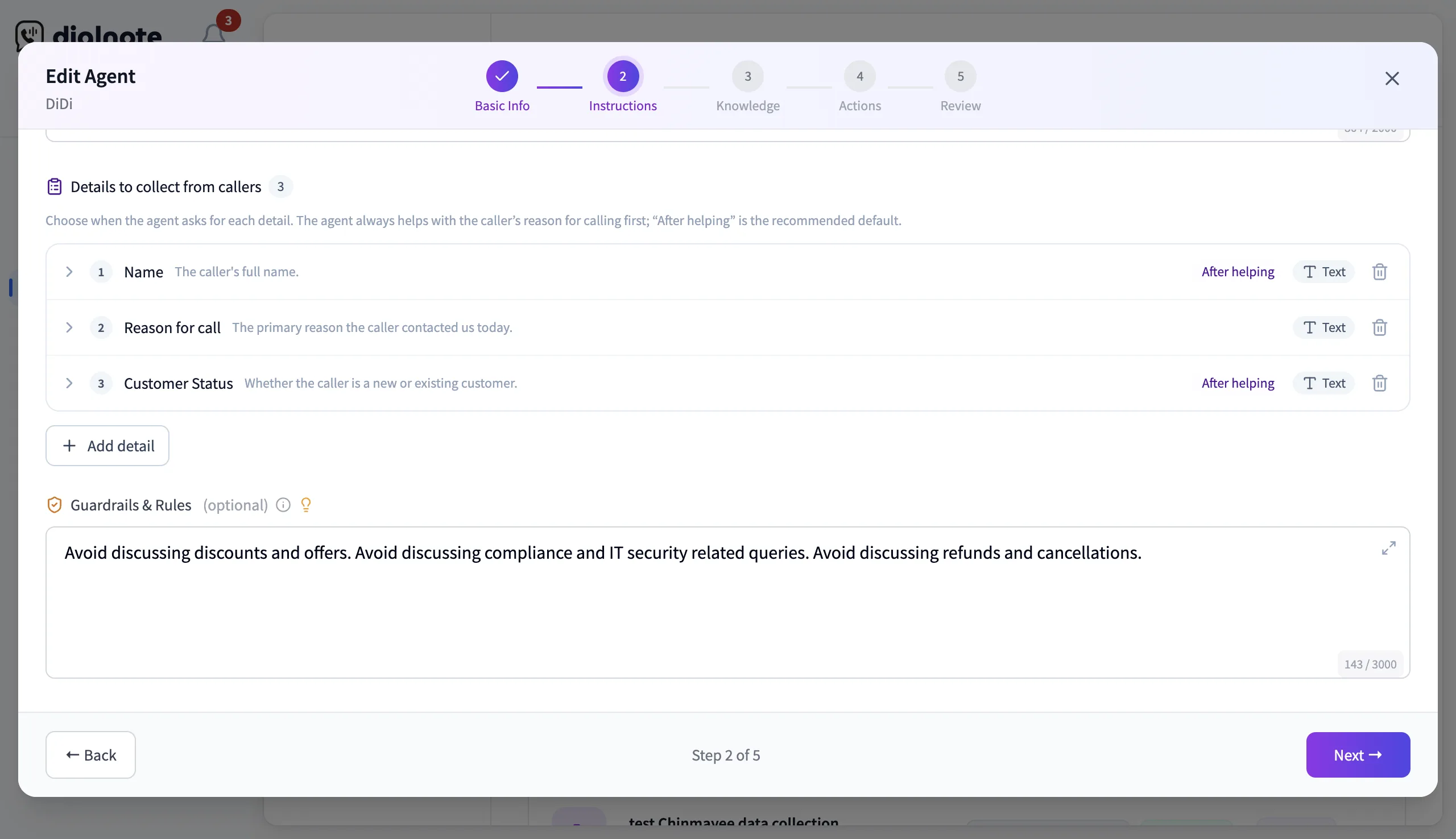
That details list is your order desk written as a script. A caller who wanted a live answer about their parcel leaves the call as a logged order number, a reason, and a callback number your team clears in one batch, instead of a day of phone tag. After the first week, add whichever detail callers keep volunteering on their own; that's the field your script was missing.
Build your store's AI receptionist in one sitting
10-day free trial, no credit card needed.
Step 4: Test before you go live
Run test calls before flipping the switch. Call your own number and pretend to be a customer with an order question. Then try a return request. Then ask something off-script and see how the AI responds.
Check that the AI handles your most common call types correctly. Listen to a few recordings and adjust the responses where they fall short. Pay extra attention to how it handles edge cases, like a caller asking two questions in one sentence or switching topics mid-call.
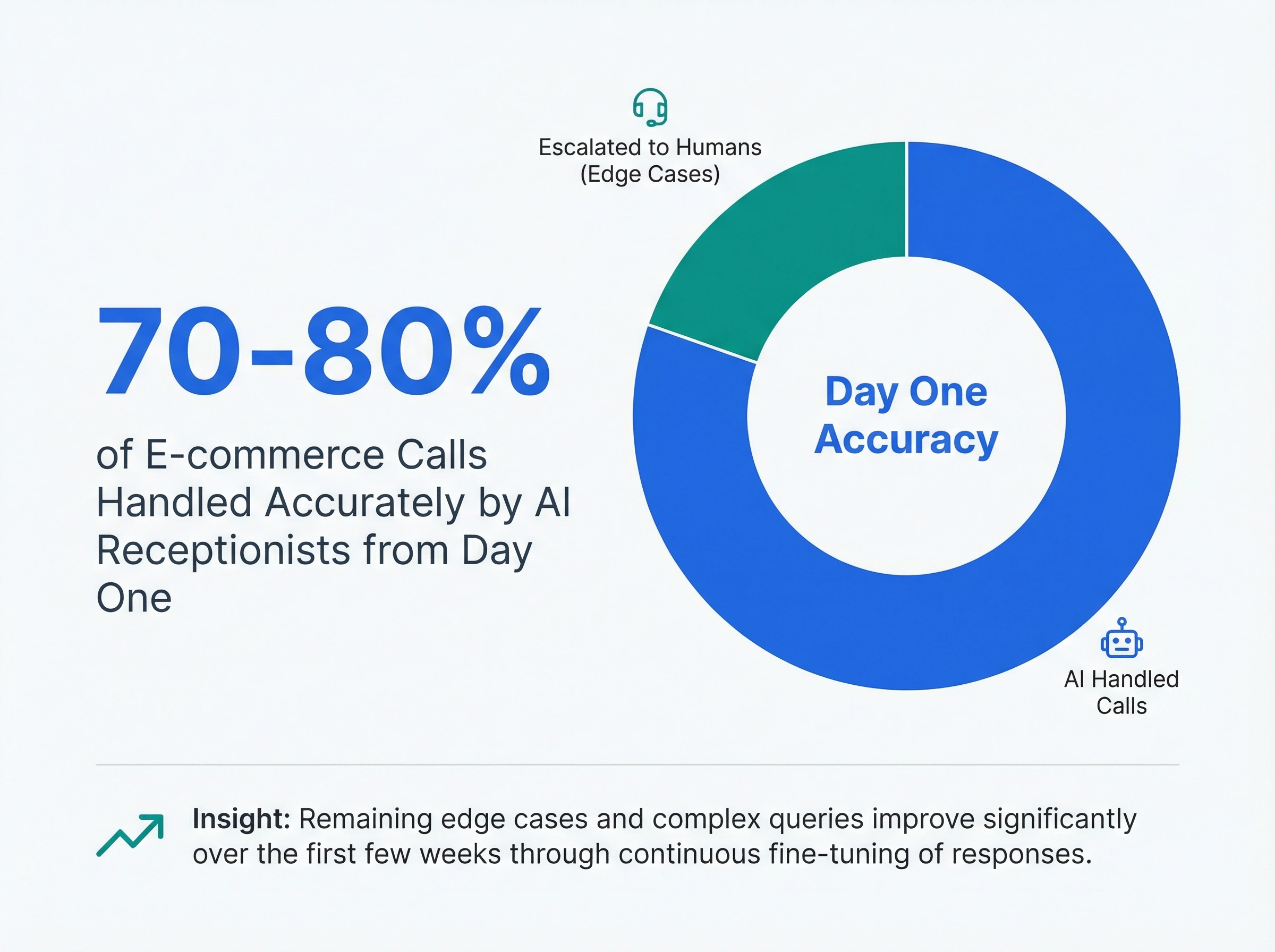
Most businesses find the AI handles 70-80% of calls accurately right away. The remaining edge cases improve over the first few weeks as you fine-tune the responses.
Step 5: Monitor and improve
Once live, review call logs and transcripts regularly. Look for patterns in calls that get escalated to humans. These are opportunities to expand what the AI handles on its own.
AI-powered call analytics track resolution rates, call duration, and even caller sentiment. That data makes it easy to spot which call types need better responses and which ones the AI already handles well.
Set a monthly review cadence. Spend 30 minutes listening to a sample of AI-handled calls and escalated calls. This is the fastest way to spot gaps and keep improving the experience.
Also pay attention to seasonal shifts. Your call patterns in December will look very different from July. Update the AI's knowledge base before big sales events, product launches, or policy changes so it's always working with current info.
Growing your e-commerce business with an AI receptionist
E-commerce moves fast. Customers expect instant answers, and they don't care if it's a Tuesday afternoon or a Sunday at midnight. An AI receptionist for e-commerce gives your store the ability to answer every call, capture every lead, and support every customer, regardless of the hour.
The online stores that grow fastest aren't necessarily the ones with the biggest teams. They're the ones that use smart systems to do more with less. An AI receptionist is one of those systems. It handles the phone so your people can handle everything else.
What should you expect in the first month? Most stores see immediate results on after-hours call capture. Within two to three weeks, the AI starts handling 70-80% of calls without escalation.
By month two, you'll have enough call data to spot trends, like which products generate the most questions or which hours drive the highest call volume. That's information you can use to improve your website, your product pages, and even your inventory planning.
The e-commerce stores winning right now aren't just optimizing their ad spend or tweaking their checkout flow. They're fixing the gaps most people ignore, like the phone that rings five times and goes to voicemail. An AI receptionist fills that gap quietly and consistently, every single day.
If you're still relying on voicemail or a "we'll call you back" approach, you're losing customers you'll never know about. Automating your phone system is one of the highest-ROI moves an online store can make, and an AI receptionist is the most practical way to start.
Ready to stop missing calls? Try dialnote free and see how an AI receptionist handles your e-commerce calls from day one.
Frequently asked questions
It answers phone calls automatically, checks order status, responds to product questions, walks customers through returns, and transfers complex issues to a human. It works 24/7 so you don't miss calls outside business hours.
Most plans run between $50 and $300 per month. The average cost of an AI voice agent is about $1 per minute, which works out to $2-$3 per typical call compared to $6-$8 with a human agent. It pays for itself quickly.
Yes. Most AI receptionist platforms connect to popular e-commerce platforms like Shopify and WooCommerce, pulling real-time order data, inventory levels, and customer info to give accurate answers.
Modern AI receptionists sound natural and conversational. Some callers won't notice, but it's good practice to be upfront about it. When calls get complex, the AI transfers to a real person.
With dialnote, you can go live in about an hour. Getting the AI fully trained to handle your complete range of queries takes three to five days. Setup involves connecting your store platform, uploading your FAQ and product info, and testing calls before launch.

Written by
Upasana Sahu
Senior Digital Marketing Specialist, SmartReach.io
Upasana Sahu is a Senior Digital Marketing Specialist at SmartReach.io with over 10 years of experience in content marketing, SEO, and digital strategy. She manages end-to-end blog operations, from content creation and on-page/off-page SEO to traffic...
Upasana Sahu is a Senior Digital Marketing Specialist at SmartReach.io with over 10 years of experience in content marketing, SEO, and digital strategy. She manages end-to-end blog operations, from content creation and on-page/off-page SEO to traffic...
Related Articles
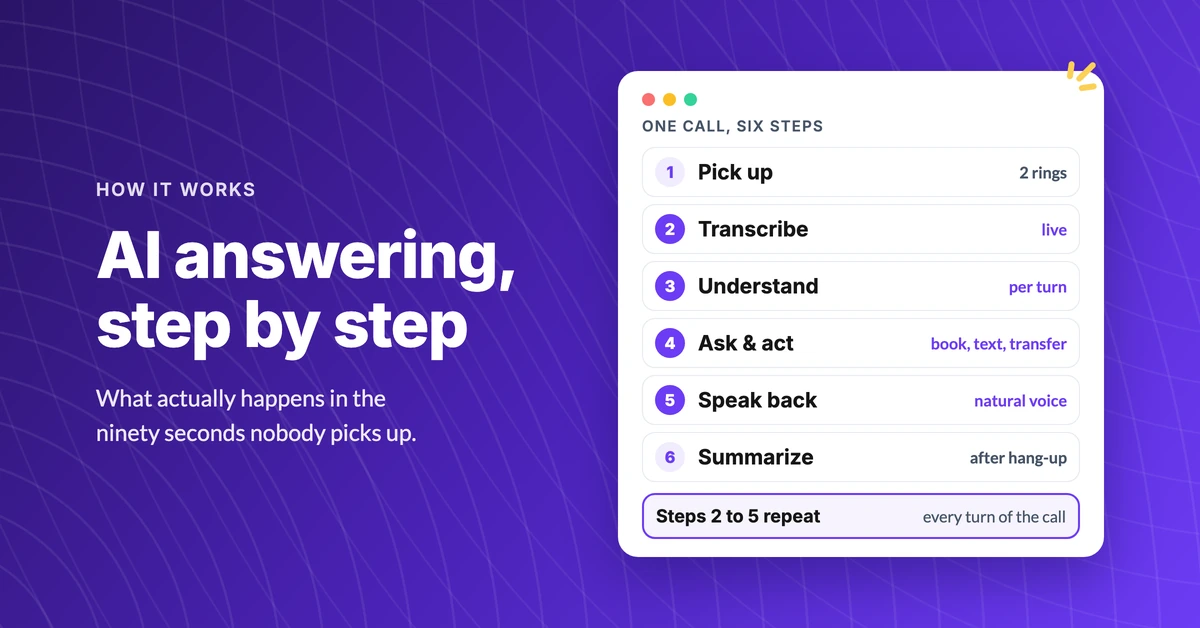
How Does an AI Answering Service Actually Work?
See how an AI answering service works, step by step: what happens in the first four seconds, what it can do on the call, and where it hands off to a human.
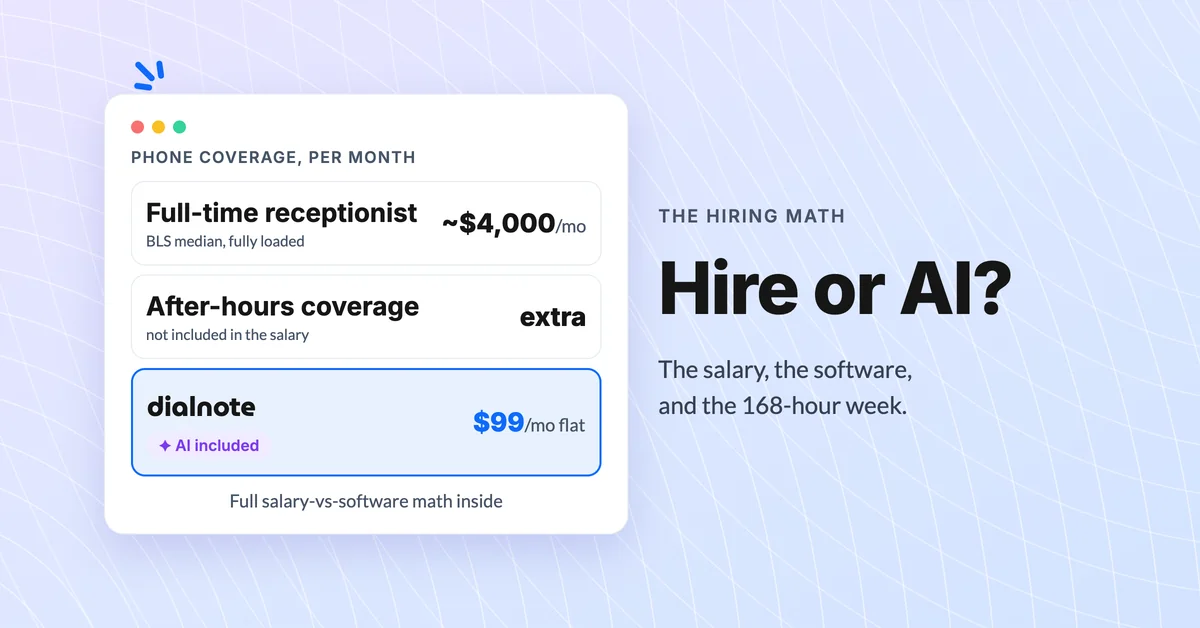
AI Receptionist vs Hiring: What Each Really Costs
Compare an AI receptionist vs hiring a receptionist: salary and benefits math, coverage hours, and what each option really costs over a year.
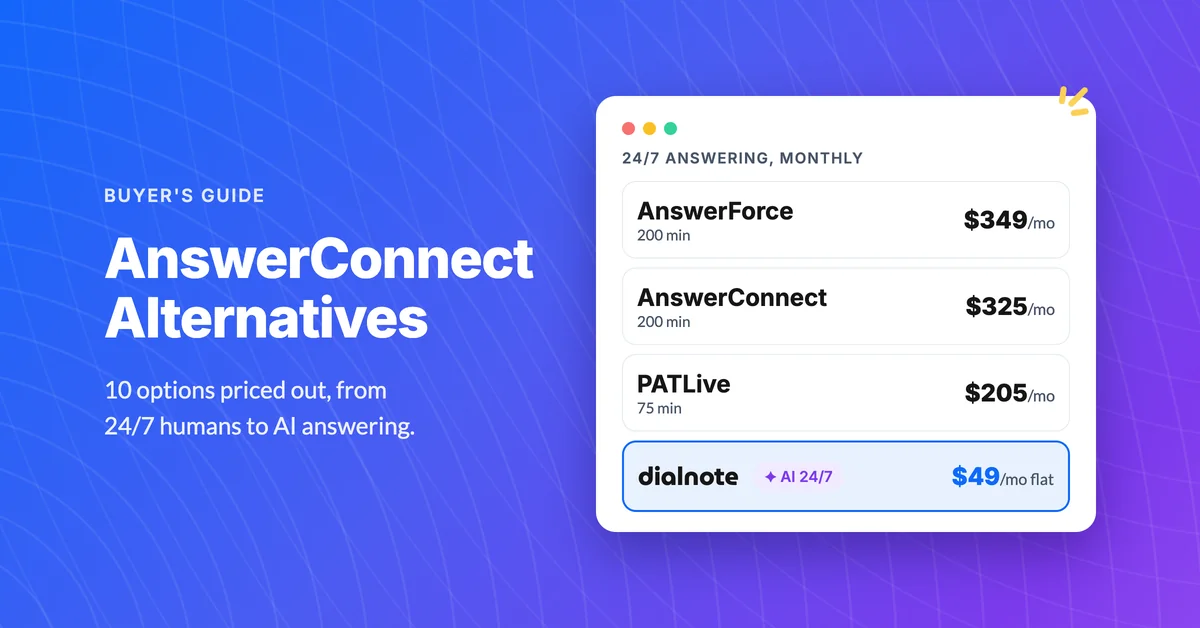
AnswerConnect Alternatives: 10 Better Options [2026]
AnswerConnect runs $325/mo for 200 minutes, and after-call work bills too. Compare 10 AnswerConnect alternatives on real cost per answered call.