How Can an AI Receptionist Grow Your Automotive Business?
It's 8:17 AM on a Monday. Your service department just opened, and there's already a line of cars at the drop-off bay. Three technicians are checking in vehicles. Your service advisor is explaining a $2,400 repair estimate to a customer who doesn't look happy. The phone rings. Then rings again. A third call comes in while the first two are still on hold.
Nobody picks up.
One of those callers needed an oil change appointment. Another wanted a status update on their transmission repair. The third? A fleet manager looking to bring 12 company vehicles to your shop for regular maintenance. That's a $40,000 annual account, and they just called the competitor down the road who answered on the second ring.
This scenario plays out at car dealerships, auto repair shops, body shops, and used car lots every single day. Most automotive businesses don't even realize how much revenue they're losing through unanswered phones.
An AI receptionist for automotive businesses changes that equation completely. It picks up every call, books appointments, answers common questions, and routes urgent calls to the right person. No hold music. No voicemail black holes. No lost customers.
Let's break down exactly how it works and why it matters for your bottom line.
TL;DR:
- An AI receptionist for automotive businesses answers every call 24/7, books appointments, gives repair status updates, and routes urgent calls to the right person, so no lead slips through an unanswered phone.
- Automotive shops lose big money to missed calls: service departments average 158 missed calls a month, about 23% of repair shop calls go unanswered, and 85% of people whose calls aren't answered never call back.
- It handles roughly 60 to 70% of routine calls on its own (scheduling, hours, pricing, status checks) and captures the 31% of calls that come in after hours.
- Pricing runs about $200 to $500 per month, far less than a full-time receptionist ($35,000 to $50,000 a year) or a traditional answering service ($3,000 to $6,000 a month), and even a conservative 20% capture rate on missed calls pays for itself.
- When choosing one, look for automotive-specific training, shop management or DMS integration, natural conversation, smart call transfers, and analytics, and make sure it works with your existing business number.
Why automotive businesses lose thousands to missed calls
Here's a number that should make every dealership owner uncomfortable: service departments miss an average of 158 calls per month. That's according to Numa's 2024 Industry Trends Report, which analyzed data from over 600 franchise dealership service departments. At an average repair order of $450, those missed calls add up to over $70,000 in potentially lost revenue every single month.
And it's not just dealerships. Independent auto repair shops aren't doing much better. About 23% of incoming calls to repair shops go unanswered during regular business hours. That's nearly one in four customers who hear ringing and get nothing.
But here's the real gut punch. 85% of people whose calls aren't answered won't call back. They don't leave a voicemail. They don't try again later. They search for the next shop on Google and call them instead. In fact, 78% of callers will immediately try a competitor when they can't get through.
Think about that for a second. You're spending money on Google Ads, SEO, signage, and word-of-mouth referrals to get your phone to ring. And then nearly a quarter of those hard-won calls disappear into the void.
The math gets ugly fast. A typical 6-bay auto repair shop that misses 40 calls per month faces roughly $18,000 in lost potential revenue. A dealership? Numa estimates it at up to $1.17 million annually in service revenue alone. Pam AI puts the combined sales and service figure even higher, at over $2 million per year.
And those are just the immediate losses. A loyal auto repair customer represents about $4,200 in lifetime revenue, according to AAA consumer research. Every missed call isn't just a missed appointment. It's potentially years of repeat business walking out the door.
The biggest phone headaches across automotive businesses
Not every automotive business struggles with the same phone problems. A three-bay independent shop has different challenges than a multi-rooftop dealership group. But they all share one thing: the phone is still the most important tool for bringing in business, and it's usually the most neglected.
Car dealerships: service and sales fighting for attention
Dealership service departments face a brutal call pattern. Over 50% of appointment calls happen between 8 and 11:30 AM, and Mondays and Tuesdays alone account for 52% of weekly volume. That morning surge hits right when service advisors are checking in cars, reviewing overnight drop-offs, and handling walk-in customers.
The sales side isn't much better. Nearly 25% of inbound leads go without follow-up for 24 hours, and 13% never get logged into the CRM at all. When a buyer calls about a vehicle they saw online, speed matters. A five-minute response time can make or break a deal, but most dealerships take hours to respond.
Then there's the routing nightmare. Callers get bounced between sales, service, parts, and finance with no warm handoff. Each transfer is another chance for the customer to hang up and call someone else.
The bigger picture is even more concerning. According to a 2025 Cox Automotive study, dealerships have lost 12% of their service market share since 2018, dropping to just 29%. The top reason customers leave? Convenience. When it's easier to call an independent shop that actually answers the phone, that's exactly what they do.
Independent repair shops: owner under the hood and on the phone
Here's the classic small shop dilemma. The person who should answer the phone is the same person elbows-deep in an engine bay. Shops with three to eight bays can't justify a $35,000 to $45,000 salary for a full-time receptionist, so the phone just... rings.
The busiest call times (8 to 10 AM and 4 to 6 PM) line up exactly with the busiest shop hours: morning drop-offs and afternoon pickups. And about 31% of calls come outside business hours entirely. A customer whose car breaks down at 7 PM on a Tuesday can't reach you, so they call whoever answers first.
Plus, a huge chunk of daily calls are repetitive status checks. "Is my car ready?" "How much longer?" "Did you order the part?" These questions eat up staff time that could go toward actual repairs. What if those routine calls just... handled themselves?
Body shops and collision centers
Body shops deal with a unique double whammy. They're fielding calls from both customers and insurance adjusters. Missing a call from an insurance rep can delay claim approvals by days, pushing back repair timelines and frustrating everyone involved.
Collision repairs take one to three weeks on average, which means each customer generates multiple status check calls throughout the repair cycle. New customers calling for estimates need an immediate response or they'll try the next body shop on their list.
And shops participating in DRP (Direct Repair Program) networks face strict phone answer requirements from their insurance partners. Miss too many calls, and you risk losing preferred status. That's not just a phone problem. It's a business survival issue.
Small body shops typically run with just one or two people handling the front office. They're juggling active repair orders, new estimate requests, insurance paperwork, and rental car coordination all at once. When the phone rings during a complex supplement negotiation with an adjuster, something's going to get dropped.
Used car lots
Someone calling a used car lot about a specific vehicle is about as close to a sale as you can get without a handshake. These are high-intent callers. "Is that 2021 Civic still available?" is basically "I'm ready to buy." Missing that call doesn't just lose an appointment. It loses a sale.
Used car shoppers browse online in the evenings and weekends, then call first thing in the morning. Lots with limited hours or no after-hours phone coverage miss these peak-intent calls entirely. And with thin margins and lean operations, most used car businesses can't afford a dedicated front desk person either.
Small used car groups with two or three locations face an extra challenge: staffing each lot's phones consistently. When your best salesperson is on a test drive at one location, calls to that lot go unanswered. Multiply that across multiple sites and you've got a serious coverage gap that most owners don't even track.
What does an AI receptionist for automotive businesses actually do?
An AI receptionist isn't a glorified voicemail system or one of those clunky "press 1 for service, press 2 for parts" phone trees. It's a phone agent that answers calls, talks to customers in natural language, and takes real action based on what they need.
Here's what happens when a customer calls your shop and an AI receptionist picks up:
It answers instantly. No hold music, no phone tree menus. The AI picks up on the first or second ring, every time, 24 hours a day. That alone is a big upgrade for most shops.
Caller intent gets recognized automatically. Using natural language processing, the AI figures out whether someone wants to book a service appointment, check on a repair, ask about pricing, or talk to a specific person. Callers don't get forced through rigid scripts.
Routine requests get handled without staff involvement. Appointment scheduling, hours and location questions, basic pricing inquiries, repair status updates... the AI takes care of these on its own. That's roughly 60 to 70% of incoming calls resolved automatically.
Complex calls get routed to the right person. When a caller needs to speak with a service advisor, sales rep, or manager, the AI transfers them directly. No bouncing between departments. No explaining the issue three times to three different people.
Every call gets logged. Caller details, what they asked about, and what action was taken. Nothing falls through the cracks, and your CRM stays updated without anyone manually entering data.
After-hours calls get answered too. This is where it really starts earning its keep. Those 31% of calls that come in outside business hours? The AI handles them. A customer who calls at 9 PM to schedule a brake inspection gets it done right then. They don't call your competitor instead.
Five ways an AI receptionist changes daily operations at your shop
The obvious benefit is answering more calls. But the ripple effects across your business are bigger than most owners expect.
1. Your front desk stops being a bottleneck
Whether you have a dedicated receptionist or your service advisor doubles as one, phone interruptions slow everything down. Every call that pulls someone away from an in-person customer creates a bad experience for both parties. The customer at the counter feels ignored. The caller on the phone gets a rushed, distracted conversation. An AI receptionist absorbs the call volume so your team can focus on the people actually standing in front of them.
2. Appointment scheduling runs on autopilot
Most automotive appointment calls follow a predictable pattern. Customer gives their name, vehicle info, describes the issue, and picks a time. An AI receptionist handles this entire flow without human involvement. It checks your schedule, books the slot, and sends a confirmation. Your service board fills up without anyone lifting a finger.
For shops running multiple bays or departments, this is a big deal. Service, body work, and quick lube can all have separate scheduling logic, and the AI routes each request to the right calendar automatically.
3. After-hours calls become revenue instead of voicemails
About 31% of calls to automotive businesses come outside regular hours. Without an AI receptionist, those calls go to voicemail. And we already know 80% of callers sent to voicemail don't leave a message. That's not a phone system. That's a revenue leak.
An AI receptionist turns those dead-end calls into booked appointments and captured leads. Honestly? This is where most shops see the biggest ROI. Not from handling daytime calls better (though that helps), but from capturing business that was previously invisible to them.
4. Status update calls stop eating staff time
"Is my car ready?" is probably the most common call any shop gets. It's also the least productive use of your team's time. A service advisor who spends 15 minutes per hour answering status checks loses two hours of productive time per day.
An AI receptionist connected to your shop management system can answer these questions instantly. The customer gets their answer in 30 seconds. Your service advisor doesn't lose their train of thought mid-repair order. Everyone wins.
5. You get data you never had before
Every call gets transcribed, categorized, and logged. You can see exactly how many calls you're getting per day, what people are calling about, which marketing channels are driving phone leads, and how quickly calls get resolved.
Most shops are flying completely blind on phone performance. How many calls did you miss last Tuesday? Which ad campaign generated the most phone leads this month? What's your busiest call hour? Without an AI receptionist, you're guessing. With one, you've got a dashboard that answers all of it.
This data matters more than most owners realize. When you can see that 40% of your appointment calls come from a specific Google Ads campaign, you know where to put your marketing budget. When you notice a spike in "check engine light" calls every October, you can run a targeted diagnostic special. The phone data becomes a roadmap for smarter business decisions.
How much does it really cost (and what's the ROI)?
An AI receptionist typically runs $200 to $500 per month, a fraction of what you'd pay for a full-time hire or traditional answering service. Let's run the numbers side by side.
Full-time receptionist: $35,000 to $50,000 per year in salary, plus benefits, payroll taxes, training, and PTO coverage. Available roughly 40 hours per week. Calls go unanswered during lunch breaks, sick days, and after 5 PM. And when they quit? You're back to square one with hiring and training.
Traditional answering service: $1 to $2 per minute. A shop taking 50 calls per day at an average of 3 minutes each racks up $150 to $300 per day, or $3,000 to $6,000 per month. And the service can only take messages. They can't book appointments, check repair status, or answer detailed questions about your services.
AI receptionist: Typically $200 to $500 per month, depending on call volume and features. Available 24/7/365. Handles scheduling, routing, FAQ responses, and lead capture. No sick days, no turnover, no training ramp-up.
The cost difference is dramatic, but the revenue side is where it really matters. If an AI receptionist helps you capture even 30 of those 158 missed monthly calls, and your average repair order is $450, that's $13,500 in recovered revenue per month. Against a $300 to $500 monthly cost, the ROI isn't even close.
Now, I'm not going to pretend every missed call would've converted to a paying customer. That's unrealistic, and anyone who claims a 100% capture rate is selling you something.
We're not 100% sure of the exact conversion rate since it varies so much by shop type, location, and what the caller needed. But even a conservative 20% conversion rate on previously missed calls generates returns that dwarf the investment. The directional math is clear.
What to look for when choosing an AI receptionist for automotive
The most important factors are automotive-specific training, shop management integration, and natural conversation flow. Not every AI receptionist is built for the automotive world. Some are generic phone bots that work fine for scheduling a haircut but fall apart when a customer describes a grinding noise coming from their front left wheel at highway speed. Here's what actually matters:
Automotive-specific training. The AI should understand terms like "check engine light," "OBD code," "brake pad replacement," "PDR," "insurance claim," and "loaner car." If it can't talk shop, your customers will notice immediately.
Integration with your DMS or shop management software. An AI receptionist that can't check your schedule or look up a repair status is just a fancy answering machine. Look for connections to tools like Tekmetric, Shop-Ware, Mitchell, or your dealership management system.
Natural conversation flow. The days of robotic phone menus are numbered. Your customers should be able to speak naturally: "I need an oil change for my 2019 F-150, maybe Thursday morning?" The AI should handle that without forcing them through a step-by-step script.
Call transfer capabilities. The AI should know when to hand off to a human and do it smoothly. A customer who's upset about a repair shouldn't be stuck talking to a bot. Smart escalation rules matter more than most people realize.
Bilingual support. If your shop serves a diverse community, the AI receptionist should handle calls in multiple languages, including through SMS. Spanish-language support alone can open up a significant customer base that might've gone to a competitor.
Reporting and analytics. You want call volume data, peak time analysis, common question tracking, and conversion metrics. If you can't measure it, you can't improve it. Skip any AI receptionist that doesn't give you a real dashboard.
And one more thing: don't pick a solution that requires you to change your business phone number. Your existing number has years of SEO value, directory listings, and customer familiarity baked into it. The right AI receptionist works with your current number through simple call forwarding or number porting.
How dialnote helps automotive businesses answer every call
An AI receptionist works best when it's part of a complete phone system built for how auto shops actually run day to day. Here's what a typical day looks like when an automotive business uses dialnote with the AI receptionist.
7:15 AM. A fleet manager calls to schedule maintenance for five trucks. Your shop doesn't open until 8, but the AI receptionist picks up, books all five appointments across the right time slots, and sends confirmation texts. By the time your team walks in, the morning schedule is already set.
9:30 AM. Your service advisor is writing up a repair order with a customer at the counter. Three calls come in at the same time. The AI receptionist handles two of them (an appointment booking and an hours-and-directions question) and transfers the third (an insurance adjuster calling about a collision claim) directly to your body shop manager's cell.
12:15 PM. Four customers call during your receptionist's lunch break asking "Is my car ready?" The AI checks your shop management system and gives each caller a real-time status update. Zero hold time. Zero staff interruption.
7:45 PM. A first-time customer searches "auto repair near me," finds your shop, and calls about a weird noise their car started making on the highway. The AI receptionist answers, captures the vehicle details and symptoms, and books a diagnostic appointment for the next available slot. That customer would've called your competitor if they'd hit voicemail instead. Beyond the AI receptionist, dialnote gives your automotive business the phone infrastructure to run everything smoothly:
A real business number on your personal phone. Download the dialnote app and your business line works on your cell. Service advisors and sales reps stay reachable without giving out personal numbers. Turn on Do Not Disturb when you're off the clock. It's that simple.
Shared numbers for your whole team. One main shop number rings for everyone on your team. When the AI receptionist transfers a call, it goes to whichever team member is available first. No more "they're at the other location today" runarounds.
Smart call routing that fits your schedule. Route calls to your service desk during shop hours, to the AI receptionist after hours, and directly to the body shop manager when someone mentions "insurance claim" or "collision." Set rules once and they run on autopilot.
Call recording and transcription. Every customer conversation gets recorded and transcribed automatically. Great for training new service advisors, resolving disputes about what was promised, and spotting trends in customer complaints.
Call analytics you'll actually use. See your peak call times, busiest days, most common customer questions, and which marketing channels drive the most phone leads. Make staffing and ad-spend decisions based on real data instead of gut feelings.
CRM integration. Call data syncs to your CRM automatically. No manual entry, no lost leads, no "I forgot to log that call" gaps in your customer records. Every interaction is tracked from the first ring.
The AI receptionist is powerful on its own. But when it's part of a complete business phone system with shared lines, smart routing, business texting, call recording, and analytics, your entire customer communication operation gets sharper. You can explore dialnote's pricing to see which plan fits your shop.
The shops that answer win the customers
Here's what it comes down to. Every automotive business, whether it's a single-bay shop or a 15-rooftop dealership group, runs on phone calls. Customers call to schedule service, check on repairs, ask about inventory, get estimates, and make buying decisions. When those calls go unanswered, revenue goes with them.
An AI receptionist for automotive businesses doesn't replace your team. It gives them breathing room. It handles the repetitive stuff (appointment bookings, status checks, after-hours inquiries) so your people can focus on the high-value work that actually requires a human touch: closing sales, explaining complex repairs, and building the kind of relationships that turn one-time customers into lifers.
95% of dealers already believe AI will be critical to their future. And among dealerships that have already adopted AI, 100% reported revenue increases, with 37% seeing a 20 to 30% jump. The trend is clear: the shops that figure this out first won't just answer more calls. They'll win the customers that everyone else keeps losing.
Want to see how it works for your shop? Try dialnote free and set up your AI receptionist in under 10 minutes. Your phones will thank you. More importantly, your revenue will too.
Frequently asked questions
It's trained on auto terminology like 'check engine light' and 'brake pad replacement.' It books appointments, gives status updates, answers common questions, and routes calls to the right person.
Most can't tell. Today's AI receptionists use natural voices and conversational language, not robotic scripts. They respond to what callers say rather than forcing rigid menu options.
Yes, many platforms connect with tools like Tekmetric, Shop-Ware, Mitchell, and dealership DMS systems. This lets the AI check schedules, book appointments in real time, and pull repair status info.
It recognizes when a call needs a human and transfers directly to the right team member. Customers don't get trapped in loops. Clear escalation rules make sure urgent calls reach a real person fast.
Most platforms, including dialnote, can be set up in under an hour. Connect your existing number, configure business hours, and customize responses. No hardware needed. Many shops go live same day.

Written by
Lancelot Dsouza
Chief Marketing Officer, SmartReach.io
Lancelot Dsouza is the Chief Marketing Officer at SmartReach.io, where he built the Marketing, Sales, and Customer Success verticals from the ground up. With over 25 years of experience spanning digital marketing, business development, and strategic...
Lancelot Dsouza is the Chief Marketing Officer at SmartReach.io, where he built the Marketing, Sales, and Customer Success verticals from the ground up. With over 25 years of experience spanning digital marketing, business development, and strategic...
Related Articles
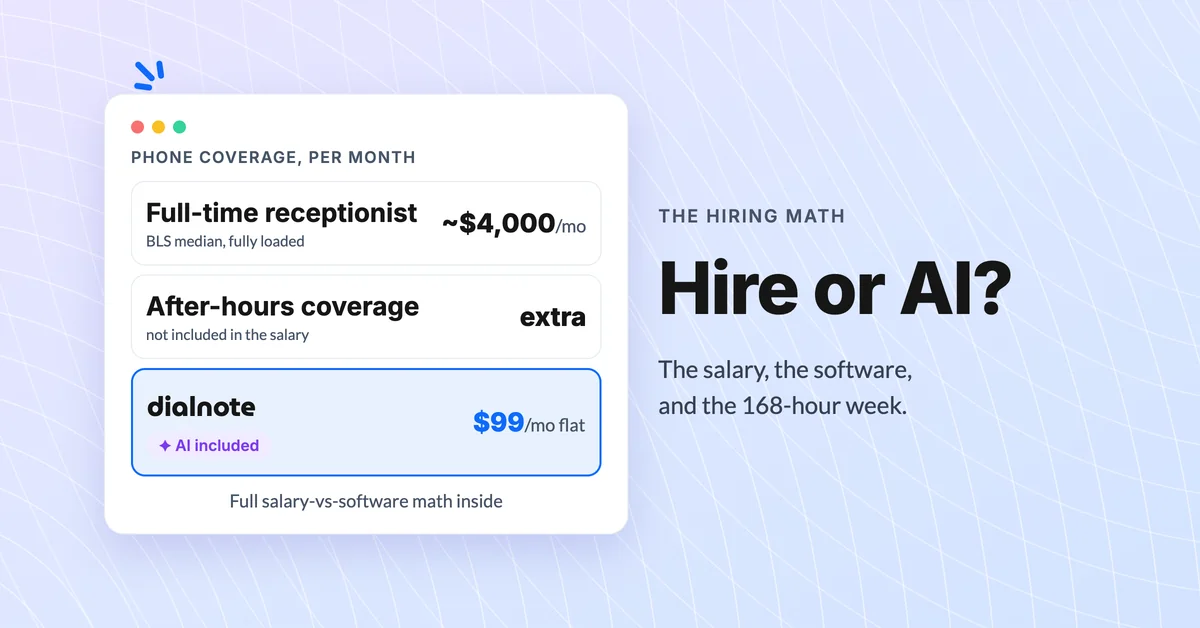
AI Receptionist vs Hiring: What Each Really Costs
Compare an AI receptionist vs hiring a receptionist: salary and benefits math, coverage hours, and what each option really costs over a year.
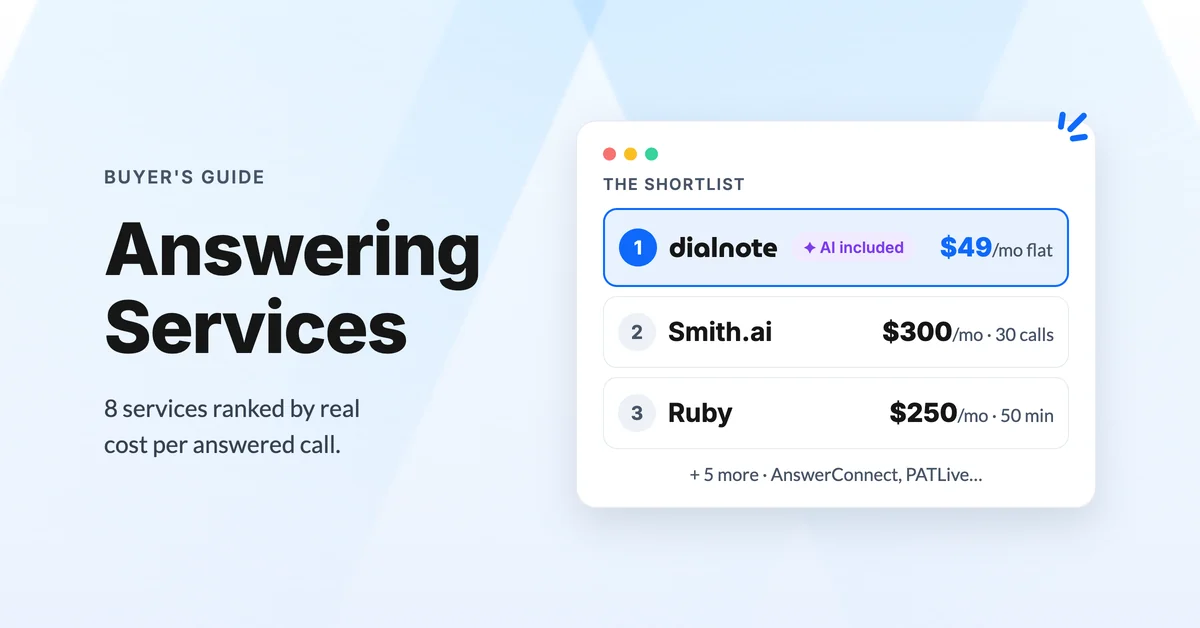
Best Answering Service for Small Business [2026]
Compare the best answering services for small business in 2026: live, AI, and hybrid options ranked by real cost per call and coverage.
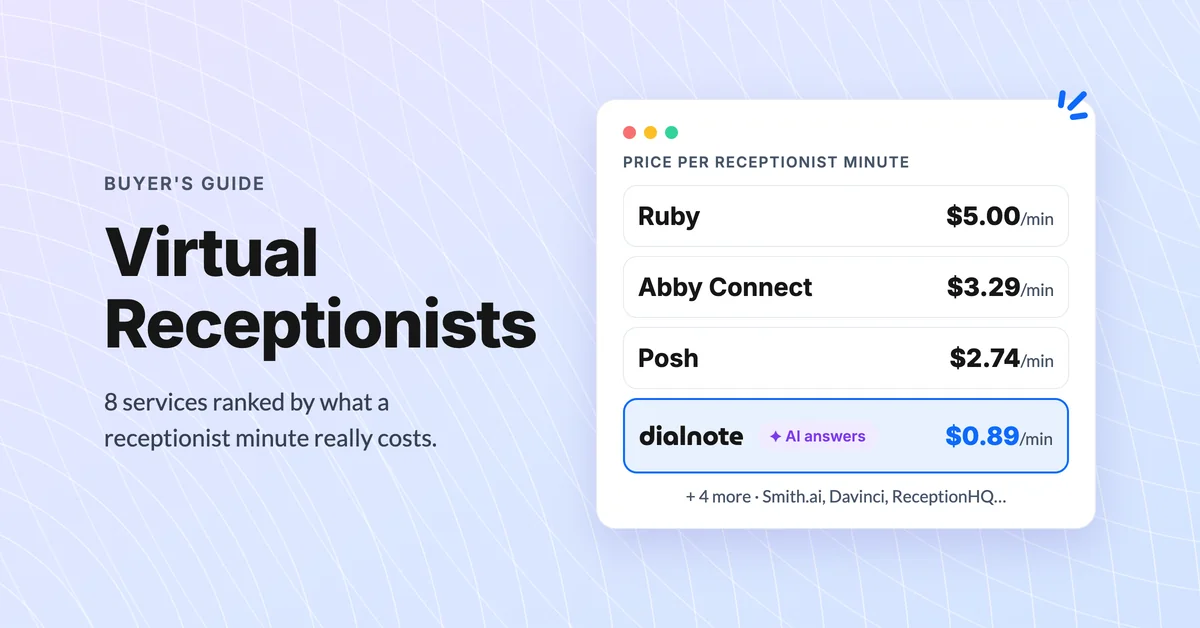
Best Virtual Receptionist Services Ranked [2026]
Compare the best virtual receptionist services of 2026 by price per receptionist minute, booking depth, and coverage, including the AI option.