Best Landline Alternatives for UK Small Businesses (2026)
Every landline alternative pitch starts the same way: the copper network is closing, so buy something digital. True, but not helpful. What UK small businesses actually need is a straight comparison of the landline alternatives on the table, with costs, and an honest read on who each one suits.
Dana manages the front desk at an eight-person dental clinic that has run on two copper lines since before she joined. The switch-off letter landed in March. Six months later the practice still hasn't chosen, not because nobody cares, but because every supplier who calls her says something different: one pitches "digital voice", another "a virtual landline", a third "a cloud phone system". Are those even different things?
They are, and the differences decide what your front desk feels like in 2027. Here's the whole menu, priced and ranked for small teams.
TL;DR:
- The main landline alternatives for UK small businesses are cloud VoIP systems, virtual landline services, broadband digital voice, business mobiles, and SIP trunking.
- Cloud VoIP fits most teams: ported number, call routing, and apps on existing phones, often for less than doubled copper rental.
- Whatever your letter calls it (the BT switch off, the Big Switch Off, the PSTN switch off), the deadline is the same: 31 January 2027.
- Your existing number ports to every option on this list, as long as you port before cancelling the old line.
- Budget honestly: flat-rate cloud plans run £29-£79 a month for whole small teams, while per-user plans multiply by headcount.
Jump straight to: the 5 alternatives · which fits your business · what it costs · keeping your number
Why you need a landline alternative before January 2027
The copper phone network that business landlines run on shuts down on 31 January 2027, and Openreach has confirmed the date won't move. Analog lines and ISDN stop working, and the businesses still on them are paying line rental that roughly doubled across 2026 while they waited.
And the queue is real: according to Comms Business, around 350,000 UK business sites still had lines to replace as of August 2026, all funnelling toward the same providers and engineers in the final months.
So this isn't a should-we question anymore, it's a which-one question. The full deadline picture, including what happens to alarms, card machines, and broadband, is in our UK PSTN switch off guide. This article handles the decision that guide sets up: what to actually buy instead.
One reassurance before the list. Every option below works with your existing business number, because UK numbers are portable by law. The only way to lose the number is to cancel the line before porting it, so whichever alternative you pick, port first.
The 5 best landline alternatives for UK small businesses
Here's the menu at a glance, before we take each option in turn:
| Alternative | Typical monthly cost | Best for |
|---|---|---|
| Cloud VoIP phone system | £29-£79 flat, or £10-£25 per user | Most teams of 1-50 |
| Virtual landline service | From around £7-£15 | Solo traders who just need the number answered |
| Broadband digital voice | Bundled with broadband | Like-for-like single lines |
| Business mobile only | Whatever your tariff costs | One-person businesses, with caveats |
| SIP trunking | Varies by channels | Businesses keeping an existing PBX |
1. Cloud VoIP phone system (best for most teams)
A cloud VoIP system moves your number, routing, voicemail, and call history into one service that runs over broadband, with apps for the phones and laptops your team already owns. Nothing to install, no new wiring, and the front desk stops being a single physical socket.
Pros
- Your ported number rings the whole team, in the office or out of it
- Routing, voicemail transcripts, and call history included rather than sold per feature
- Flat-rate plans exist, so hiring doesn't raise the phone bill
- Modern systems add AI answering for the calls nobody is free to take
Cons
- Needs a reliable broadband connection to carry calls
- The market is crowded, and per-user pricing from the big names multiplies with headcount
- Feature lists can overwhelm a business that wants two lines and voicemail
This is the option we'd point most small teams to, and yes, we're biased. dialnote is an AI business phone system with no per-user pricing. AI voice agents answer calls, capture leads, and book meetings 24/7. Plans from $19/mo. The UK plans run £29 a month for a solo line and £79 a month flat for a whole team, and the flat rate is the point: Dana's eight-person clinic pays the same £79 whether reception is two people or four. The AI receptionist answers when the desk is swamped, takes the caller's details, and books appointments through Calendly or Cal.com, which for a clinic front desk is the difference between a missed new patient and a booked one. A VoIP phone system comparison is worth an evening of anyone's time; the 10-day free trial needs no credit card.
Ready to stop paying by the call?
10-day free trial, no credit card needed.
2. Virtual landline service
A virtual landline keeps a landline-style number alive in the cloud and forwards its calls to whatever phone you choose, usually your mobile. According to Simply Business, entry pricing starts around £7 a month, which makes it the cheapest way to keep a professional number ringing.
Pros
- Cheapest paid route to keeping your business number alive
- Nothing to learn: calls simply arrive on the phone you already carry
- Quick to set up, and fine as a bridge while you decide long-term
Cons
- It forwards calls, and that's mostly it: little routing, no team features
- Per-minute or capped-forwarding terms need reading before you sign
- Growing teams outgrow it fast, and then you're migrating twice
Think of it as number preservation rather than a phone system. For a sole trader whose whole requirement is "my old number reaches my mobile", it's honest value. For anyone hiring, it's a waypoint, not a destination.
3. Digital voice from your broadband provider
The like-for-like option: your broadband provider replaces the copper line with a digital line plugged into the router, usually branded something like Digital Voice. It's the default path if you do nothing but answer your provider's migration letter.
Pros
- Simplest possible transition: same handset, same socket area, same habits
- One bill with your broadband
- Fine for a business that genuinely only ever needs one line and one handset
Cons
- Recreates 1995: one line, no routing, no visibility of missed calls
- Ties your phone service to your broadband contract and its price rises
- The migration effort is the same as picking something better
Honestly? This is the option we'd skip for almost every business. You go through a migration either way, and this one spends the effort buying back the exact limitations the copper line had. It exists because it's easy to say yes to, not because it serves a growing business.
4. Business mobile only
Plenty of one-person businesses already run on a mobile, and after the switch off some will simply drop the landline entirely. It can work, with eyes open.
Pros
- No new monthly cost if your tariff already fits
- You're reachable everywhere by definition
- Zero migration effort beyond porting or retiring the old number
Cons
- A landline number can't always live cleanly on a bare mobile plan, so the old number often gets abandoned
- Personal and business calls blur, and evenings stop being evenings
- No routing, no shared answering, no story for the day you hire
For a team of two or more, we'd call mobile-only a false economy: the first missed enquiry that would have paid for a proper system usually arrives within the month. If the mobile is the appeal, note that cloud VoIP puts the business number on your mobile anyway, without giving out your personal one.
5. SIP trunking for existing phone systems
If you've already invested in an office phone system (a PBX with desk phones, often fed by ISDN lines), SIP trunking replaces the retiring lines with broadband connections into the same hardware. Our SIP trunking guide covers the mechanics.
Pros
- Keeps hardware you've already paid for in service
- Often the cheapest per-channel option for call-heavy offices
- A well-understood, mature migration path for ISDN businesses
Cons
- You keep the old system's limitations along with the hardware
- Setup is more technical than the app-based options
- Small teams without an existing PBX have no reason to start here
This is the right answer for a specific business: one with working phone hardware, an installer relationship, and no appetite to change how calls flow. If that's not you, the app-based options above are simpler.
Which landline alternative fits your business?
The pattern across the businesses we talk to is consistent enough to put in a table:
| Your situation | Start with | Why |
|---|---|---|
| Solo trader, calls on the move | Cloud VoIP solo plan or virtual landline | Professional number on your mobile, without giving out your personal one |
| Small team (2-15), one shared number | Cloud VoIP, flat rate | Everyone answers the business line; hiring doesn't raise the bill |
| Front-desk business (clinic, salon, practice) | Cloud VoIP with AI answering | The desk gets help at its busiest, and missed calls get captured |
| Call-heavy office with its own PBX | SIP trunking | Keeps the investment working past the switch off |
| "We just want the old setup back" | Broadband digital voice | It's the honest match, but read option 3's cons first |
Two of these deserve a flag. The front-desk row is where we've seen the clearest before-and-after: a clinic like Dana's doesn't lose calls at 3 PM on a quiet Tuesday, it loses them at 9 AM Monday when three patients are checking in, and that's precisely the moment AI answering earns its keep. And the last row is there because it's real, not because we recommend it.
What switching actually costs a small team
Budget from real shapes, not brochure prices. Dana's clinic makes a useful worked example: eight staff, two copper lines, front desk answering for everyone.
Staying put: say the clinic's two lines cost £25 each in early 2026. With the copper price rises, that heads toward £100 a month by the switch off, for two lines that still can't tell Dana which calls were missed. Per-user cloud plans: at a typical £15 per user, eight staff means £120 a month, and every hire adds £15. Flat-rate cloud: the whole clinic on our £79 Team plan is £79, full stop, about £10 a head.
| Option (Dana's clinic, 8 staff) | Monthly | The catch |
|---|---|---|
| Two copper lines (by 2027) | ~£100 | Doubled rental, zero visibility, then the network dies |
| Per-user cloud VoIP at £15/user | £120 | Grows £15 with every hire |
| Flat-rate cloud (dialnote Team) | £79 | Whole team covered; hiring is free on the phone bill |
The £25-a-line and £15-a-user figures are assumptions to swap for your own quotes; the flat £79 is our published UK price. We ran this same math across nine providers' price pages for our business phone system cost guide, and the pattern held: for teams above three or four people, the pricing model matters more than any single sticker price.
We can't tell you what broadband providers will charge for digital voice lines two years after the migration, and we'd be suspicious of anyone who claims to. What we can say is that a phone bill that doesn't move when you hire is the easiest one to budget.
What to ask any provider before you sign
The sales calls all sound alike, so walk in with questions that separate the options quickly. Seven that earn their place:
- Is pricing per user or flat? Multiply the per-user price by your headcount in two years, not today's. This single question reorders most shortlists.
- What's the contract term, and what does year two cost? Intro pricing is common; the renewal price is the real price. Get it in writing.
- Can you port my existing number, and what does it cost? Every serious provider says yes. Ask for the fee and the typical timeline anyway.
- What happens to my number if I leave? You want to hear that it ports out freely. Any hesitation here is a red flag worth walking away from.
- Will my desk phones work? If you have handsets you like, check whether they're SIP-compatible before budgeting for replacements.
- What do calls to mobiles and international numbers cost? Inclusive-minutes definitions vary wildly, and this is where cheap headline prices claw money back.
- What does support look like at 9 AM on a Monday? Phone systems fail at the worst times. Email-only support is a real answer, and a telling one.
Ten minutes with this list does more than an hour of demo videos. Providers comfortable with all seven are the ones worth trialing.
Three mistakes we keep seeing
The same three mistakes turn an easy migration into a January emergency. First, waiting for the deadline: porting queues and installer diaries fill from the outside in, and autumn movers get the calm version of the same switch. Second, cancelling the old line before the port completes, which is the one error that can cost you the number itself. Third, forgetting the non-phone devices: the alarm, the lift line, the card terminal on the phone socket. They need their own suppliers' upgrade paths, and those conversations start slower than you'd hope.
None of these are hard to avoid. All three are miserable to fix in the last week of January.
Switching without losing your number
Whichever alternative wins, the order of operations is the same and it protects the asset that matters most: port your number to the new service first, confirm it rings, and only then cancel the copper line. A ceased line can take its number with it permanently.
The under-appreciated upside of that order: the new system doesn't need the port to start working. Cloud services run over broadband, so you can build the entire digital replacement while the copper line still answers, then move the number only once the new setup has proven itself. dialnote ports UK numbers in (there's a small carrier pass-through fee; US and Canada ports are free), and the rehearsal takes minutes rather than days:
- Sign up and open the Quick Start page
- Click Get Phone Number to claim a temporary UK number
- Click Make a Call Now to test call quality over your broadband
- Set Business Hours and choose where after-hours calls go
- Submit the port request for your real number
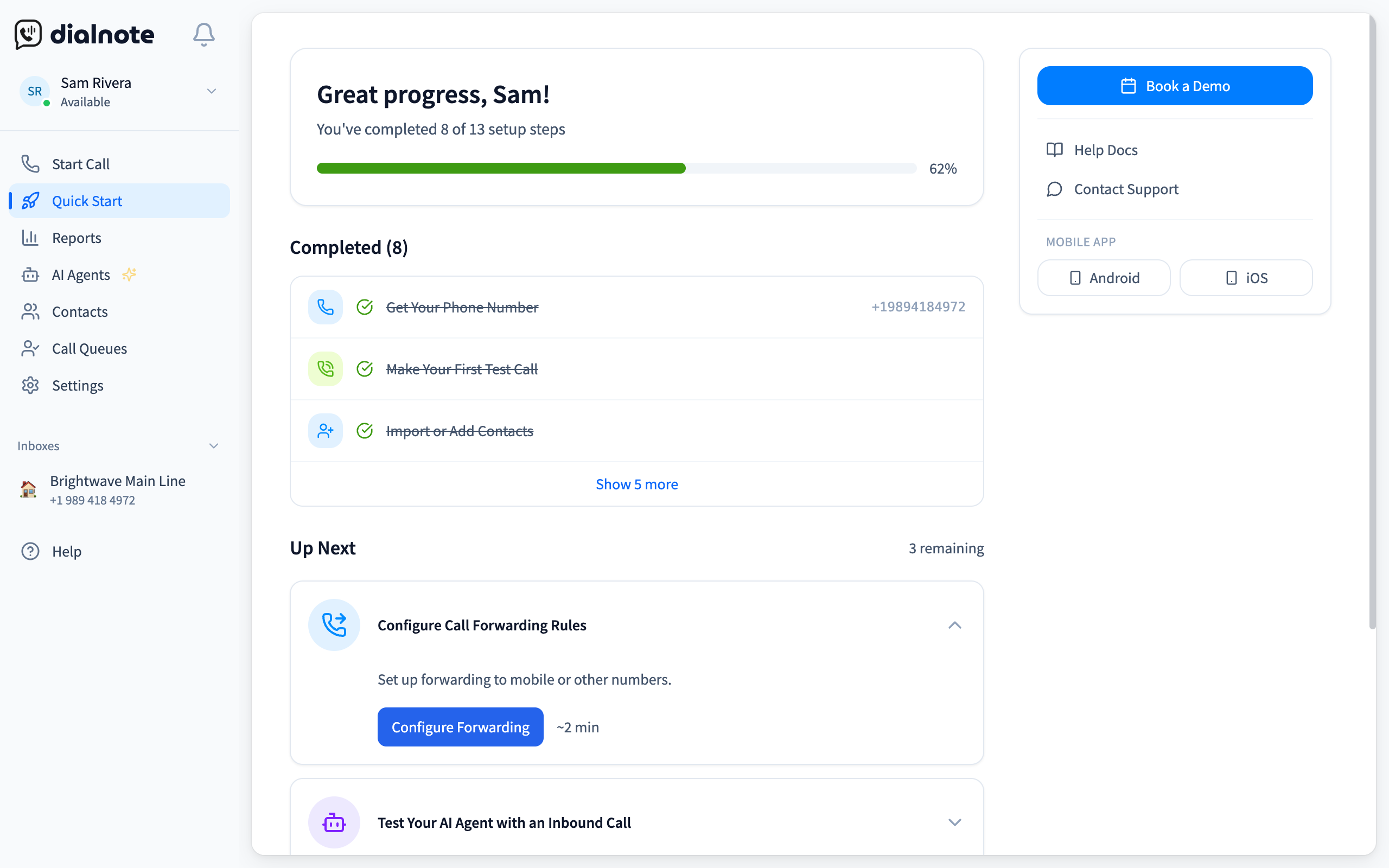
That temporary number is the whole trick. The front desk can rehearse on the new system for a week while the old line still rings, and by the time the port lands, switching day is a non-event: the copper line goes quiet and callers never notice.
The porting process itself is paperwork (a signed letter of authority and a recent bill) and a few weeks of patience, and our guide to keeping your business number in the switch off walks through every step, including why ports get rejected and how the timeline runs.
The alternative is better than the thing it replaces
The switch off forces a decision, but the decision is friendlier than it looks: every serious landline alternative for UK small businesses costs about the same or less than doubled copper rental, and most do more. Match the option to your shape, port the number first, and do it in autumn rather than in the January queue.
If your shape is "small team, one number everyone should answer", that's exactly what we built for: take the free trial for a week, port nothing until you've tested it, and see whether the front desk feels different by Friday.
Frequently asked questions
For most teams, a cloud VoIP phone system: your ported number rings apps on the phones you already own, call routing and voicemail are included, and flat-rate plans often cost less than doubled copper rental. Solo traders can also consider a virtual landline or a business mobile.
Digital services that carry calls over broadband. The main options are cloud VoIP systems, virtual landline services, digital voice lines from broadband providers, business mobiles, and SIP trunking for businesses keeping older phone hardware. Your number ports to any of them.
Sometimes, for a one-person business. But a bare mobile can't port your landline number cleanly into team features later, can't route or share calls, and mixes personal and business life. Teams of two or more usually outgrow mobile-only within the first hire.
Often, yes. Many office desk phones are SIP-compatible or can be made so with an adapter, and SIP trunking keeps whole PBX systems running over broadband. Check your handset models with your new provider before assuming you need to replace the hardware.

Written by
Upasana Sahu
Senior Digital Marketing Specialist, SmartReach.io
Upasana Sahu is a Senior Digital Marketing Specialist at SmartReach.io with over 10 years of experience in content marketing, SEO, and digital strategy. She manages end-to-end blog operations, from content creation and on-page/off-page SEO to traffic...
Upasana Sahu is a Senior Digital Marketing Specialist at SmartReach.io with over 10 years of experience in content marketing, SEO, and digital strategy. She manages end-to-end blog operations, from content creation and on-page/off-page SEO to traffic...
Related Articles
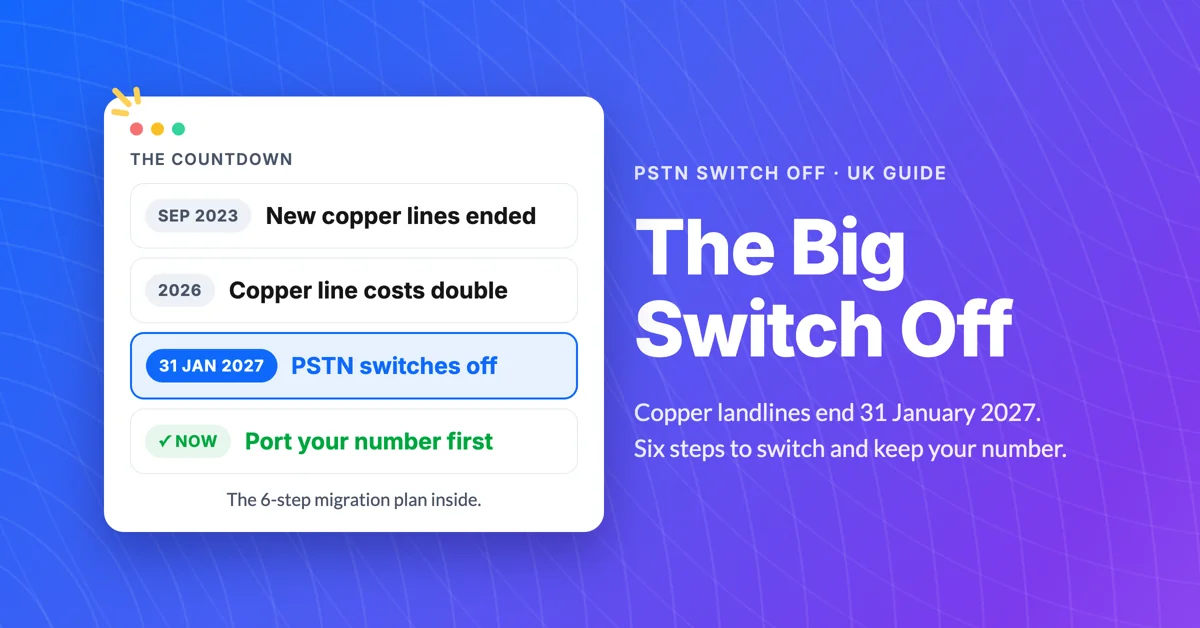
UK PSTN Switch Off: What Businesses Must Do Before 2027
Learn what the UK PSTN switch off means for your business: the January 2027 deadline, rising landline costs, and 6 steps to switch without losing your number.
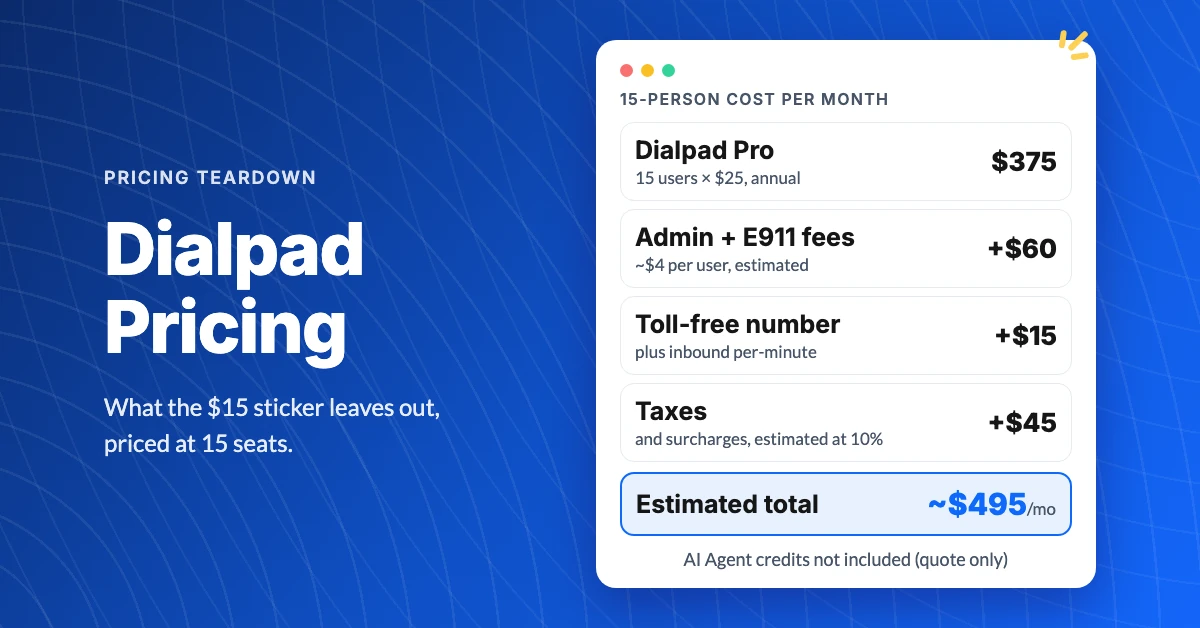
What Does Dialpad Pricing Really Cost a Small Team?
See what Dialpad pricing really costs: $15 to $35 per user, the 3-seat Pro minimum, per-text and admin fees, and real team math at 5, 15 and 30 people.
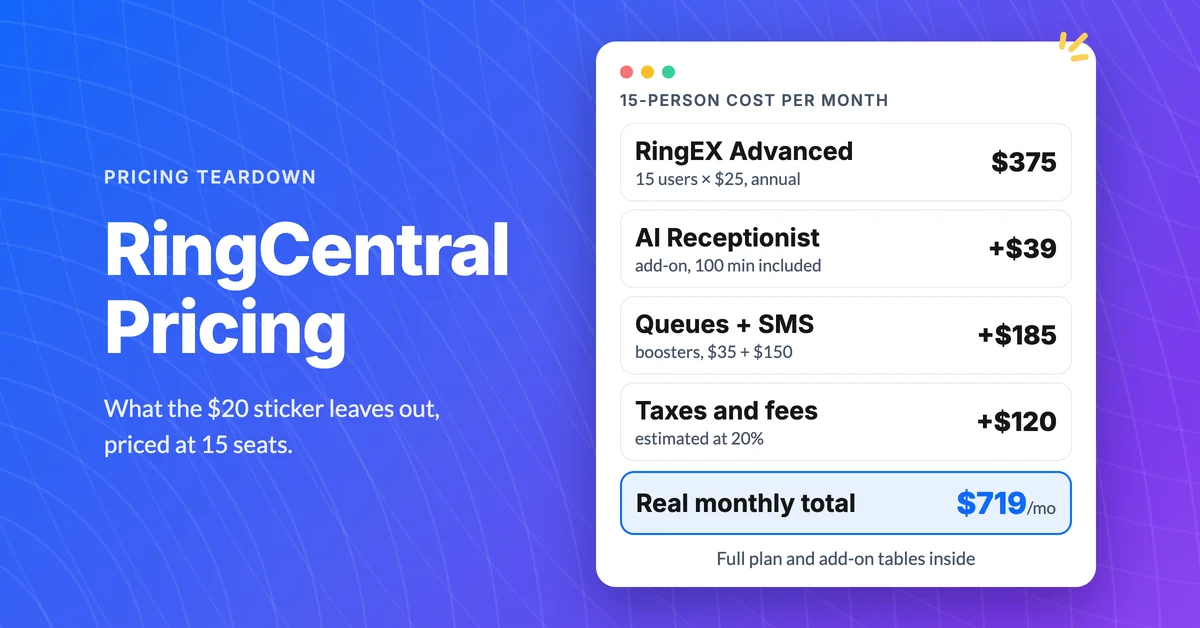
How Much Does RingCentral Really Cost per User?
RingCentral cost per user starts at $20, but add-ons, SMS caps and regulatory fees decide the real bill. See the 15-person math and the flat-rate comparison.