UK Landline Switch Off: Don't Lose Your Business Number
Your phone number might be the oldest marketing asset your business owns. And if it still lives on copper, it has a deadline attached: to keep your business number in the UK landline switch off, you need to move it before the line beneath it disappears on 31 January 2027.
Elena has run her solo family-law practice on the same number for eleven years. It's on the website, a decade of directories, two filing cabinets of old letterheads, and in the contacts of every past client who might refer the next one. When her provider's switch-off letter arrived, her first worry wasn't the technology. It was the number.
Here's the reassuring truth, and the one trap that makes it go wrong.
TL;DR:
- You can keep your business number in the UK landline switch off: providers must support number porting under Ofcom's rules, and ported numbers work fine on digital systems.
- The order is everything: port first, confirm, then cancel. A number on a ceased line can be lost permanently.
- Porting needs three things: a signed letter of authority, a recent bill, and the exact account details.
- Allow a few weeks for the port; your number keeps working the whole time.
- Once digital, the same number rings your mobile, your team, or an AI receptionist instead of one desk phone.
Jump straight to: your porting rights · how porting works · the 5 steps · what your number can do after
Will you lose your number in the landline switch off?
No. Your number is legally portable: Ofcom's General Conditions require every UK provider to let you take your number with you when you switch, and that protection covers landline and business numbers, not just mobiles. The switch off kills the copper line, not the number riding on it.
One naming note, because the letters and the articles rarely match: the landline switch off, the PSTN switch off, the copper switch off, the digital switchover, and BT's "Digital Voice" migration are all the same event with the same 31 January 2027 deadline. Whatever your provider calls it, the number advice below is identical.
But there's a catch, and it's the one that catches businesses. Portability protects a number on an active line. If the line is cancelled, or simply dies at switch off with no port in motion, the number can be released back into the carrier pool. Sometimes it's recoverable. Sometimes it's gone, or worse, reissued to someone else.
So the question isn't really "will I lose my number?" It's "will I move it before the deadline moves it for me?" With Openreach reporting around 2.8 million lines still on the old network in mid-2026, according to ISPreview, more than half a million of them serving business premises, a lot of companies will be asking it at the same time.
Your phone number is a marketing asset
A long-held business number is accumulated marketing you already paid for. It sits in your Google Business Profile and every review attached to it, on your signage and vehicles, in old invoices and quotes that get dug out years later, and in the phone contacts of every customer who might pass your name along. How many places is your number printed right now?
That's why we'd put it bluntly: giving up an established number to skip some porting paperwork is one of the worst trades in small-business marketing. Put rough numbers on it and the trade gets embarrassing. Say a van and signage redo runs £450, reprinting cards and letterheads another £150, and chasing every listing and directory eats a working day. Then add the line that actually hurts: one referral call that can't find you, worth £1,500 or more for most service businesses. That's a £2,000+ first bill for losing the number, against a small one-off carrier fee and one signed form for porting it.
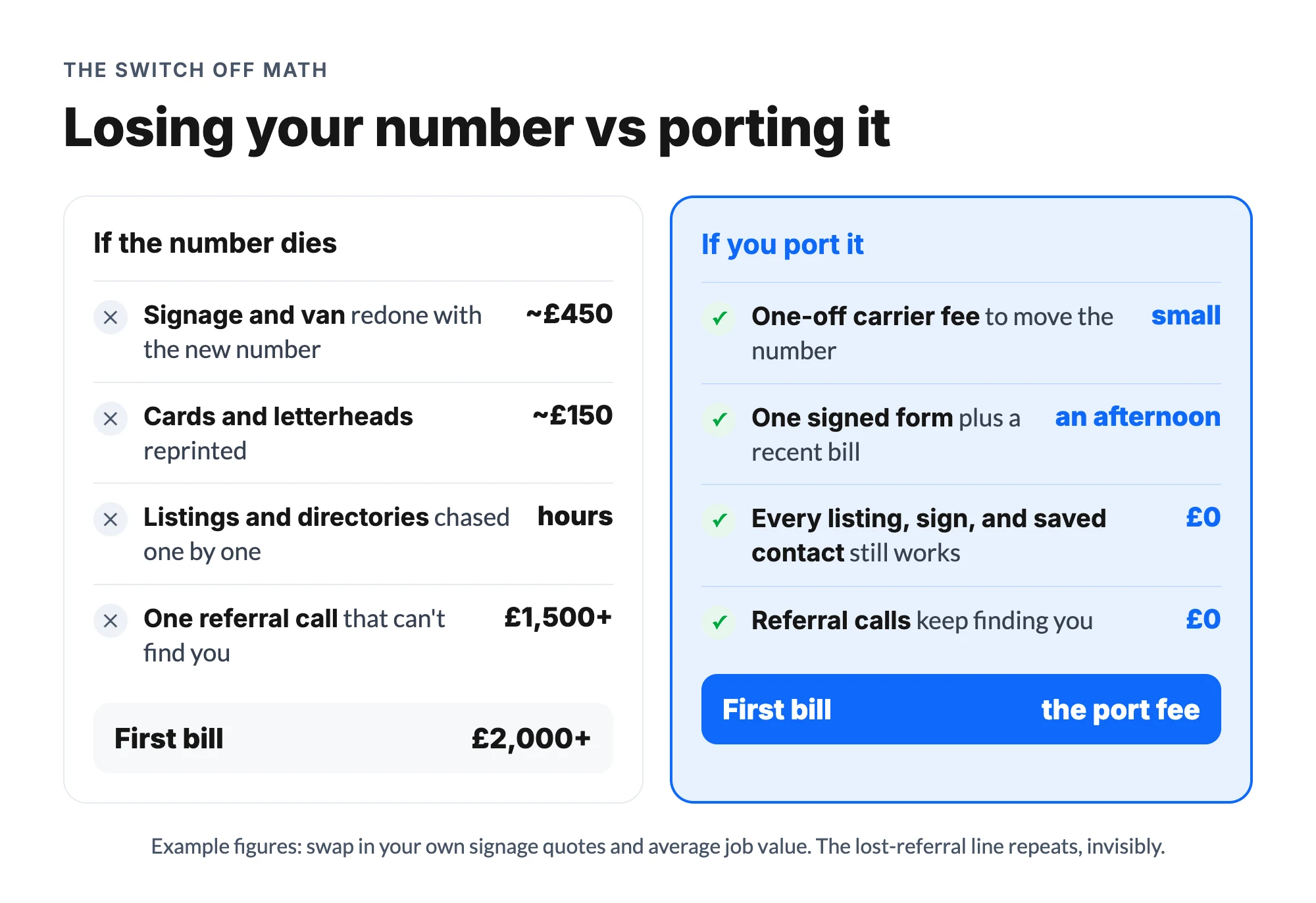
Those example figures are ours, so swap in your own signage quotes and your own average job value. The arithmetic rarely changes its mind: the reprints are the cheap part, and the lost calls are the bill that repeats without ever appearing on an invoice.
Elena's math makes the point. One referred client found her through a number printed on a settlement letter from 2019. If that number had died with her landline, nothing would have told the caller where she went. They'd have simply rung the next solicitor in the results, and she'd have been none the wiser.
How number porting works in the UK
Porting is an agreement between your old and new provider, and your new provider drives it. You sign a letter of authority (a short form confirming you own the number and authorize the move), provide a recent bill, usually from the last 30 days, and make sure the billing name and address you give match the old account exactly. Mismatched details are the number one cause of rejected ports.
Here's the full paperwork picture in one place:
| What you provide | Why it matters |
|---|---|
| Letter of authority (signed) | Proves you own the number and authorize the move |
| A bill from the last 30 days | Confirms the account is live and the details are current |
| Exact billing name and address | Must match the old account character for character |
| The full list of numbers | Multi-line setups can lose stray numbers nobody listed |
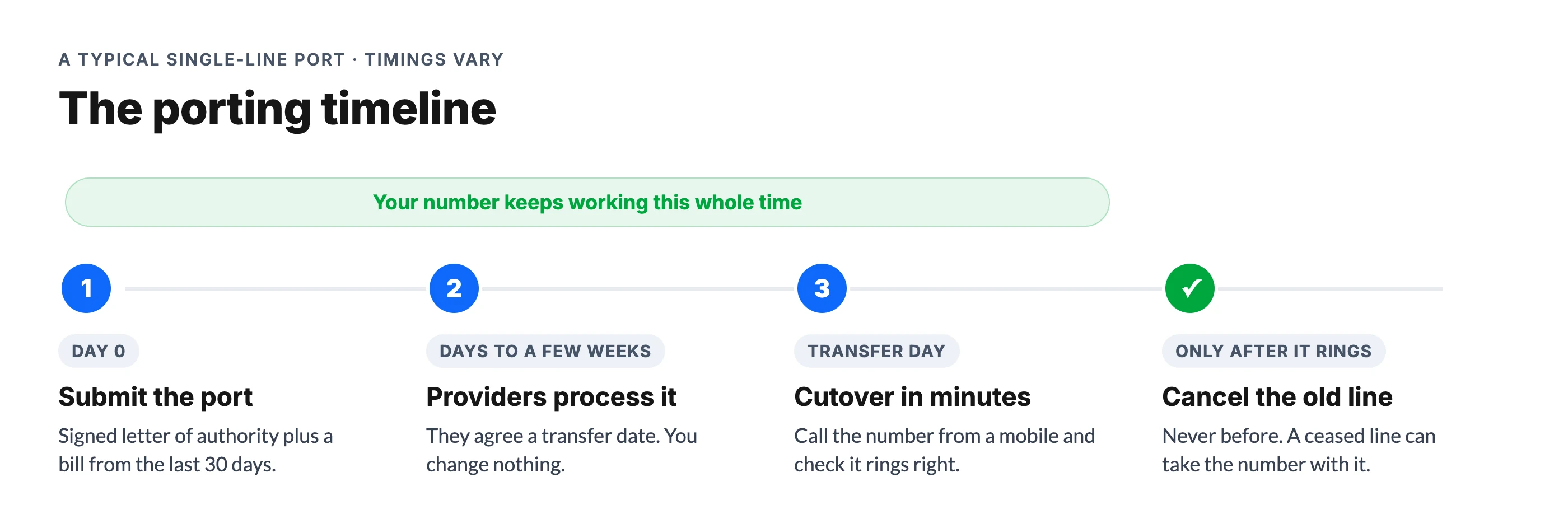
Then the providers agree a transfer date. Your old number keeps working right up to the switchover, which itself usually takes minutes. Ofcom's rules even cover the failure case: if a port fails partway, your old service must be reactivated until the move completes, so you're not left dark in between.
Why do ports get rejected?
Almost every rejected port comes down to one of three fixable problems. First, mismatched account details: the name or address on the form differs from what the old provider has on file, sometimes by as little as an abbreviation. Second, a missing or unsigned letter of authority, which providers treat as a hard stop because it's their fraud protection. Third, a line that's already been ceased, which is the only one of the three that can be fatal to the number.
The fix for the first two is boring diligence: copy the details from the old bill exactly, and sign the form the day it arrives. The fix for the third is the rule this whole guide keeps repeating. Keep the line alive until the port lands.
Timing is the honest unknown here. A clean single-line port often lands within days of the paperwork being accepted, but we can't promise yours will; some take weeks, and multi-line or ISDN setups take longer. That's exactly why starting in autumn 2026 beats starting in January 2027, when the porting queues will be at their worst. The wider deadline picture, including what else dies with the copper, is in our UK PSTN switch off guide.
How to keep your business number in the UK landline switch off
Five steps, in an order that never risks the number:
- Confirm portability with your new provider. Give them the number before you sign anything. Nearly all UK geographic numbers port fine, but a two-minute check beats an assumption.
- Gather the paperwork. Letter of authority, a bill from the last 30 days, and the exact billing name and address from the old account. Sloppy details here add weeks.
- Submit the port and keep paying the old line. The old service must stay active until the transfer completes. Treat the final copper bill as insurance, not waste.
- Test on transfer day. Call the number from a mobile, check it rings where you expect, and record a proper voicemail greeting on the new system.
- Cancel the old line only after the number answers on the new one. Never before. This is the whole game.
Notice what's not on the list: telling customers your number changed. That's the point of porting, and it's why we'd start this process before any other part of a switch-off migration.
A few special cases deserve a mention. If you run several numbers over ISDN, list every single one in the port request, including the fax line and any direct dials, because unlisted numbers can quietly die with the circuit. If a number is tied to an alarm or card terminal, sort that device's digital upgrade with its supplier first, since porting the number won't make the hardware compatible. And if you're changing broadband in the same season, port the numbers before the broadband switch, not during it; two migrations sharing one week is how details get missed.
None of these change the plan. They just add lines to step 2's paperwork, and they're all covered in the wider audit in our pillar guide.
What your number can do once it's digital
A ported number stops being a socket in the wall and becomes an address your business controls. The same eleven-year-old number that used to ring one handset can ring Elena's mobile in court recess, ring a colleague when she's with a client, or hand the call to an AI receptionist that takes the caller's details and books the consultation instead of dropping them to voicemail.
That's the part we've seen surprise people most: keeping the number isn't just damage avoidance, it's an upgrade to what the number does. Our guide to running a business number without a landline covers day-to-day life on a digital number in more detail.
On costs, porting is cheaper than its reputation. Bringing your number to dialnote is free in the US and Canada and a small carrier pass-through fee in the UK, and the porting page walks through the handover process. There's a 10-day free trial with no credit card, so you can set up the new system, test your call flows, and start the port only once you've seen where your number is going.
Set up the new home for your number
10-day free trial, no credit card. Start the port when you're ready.
The number should outlive the network
The copper is going away; there's no decision to make there. Your number doesn't have to go with it, and Ofcom's porting rules mean the choice is entirely yours as long as you act while the line is still live.
So treat it like the asset it is. Confirm portability this week, get the letter of authority signed, and port first, cancel second. The number that has carried your business for a decade deserves to do more than survive the switch off.
Frequently asked questions
Yes. UK providers must support number porting under Ofcom's rules, so your landline number can move to a digital (VoIP) provider and keep working after the 31 January 2027 switch off. The one condition: port it while the copper line is still active.
A clean single-line port often completes in days once the paperwork is accepted, but allow a few weeks, and longer for multi-line or ISDN setups. Your old number keeps working the whole time, so starting well before the January 2027 deadline costs you nothing.
Three things: a signed letter of authority confirming you own the number, a recent phone bill (usually from the last 30 days), and the exact billing name and address on the old account. Your new provider runs the port with your old one from there.
It can be lost for good. A ceased or switched-off line releases its number back to the carrier pool, and recovery is sometimes impossible. Port first, confirm the number rings with the new provider, and only then cancel, well before the 31 January 2027 cut-off.

Written by
Lancelot Dsouza
Chief Marketing Officer, SmartReach.io
Lancelot Dsouza is the Chief Marketing Officer at SmartReach.io, where he built the Marketing, Sales, and Customer Success verticals from the ground up. With over 25 years of experience spanning digital marketing, business development, and strategic...
Lancelot Dsouza is the Chief Marketing Officer at SmartReach.io, where he built the Marketing, Sales, and Customer Success verticals from the ground up. With over 25 years of experience spanning digital marketing, business development, and strategic...
Related Articles
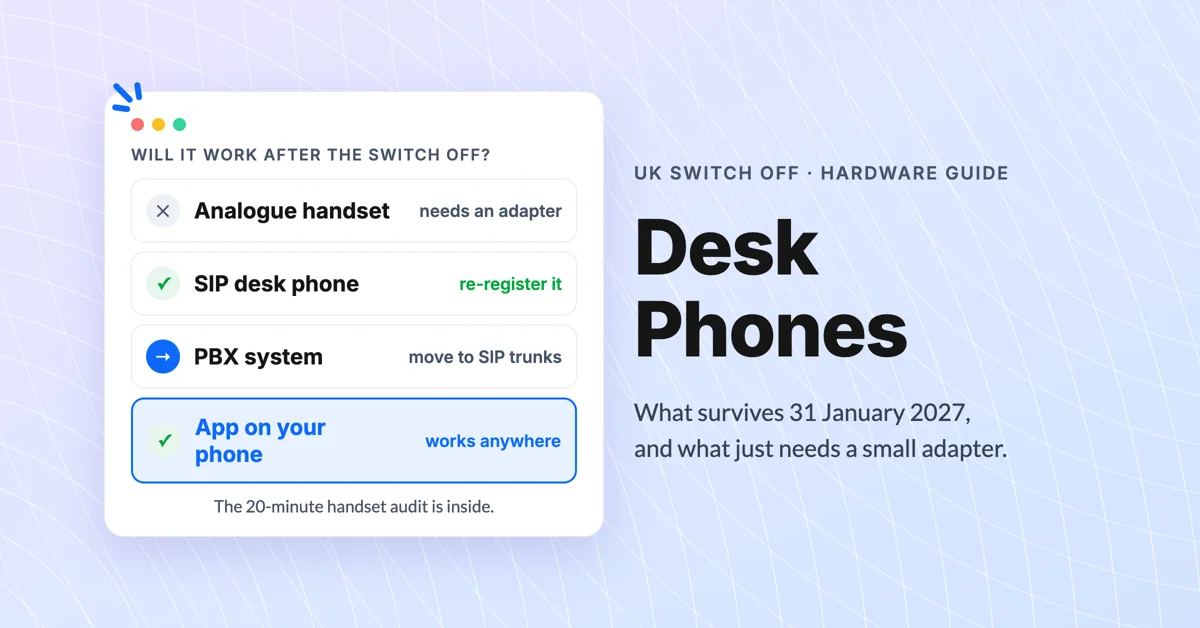
Desk Phones After the UK Switch Off: What Still Works
Find out which desk phones after the UK switch off keep working, which need an adapter, and when to let the handsets go before the 2027 deadline.
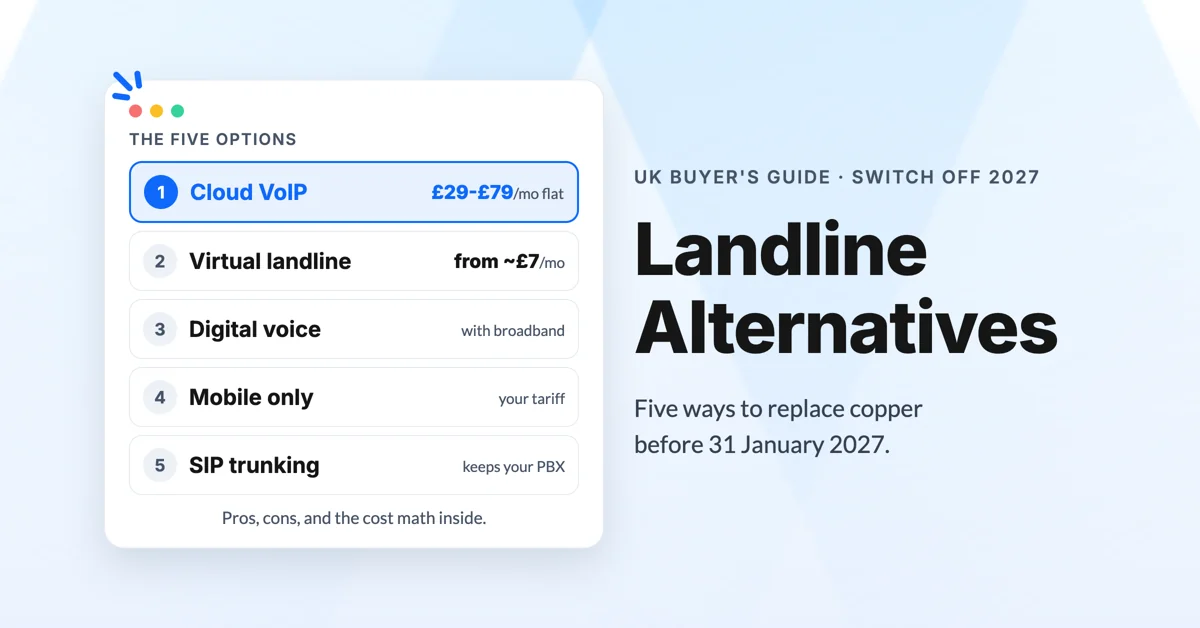
Best Landline Alternatives for UK Small Businesses (2026)
Compare the best landline alternatives for UK small businesses before the 2027 switch off: cloud VoIP, digital voice, mobile and SIP, with real costs.
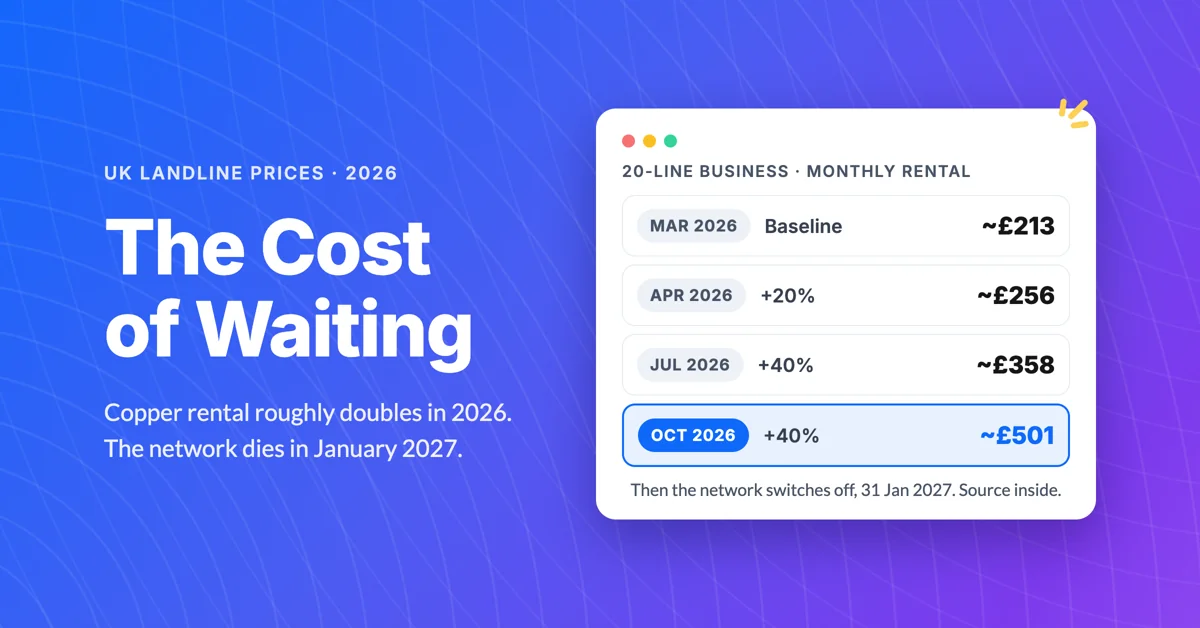
UK Landline Price Increases: The Real Cost of Waiting
See the UK landline price increases hitting businesses in 2026, the math on what waiting costs, and the cheaper switch to make before January 2027.