What's the Difference Between SIP and VoIP?
Here's the secret nobody selling phone systems tells you: SIP vs VoIP isn't a choice between two systems. It isn't even a choice. And "cloud phone system" isn't a third option either; it's the same thing wearing a friendlier name.
Marcus found this out shopping for his six-person plumbing firm. One quote pitched "SIP phones", another "a VoIP solution", a third "a cloud phone system". Three quotes, three vocabularies, zero explanations. Sound familiar?
The whole tangle unravels with three short definitions, so let's do those first, then get to the only question that matters: what should your team actually buy, and what will it cost?
TL;DR:
- SIP vs VoIP is a false choice. VoIP means calls over the internet; SIP is the language used to set those calls up. One runs inside the other.
- A cloud phone system is not a third thing. It's VoIP that a provider runs for you, delivered as apps.
- Your real decision is how to buy VoIP: run your own hardware (SIP desk phones, trunks) or use a cloud service.
- For a 10-person team, typical per-user cloud plans run around $250 a month, while flat-rate plans like dialnote's are $49 for the whole team.
- Use the calculator below to run your own numbers in ten seconds.
Jump straight to: the plain-English difference · the calculator · the two ways to buy · how to decide
SIP vs VoIP in plain English
Three terms, three one-liners:
- VoIP is the technology: any phone call carried over the internet instead of old copper wires.
- SIP is the language: the open standard that phones and services use to start, manage, and end those internet calls.
- A cloud phone system is the product: VoIP that a provider runs for you, so your number, routing, and voicemail live in an app instead of in equipment.
That's the entire mystery. There's one technology (VoIP), one language it speaks (SIP), and two ways to buy it: run the equipment yourself, or let a cloud service run it for you. A "SIP phone" is just a desk phone that speaks the language.
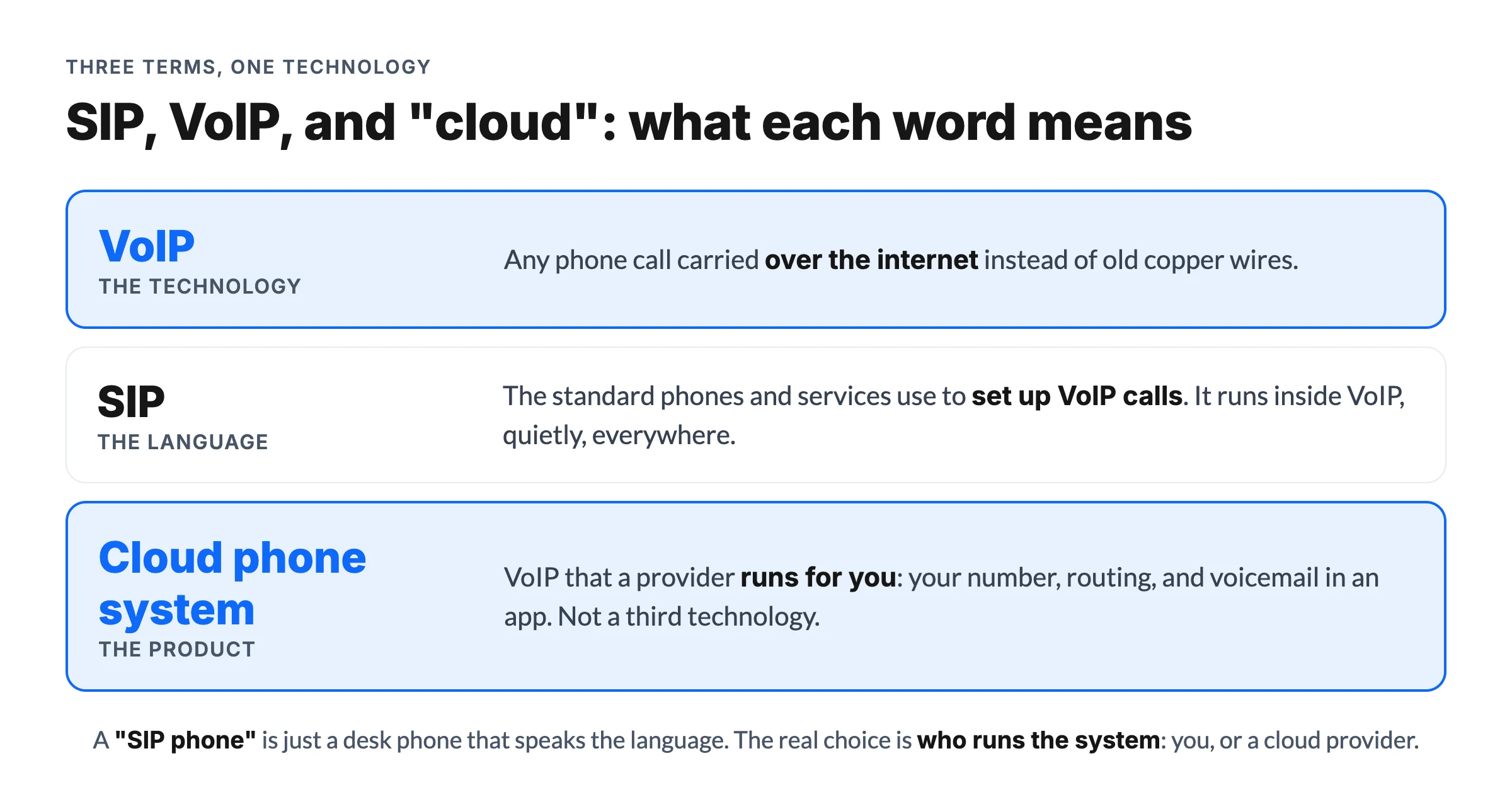
So when suppliers pitch "SIP phones" against "a cloud system", they aren't offering different technologies. They're offering different amounts of homework. The SIP-flavored quote means hardware on your desks and equipment you (or an installer) manage. The cloud quote means apps and a dashboard, with the provider managing everything.
And to answer the question we get asked directly: is dialnote a VoIP phone or a cloud phone? Both, because the words describe the same thing at different levels. Our calls travel as VoIP, SIP runs under the hood, and the whole system is delivered from the cloud as apps. Every cloud phone system you'll shortlist can say the same sentence.
Decoding the three quotes on your desk
Run any supplier pitch through the three definitions and it translates instantly:
- "SIP handsets, 4 trunk channels, installation included" means the hardware way: desk phones that speak SIP, a per-channel line rental, and equipment that becomes yours to think about.
- "A complete VoIP solution for your business" means almost nothing yet. Everything on this page is VoIP. Ask them the only clarifying question that matters: who runs it, you or them?
- "A cloud phone system, from $X per user per month" means the managed way: apps, a dashboard, and a bill that multiplies by headcount unless the plan is flat.
Marcus's three quotes weren't three technologies. They were two ways of buying one technology, plus one salesperson being vague. Once he saw that, comparing them took an evening instead of a month.
Run your own numbers
Cost is where the two ways of buying VoIP really separate, so here's the ten-second version for your team instead of a hypothetical one:
What would your team pay? Run the numbers.
Set your team size. The market-rate assumptions are editable too, so use your real quotes.
SIP hardware setup
$1,960
year one: 10 handsets + 4 trunk channels at $20/mo, before installation and upkeep
Per-user cloud plan
$3,000
year one: 10 users at $25/mo ($250/mo), growing with every hire
dialnote, flat rate
$588
year one: Team (unlimited users) at $49/mo flat, hardware optional, 10-day free trial to test it
Assumptions, not quotes: handset and per-user prices are typical market ranges from our pricing research. Swap in your own numbers above.
Why the gap? A hardware setup front-loads handset costs and then bills per trunk channel forever, and every hire needs another handset. Per-user cloud plans skip the hardware but multiply by headcount. Flat-rate plans break the multiplication: on dialnote's Team plan, the eleventh person costs the same as the tenth, which is nothing.
The two ways to buy VoIP
Same technology, two shopping experiences. Here's the honest side-by-side, with a real 10-person price row:
| SIP hardware setup | Cloud phone system | |
|---|---|---|
| What arrives | Desk phones, trunk channels, maybe a PBX | A login |
| Setup | Installer day, per-desk configuration | Sign up, port your number |
| Who maintains it | You or your installer | The provider |
| Remote work | Possible, with configuration | Default: your number rings anywhere |
| Adding person #11 | Buy and provision a handset | Send an invite |
| 10-person team, monthly | ~$70 in trunk channels, after ~$1,000 of handsets | ~$250 typical per-user, or $49 flat on dialnote |
The hardware column isn't wrong, and we'll get to who it suits. But read the last row twice, because that's the row most quotes hope you won't calculate. The 10-person figures use the same assumptions as the calculator above; swap in your own quotes there.
What the cloud way does that hardware can't
A desk phone is one place a call rings. A cloud system makes the number itself the fixed point and lets everything else move, and that's the upgrade hardware can't match at any price.
Marcus's business number now rings the shop laptop, his mobile in the van, and a teammate at the same time. When every pair of hands is on a job, an AI receptionist answers, takes the caller's details, and books the job through Calendly or Cal.com instead of dropping a $2,400 job to voicemail. Every call leaves a searchable transcript. The system he bought this year keeps gaining features, where a handset only ever gets older. On our cloud phone system, all of that comes inside the $19 solo and $49 flat team plans, with a 10-day free trial and no credit card.
Prefer a handset on the desk anyway? Fair, and worth being straight about: SIP desk phone support is on dialnote's roadmap, coming soon, so hardware lovers can plug into the same cloud number. But we'd still make the case that the power sits in the cloud layer, because the receptionist, the transcripts, and the routing live in the service, not in any phone.
When the hardware way makes sense
Three situations keep the SIP-first column honest. You already own a PBX and handsets that work, in which case SIP trunking keeps that investment running over broadband instead of retiring it. You run fixed, call-heavy stations like a dispatch desk, where dedicated hardware is genuinely more ergonomic (our desk phones guide covers which handsets can move to a digital setup, and UK readers have an extra deadline in the 2027 copper switch off). Or your workplace restricts personal devices, and provisioned handsets are the compliance answer.
We can't tell you the exact team size where hardware stops paying for itself; it depends on quotes and call patterns. What we can say from the businesses we talk to: below roughly ten seats, hardware-first choices are usually familiarity talking, not math.
The other words you'll hear (30-second glossary)
Five more terms show up in quotes, and each is a one-liner once you have the map:
- Hosted VoIP is another name for a cloud phone system. Same thing, older label.
- PBX is the office phone-system brain that routes calls between desks. Cloud systems include one as software; hardware setups make you own one.
- SIP trunk is the virtual phone line connecting a PBX to the outside world, billed per simultaneous-call channel.
- Softphone is a phone as an app on a laptop or mobile. Every cloud system includes them.
- Virtual number is a phone number that lives in a service instead of a wall socket, which is what your number becomes on any of these setups.
None of these are new decisions. They're all pieces of the same two shopping carts you've already seen.
SIP vs VoIP: the simple way to decide
Forget the acronyms and answer four questions. Do you already own a working PBX? If not, don't buy into that column now. Where does your team answer calls, at desks or everywhere? Who's going to maintain the system, and is the honest answer "nobody"? And what should a missed call do, go to voicemail or get answered and booked?
Marcus's answers were no, everywhere, nobody, and booked, and his three confusing quotes collapsed into one obvious one. If yours look similar, start a free dialnote trial, put your number on the phones your team already carries, and let the calculator's math meet your real call volume.
Frequently asked questions
Not the same, but not rivals. VoIP means phone calls over the internet. SIP is the language phones and services use to set those calls up. Almost every VoIP call uses SIP under the hood, so you never have to choose between them.
Yes, in practice. A cloud phone system is VoIP that a provider runs for you: your number, routing, and voicemail live in their service and you use apps. The other way to buy VoIP is running your own hardware with SIP desk phones and trunks.
No. Cloud VoIP systems work through apps on the mobiles and laptops your team already owns. SIP desk phones are an option for businesses that want them, not a requirement, and many small teams run entirely on apps.
For small teams, usually the cloud system. A SIP hardware setup buys handsets and pays per trunk channel, plus someone's time to maintain it. Flat-rate cloud plans bundle everything for one monthly price with nothing to own.
Both, because the terms describe the same thing at different levels. dialnote carries calls as VoIP and delivers the whole system from the cloud as apps, so it's VoIP bought the managed way. SIP runs under the hood, like every internet phone service.

Written by
Akhilesh Betanamudi
Co-Founder, SmartReach.io
Akhilesh Betanamudi is a technology entrepreneur and engineer with over 12 years of experience in hardware engineering, SaaS, and business communications. As Co-Founder of SmartReach.io - a sales engagement platform for startups and enterprises, he h...
Akhilesh Betanamudi is a technology entrepreneur and engineer with over 12 years of experience in hardware engineering, SaaS, and business communications. As Co-Founder of SmartReach.io - a sales engagement platform for startups and enterprises, he h...
Related Articles
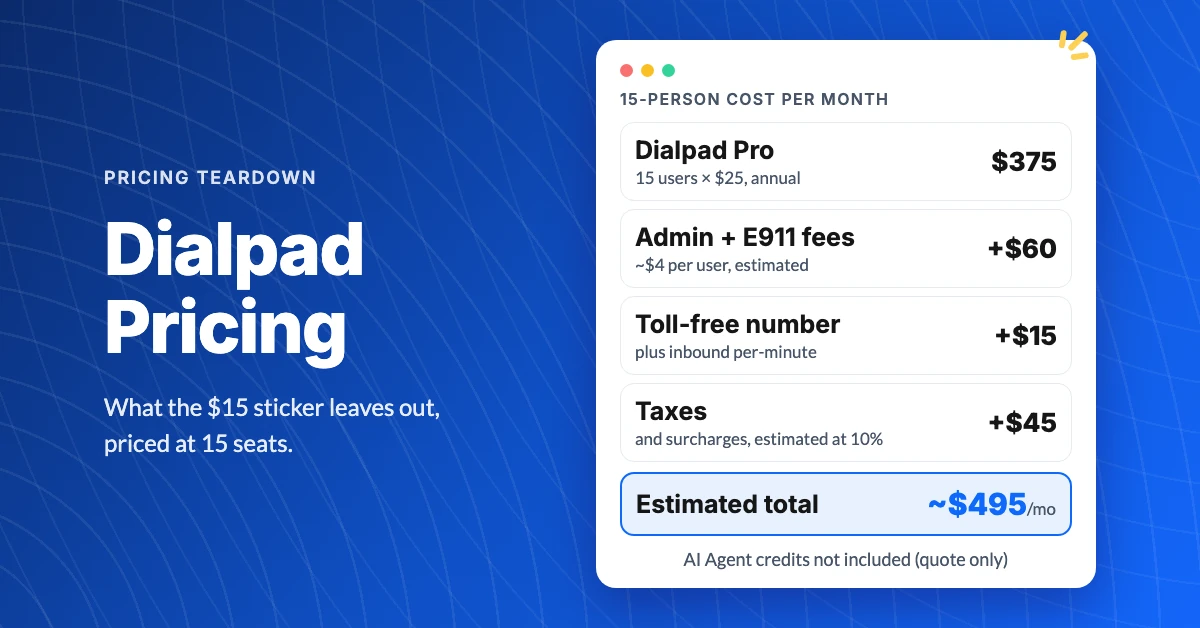
What Does Dialpad Pricing Really Cost a Small Team?
See what Dialpad pricing really costs: $15 to $35 per user, the 3-seat Pro minimum, per-text and admin fees, and real team math at 5, 15 and 30 people.
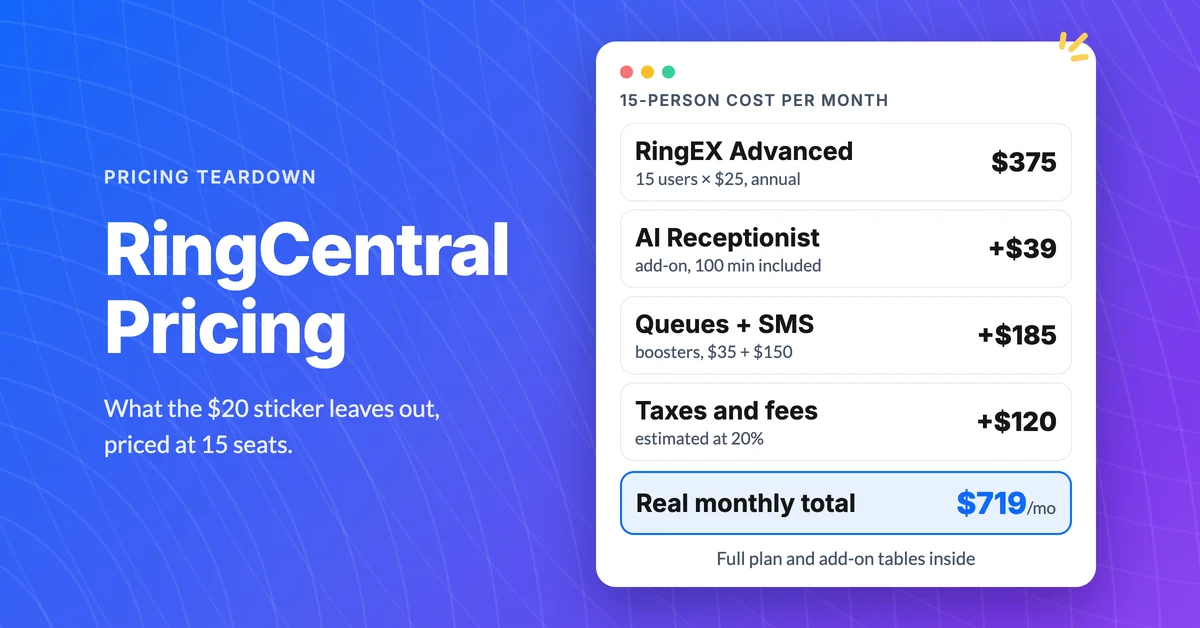
How Much Does RingCentral Really Cost per User?
RingCentral cost per user starts at $20, but add-ons, SMS caps and regulatory fees decide the real bill. See the 15-person math and the flat-rate comparison.
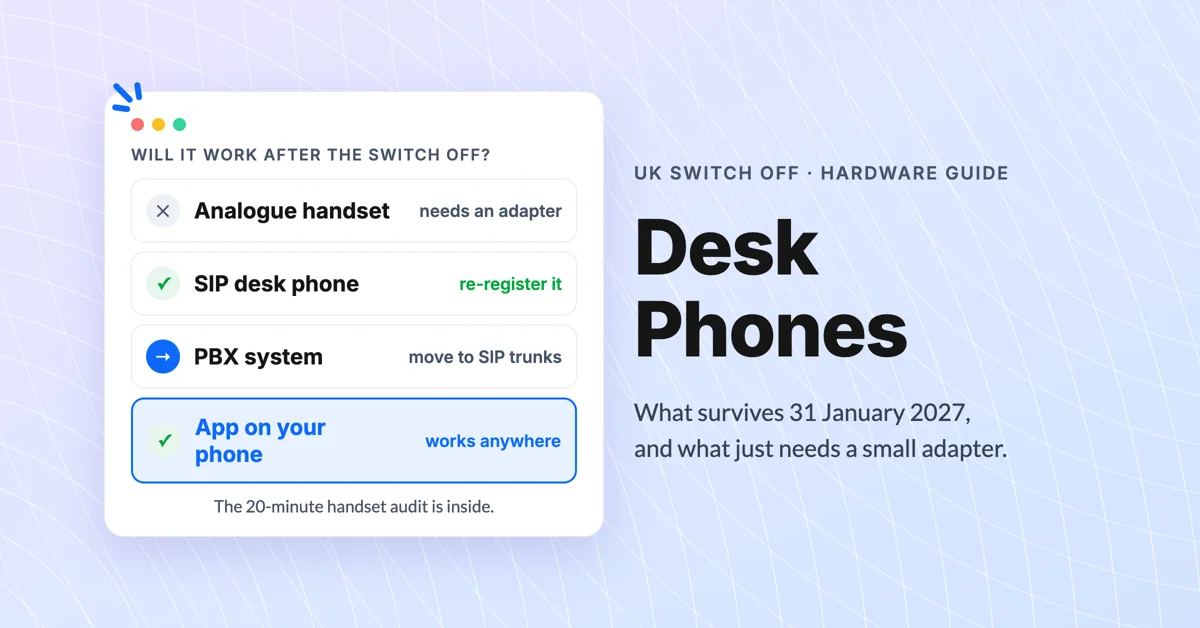
Desk Phones After the UK Switch Off: What Still Works
Find out which desk phones after the UK switch off keep working, which need an adapter, and when to let the handsets go before the 2027 deadline.